Jun 102021
 

NEW YORK CLEARING by Antony Gormley was on view in Brooklyn Bridge Park from 2/4-3/27/20. The work consisted of a single line made of 11 miles of square aluminum tubing that looped and coiled without a beginning or end, “turning itself into an environment for the viewer that counters the grid of modernism and the city with swooping lines of energy”.

This is one of a series of art works that were part of Connect, BTS– a global public art initiative supported by the K-Pop Group BTS and organized by a group of curators under the direction of independent curator Daehyung Lee. The project took place in five cities on four continents with 22 contributing contemporary artists.

Jun 092021
 

Potatoes, Grapes, and a Lemon, 2019

Pear and Cherry Juice, 2019


These paintings are from Holly Coulis‘ 2019 exhibition Stilly at Philip Martin Gallery.

From the press release–

Holly Coulis’s paintings operate as stages where still life scenes unfold. A table, or tables, create an initial structure where simplified, geometric forms are arranged and interact. There is a sense of order in these scenes as though the fruits and dishes had been laid out by some external force. Through layers of paint, linear elements are created, giving the illusion of colorful stripes or energy fields around individual objects. These works feel familiar, but upend our sense of figure/ground, horizon-line, perspective, and scale. In these newest paintings, the still life begins to verge into abstraction.

Coulis works from a visual vocabulary built up over years of practice, and the sense of discovery and newness in her works occurs as she continues to explore her own paintings and their possibilities: “I rarely look at a scene. It’s more about shapes of things I know. Things like oranges, lemons, cherries: they’re all very easy shapes.” Standing in front of her works, we are immediately involved in a scene of pleasure and abundance, surprise and stimulation – a stimulation that is physical, intellectual and aesthetic.

Her new exhibition, Orbit, which also includes her sculptures, is currently on view at the same gallery in Culver City until 7/2/21.

Jun 032021
 

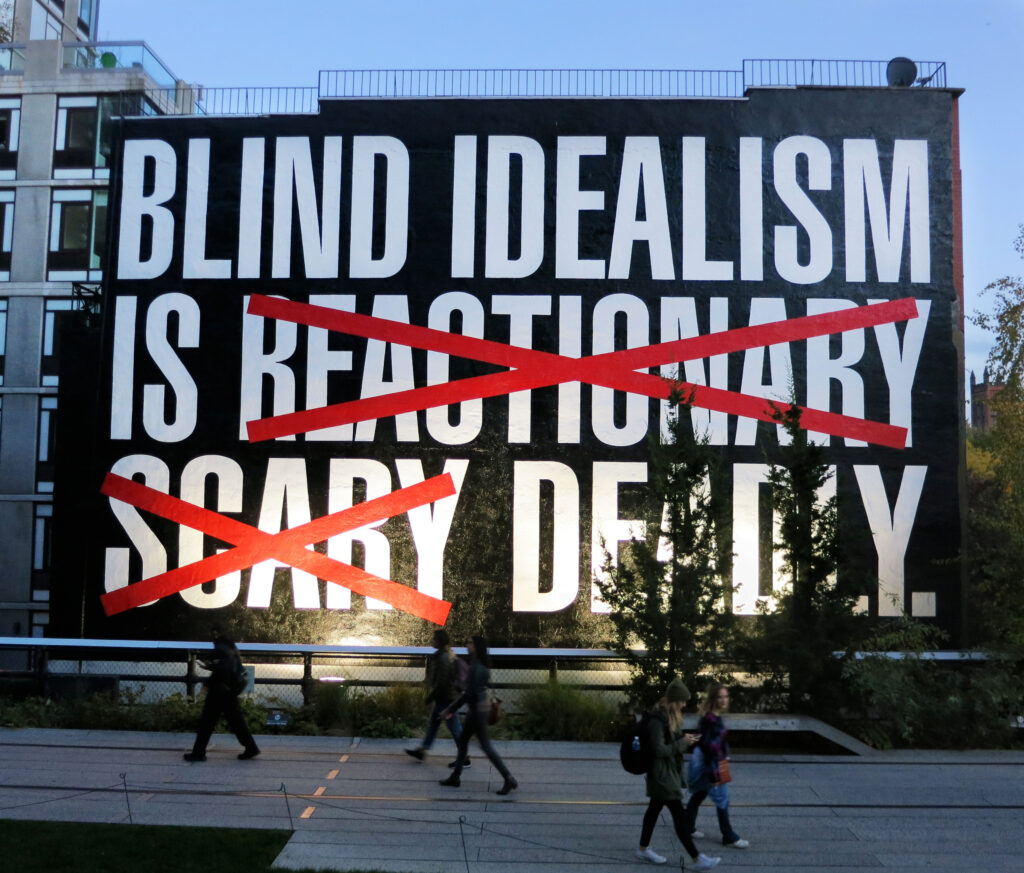
Barbara Kruger designed this mural, Untitled (Blind Idealism Is…) for the High Line in 2016. It is based on the quote “Blind idealism is reactionary” by Afro-Caribbean psychiatrist and political philosopher Frantz Fanon.

From the High Line website-

The original statement by Fanon, “Blind idealism is reactionary,” suggests that political and religious convictions stem from the situations from which they grow, not from the inherent nature of individual human beings. According to Kruger, the work reflects “how we are to one another” within “the days and nights that construct us.” These texts, along with Kruger’s own writings, resonate with particular potency in today’s political climate.

For more on this work at the time it was made, check out this interview with Kruger by The Intelligencer at New York Magazine.

May 262021
 

Mel Chin’s animatronic sculpture Wake, formerly on display in NYC’s Times Square, is now on view in Asheville, North Carolina until December 1.

From The Community Foundation of Western North Carolina website-

Wake was commissioned as part of Mel Chin: All Over the Place, a multi-site survey of his works from across many decades that took place in several New York City locations. A collaborative group, led by UNC Asheville’s Steam Studio and CFWNC, formed to plan and raise funds for the sculpture to be seen locally.

Wake – 60 feet long, 34 feet wide and 24 feet high, conceived and designed by the artist – was engineered, sculpted and fabricated by an interdisciplinary team of UNC Asheville students, faculty, staff and community artists led by Chin. Wake is interactive and features decks and places to sit and contemplate.

Wake evokes the hull of a shipwreck crossed with the skeletal remains of a marine mammal. The structure is linked with a carved, 21-foot-tall animatronic sculpture, accurately derived from a figurehead of the opera star Jenny Lind that was once mounted on the 19th century clipper ship, USS Nightingale. Jenny Lind moves subtly as she breathes and scans the sky.

“She may be looking at what cannot be seen as she moves away from the wreckage of her past,” explained Chin. “It’s about relationships we have to history. It’s almost an obligation to understand our relationships with our environment now and an opportunity to project what things could be like far into the future if we’re not engaged.”

The artwork is not only a comment on climate change, it calls forth a history that includes ships, like the USS Nightingale and many other vessels, used to move tea, guns and slaves that augmented the nation’s burgeoning economy. “These expanding past economies serve as prologue and perhaps a warning to our current environmental dilemma,” said Chin.

“Wake is a powerful comment on how the tides of history have shaped many communities, including Asheville,” said Steph Dahl, who manages the City of Asheville’s Public Art Program. “The piece asks us to acknowledge and discuss a long and complicated past, one that has left us operating in a sea of racial inequities and environmental crises. Wake’s temporary presence in an empty lot where the history and future of the Southside and South Slope meet is part of its power, and its impermanent nature underscores some of the tough questions we need to address together.

“Jenny Lind was the Beyoncé or Adele of her time,” said Chin. “She was brought by P.T. Barnum to tour America as the Swedish Nightingale. Barnum initiated American mass marketing and the world still lives in the real wake of this marketing enterprise. American commercialism provided profound advancement and wealth, but it came with real costs including colonialism, enslavement and rapid expansion. Jenny Lind, an abolitionist herself, had nothing to do with the USS Nightingale, but as its figurehead, she is an integral part. You can’t escape the web you’re in whether you are in New York City or Western North Carolina.”

Since the late 90’s Chin has lived and worked in Egypt Township, outside of Burnsville in Yancey County, North Carolina. His work has been exhibited by major art centers nationally and globally. He is described in his MacArthur entry as “a category-defying artist whose practice calls attention to complex social and environmental issues. In an expansive body of work ranging from collages, sculptural objects, animated films and video games to large-scale, collaboratively produced public installations, Chin demonstrates a unique ability to engage people from diverse backgrounds and to utilize unexpected materials and places.”

May 222021
 

This was one of the pieces from Neighborhood Reflections, eco friendly banners created last year for the Arts Gowanus Art Walk event in Brooklyn.


Mar 222021
 

For more of Justin Alsedek’s work check out his website.

If you are looking for more information about the arts in Ocala/Marion County, check out  Marion County Alliance and their gallery Brick City Center for the Arts.


Mar 102021
 

I stumbled upon this work while walking around in Brooklyn, NYC. It was created by artist Brian Block and is part of his project “based on late writings of Californian writer F.C. Wott”.

The biography of Wott from Block’s website–

Wott was born in Santa Monica and lived as a resident of Elysium Fields commune in Topanga Canyon in Los Angeles from the late 1960s until its closure the early 2000s. He was an occasional prose and poetry writer, with his musings appearing in various zine style tracts that circulated among the west coast commune culture of the 60s and 70s.  

Confirmed further details of Wott’s life are few at this time, but it has been established that he served as part-time adjunct professor at Santa Monica Community College for many years in the 70’s and 80’s, teaching classes in Anthropology and Poetry.

Curiously, after years of writing only occasionally, his late years see Wott throwing himself headlong into his writing – intensely penning hundreds of lines of notes in seclusion at his modest beach hut at the nudist colony. These varied widely in length, coherence, and completion when they were found at his desk at his death in 2013. These writings would eventually became known as “The Notes”. 

“The Notes” were first circulated informally among friends, gradually acquiring a small, eclectic readership amid creative circles in and around Los Angeles.  One set of loose photocopied pages eventually captured the attention of UCLA Art Historian Emeritus Rene Glete, who introduced Brian Block to the writings.  Glete also went on to establish the scholarly framework for the study of Wott’s work: gathering and archiving all of Wott’s papers (such as they were) in cooperation with his estate, and setting up the framework for the Nachlass. It is worth noting that these are somewhat unchartered waters, academically researching the work of an “outsider” writer, for unlike the well established conventions of “outsider artist” and “outsider art”no such consensus has been forged in historical circles around such terms for writers.   

In deciding to make a group of artworks based on the texts, Block was drawn to their “eccentricity, and the fractured, iterative thinking” they depict, obtaining permission from the estate to make work from the Notes. 

Block is pasting up more work around town so check out the walls when you pass.


Dec 112020
 

Kota Ezawa’s Once Upon A Time in the West, 2017, for Murals of La Jolla, in San Diego. Murals of La Jolla is a project started in 2010 by The Athenaeum and the La Jolla Community Foundation. It commissions artists to create work to be displayed on buildings around La Jolla. A map of current work can be found here.

From the Murals of La Jolla website–

Kota Ezawa’s mural, Once Upon a Time in the West, pays homage to La Jolla’s landmark contribution to science and architecture. The mural image overlays a stylized portrait of architect Louis Kahn in profile onto a perspectival view of the Salk Institute’s courtyard and the Pacific Ocean beyond. The Salk Institute, located in La Jolla, has been a hub for groundbreaking scientific research since its inception by Jonas Salk in 1960. Kahn was handpicked by Salk to design a flexible laboratory space that would be conducive to the constantly evolving needs of science. Ezawa portrays Kahn deep in thought as the modern, bold architecture of the Salk is depicted behind him. The use of contrasting opaque and transparent forms seamlessly blends Kahn with his creation, suggesting the endless possibilities of science and art.

Kota Ezawa uses graphic stylization reminiscent of Pop Art to create bold, flattened imagery rich with subtle, critical commentary. Ezawa was born in 1969 in Cologne, Germany. He attended the Kunstakademie Düsseldorf in the early 1990s. He later went on to receive a BFA from the San Francisco Art Institute and an MFA from Stanford University. He is an associate professor in film and fine art at the California College of the Arts in Oakland. Ezawa is known for his labor-intensive, stylized computer animations that re-contextualize history to highlight the biased lens through which pop-culture media is consumed. He seeks to reduce information to its most basic elements to question validity and truth of news and media. He also uses slide projection, light box images, and collage to explore similar themes.


Dec 052020
 

Not My Burden, 2019

From a Tropical Space, 2019

From a Tropical Space (detail)

Analogous Colors, 2020

The Aftermath, 2020

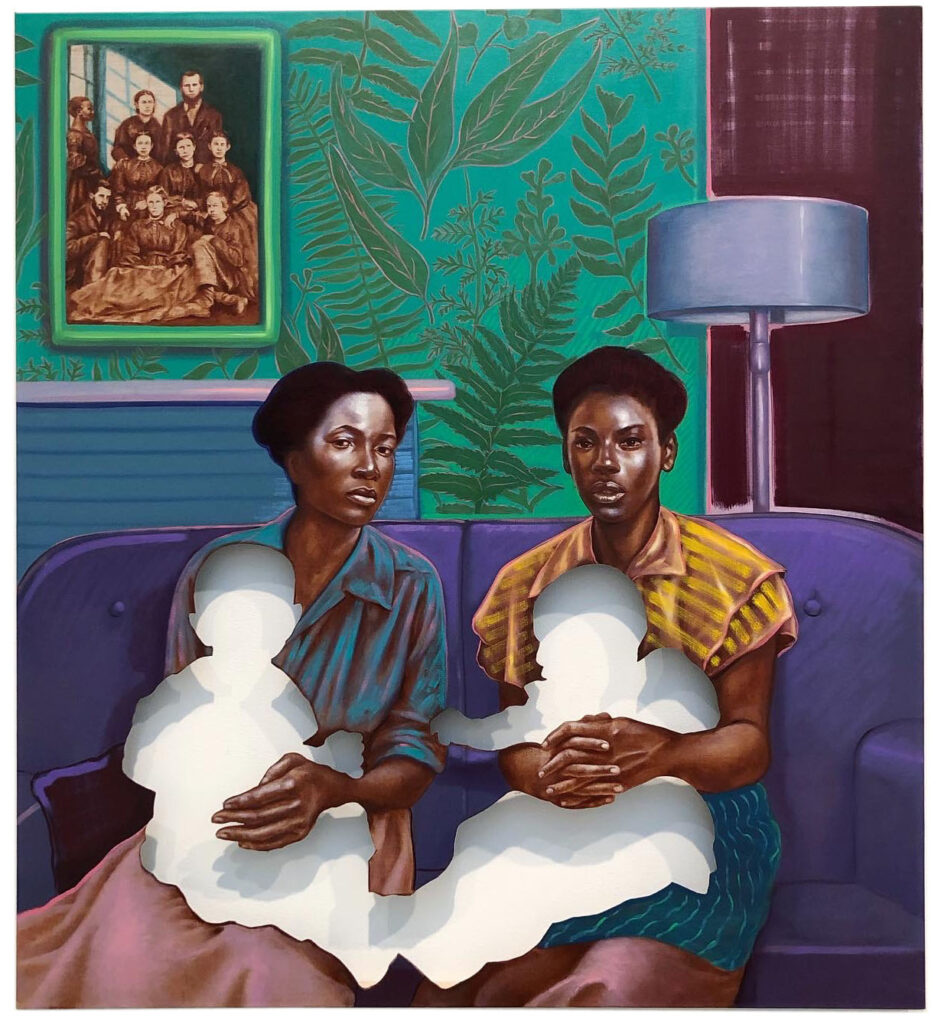
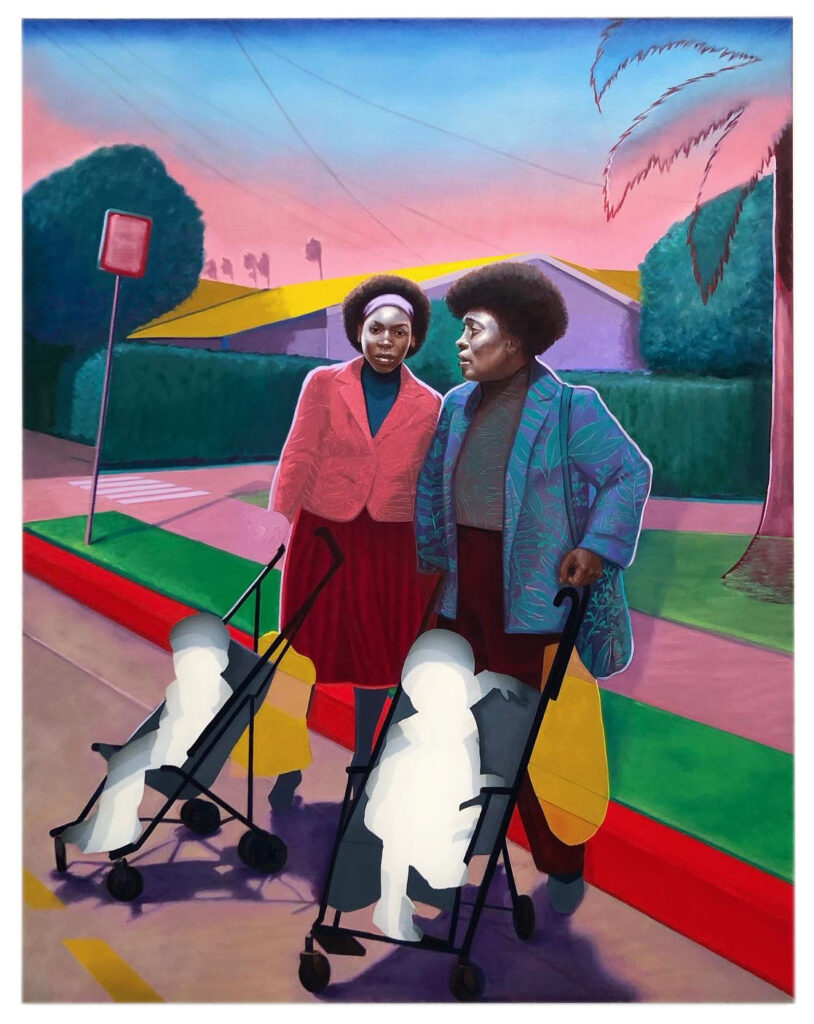
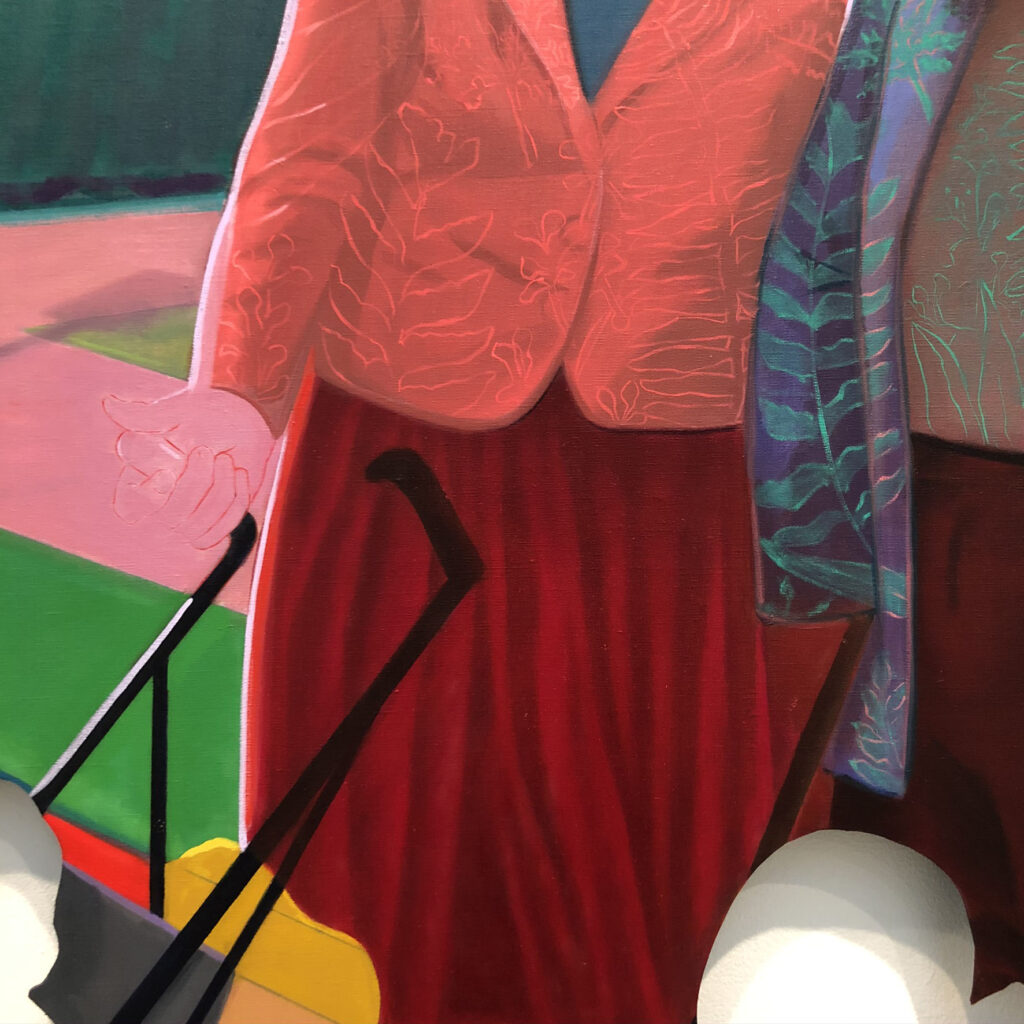
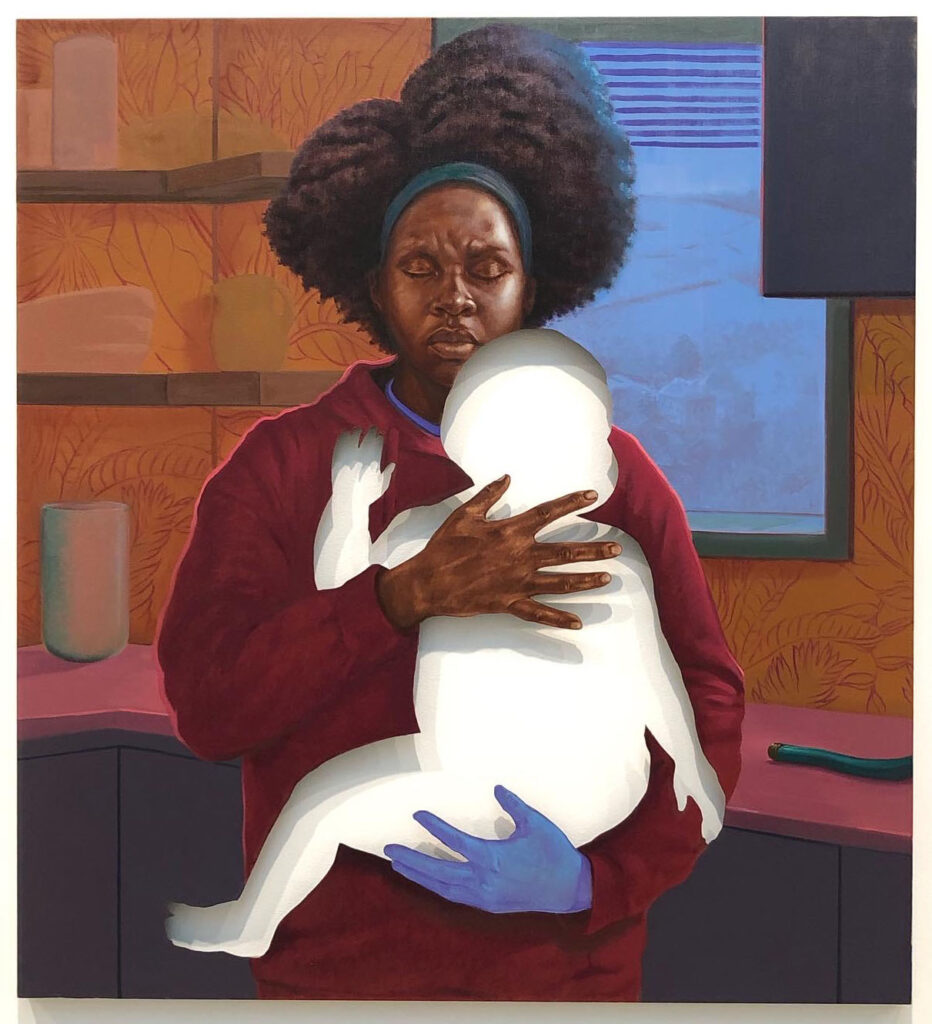
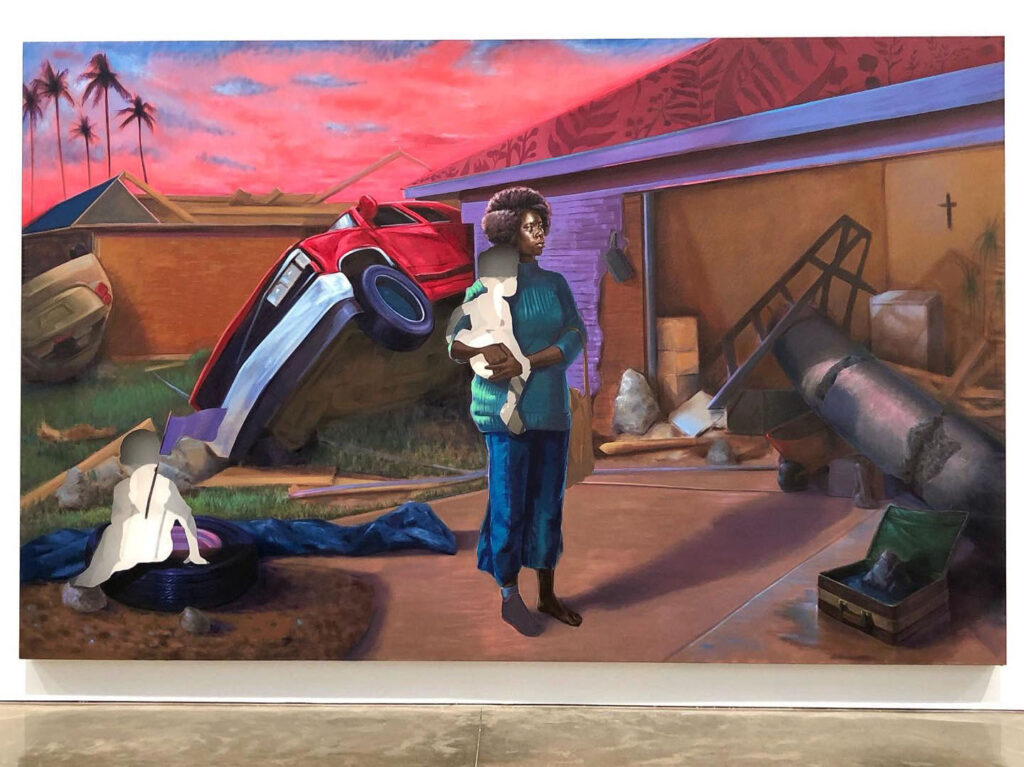
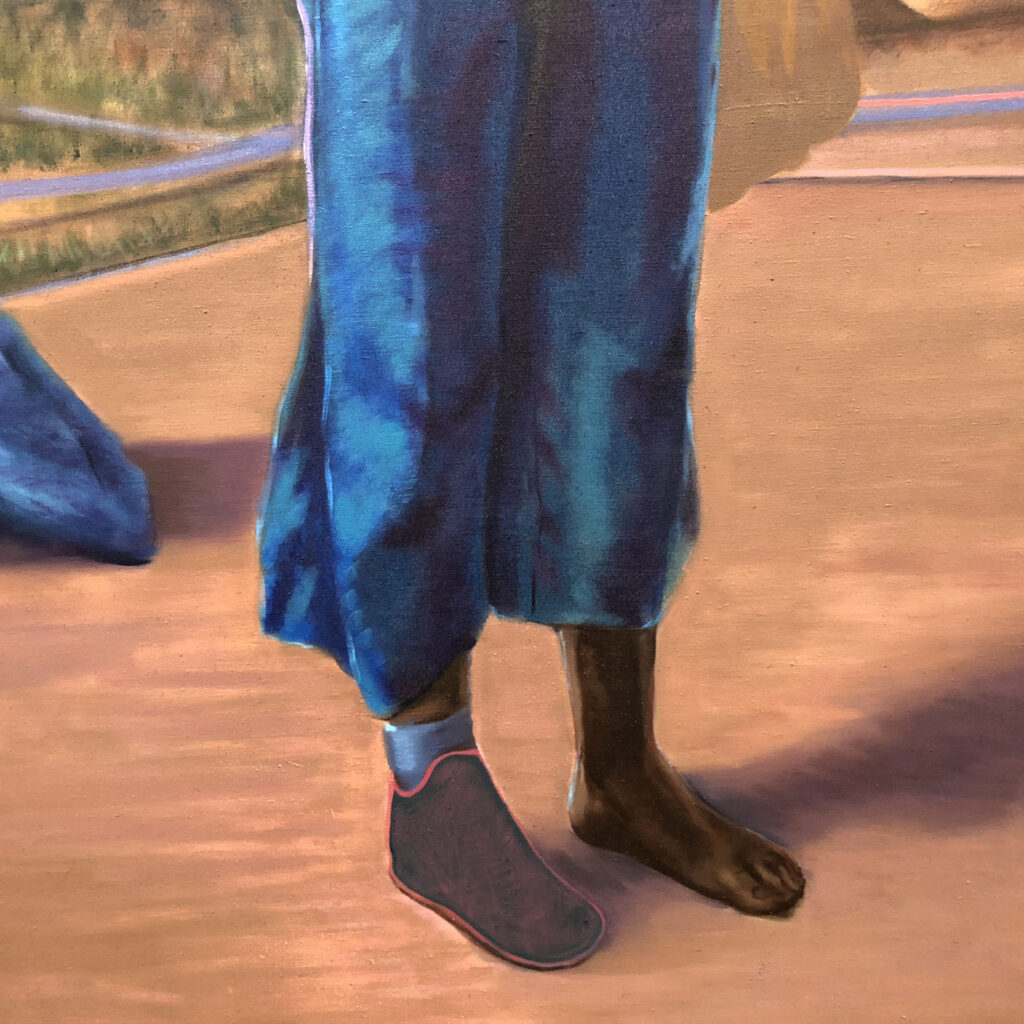
For Titus Kaphar’s first exhibition at Gagosian Gallery in NYC, From A Tropical Space, he has created moving scenes of loss, with children cut out of the paintings. While the cutouts and vivid colors are the first things that get noticed, on a longer look you can see that the women in these paintings are not just missing children, but often pieces of their own bodies are affected. Arms, a hand fading away or turning blue, a leg with only one sock and shoe- these women are losing more than what has been cut away from them, they are losing parts of themselves.

From the press release-

A painter, sculptor, filmmaker, and installation artist, Kaphar reexamines American history by deconstructing existing representations and styles through his own formal innovations. His practice seeks to dislodge history from its status as “past” in order to understand its continuing impact on the present. Using materials including tar, glass, and rusted nails—together with highly refined oil painting—and employing techniques such as cutting, shredding, stitching, binding, and erasing, he reworks canonical art historical codes and conventions. And by uncovering the conceptual and narrative underpinnings of certain source images, he explores the manipulation of cultural and personal identity as a central thematic concern while inventing new narratives.

While much of Kaphar’s work begins with an exhaustive study of pre-twentieth-century master painting techniques, From a Tropical Space sees him wield these various methods to create an emotionally saturated visual landscape that is entirely contemporary. Just as artists, through time, have translated the fraught and mercurial sociopolitical contexts in which they operate into new and often radical aesthetic modes, so do the pervasive social and cultural anxieties of the world in which we find ourselves resonate throughout Kaphar’s new work.

In From a Tropical Space, Kaphar presents a haunting narrative of Black motherhood wherein collective fear and trauma crescendo in the disappearance of children, literalized through the physical excision of their images from the canvases themselves. The absence of each juvenile figure—whether seated in a stroller or held in a woman’s arms—reveals only the blank gallery wall beneath. The intense coloration of the suburban environments in which the figures are set only heightens a pervasive tension—these are images for uncertain times. Included in the exhibition is Analogous Colors (2020). Demonstrating further the broader resonance of Kaphar’s recent work, the painting was featured on the cover of the June 15 issue of Time magazine, which included a report on the protests sparked by George Floyd’s killing at the hands of Minneapolis police.

This exhibition closes 12/19/20.

Dec 052020
 

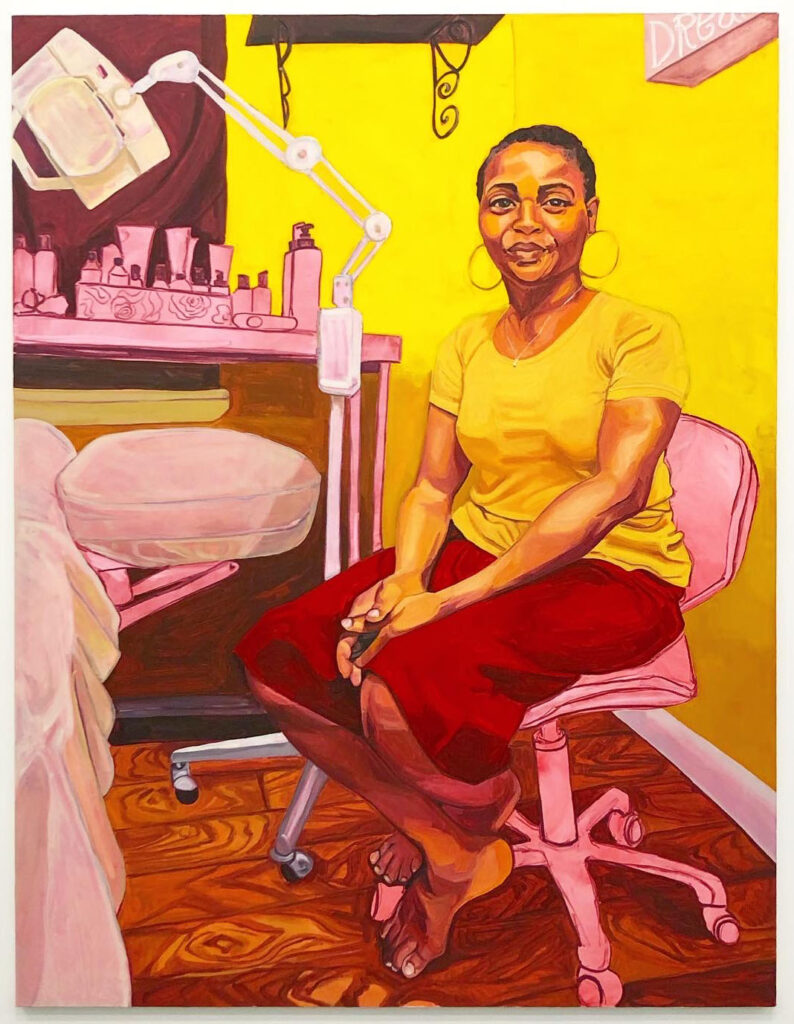
Shirley (Spa Boutique2go), 2018

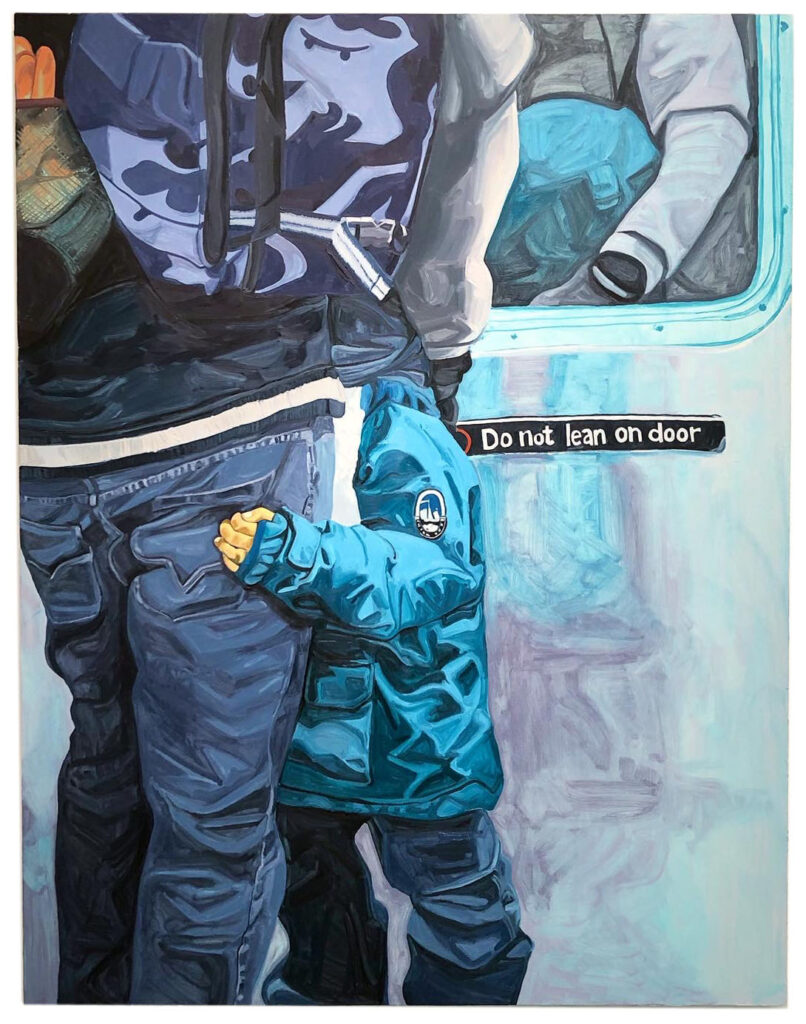
Lean, 2018

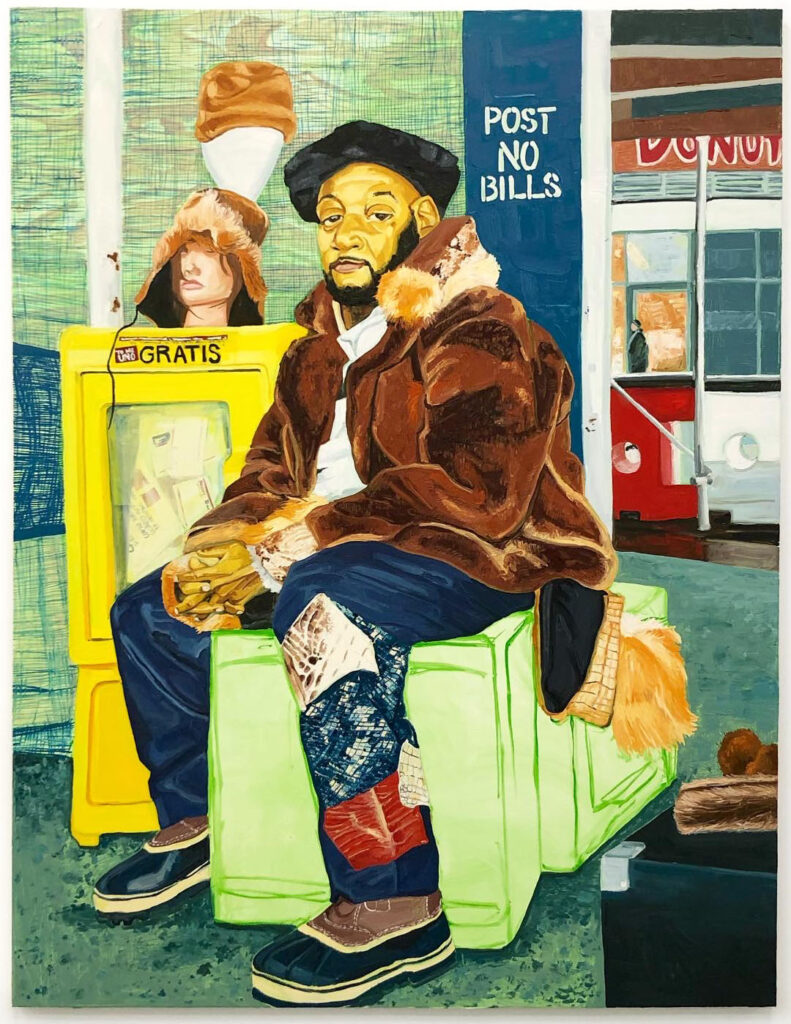
Charles, 2016

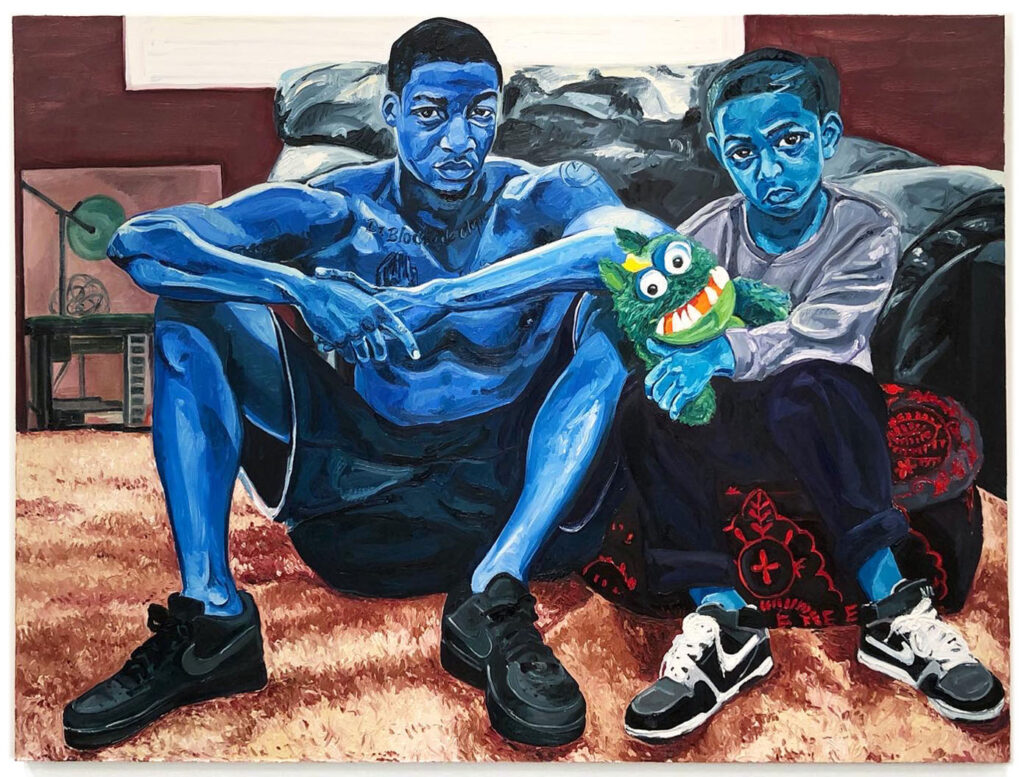
Miles and Jojo, 2015

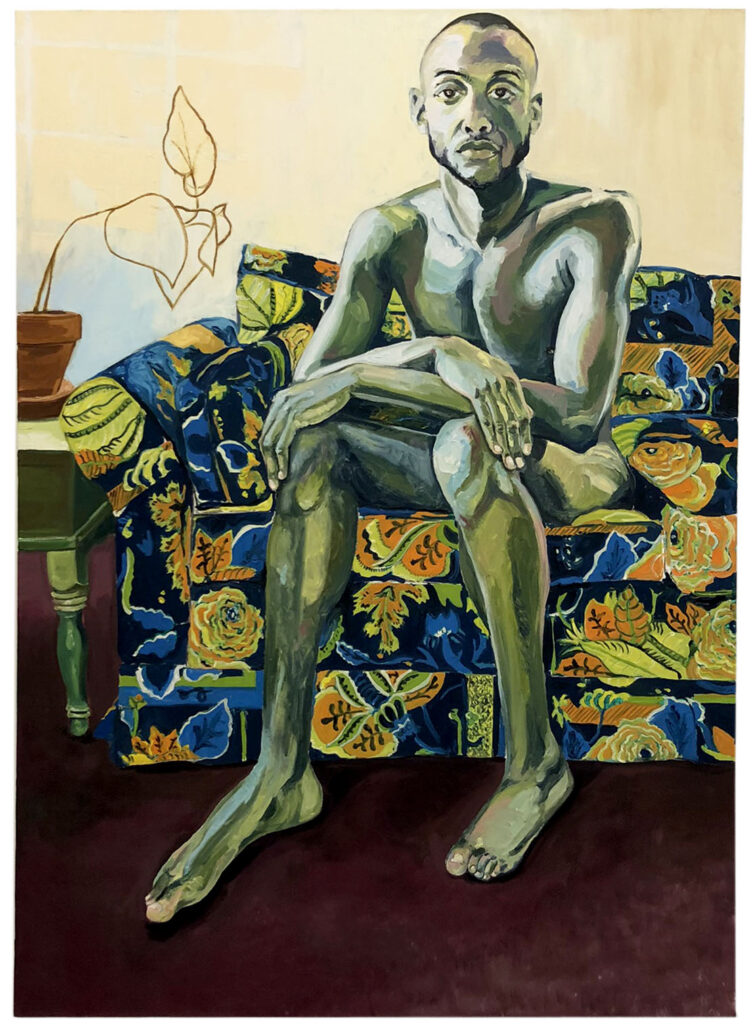
Jireh, 2013

Currently at the New Museum is Jordan Casteel: Within Reach, the artist’s first solo museum exhibition in New York City. It includes paintings from her series Visible Man (2013–14) and Nights in Harlem (2017), and recent portraits of her students at Rutgers University-Newark.

From the museum’s information page-

In her large-scale oil paintings, Casteel has developed a distinctive figurative language permeated by the presence of her subjects, who are typically captured in larger-than-life depictions that teem with domestic details and psychological insights.

Portraying people from communities in which the artist lives and works—including former classmates at Yale, where she earned an MFA; street vendors and neighbors near her home in Harlem; and her own students at Rutgers University-Newark in New Jersey—Casteel insists upon the ordinary, offering scenes with both the informality of a snapshot and the frontality of an official portrait. In these richly colorful works, Casteel draws upon ongoing conversations on portraiture that encompass race, gender, and subjectivity, connecting her practice to the legacy of artists like Alice Neel, Faith Ringgold, and Bob Thompson, among others. Casteel’s studies in anthropology and sociology also inform her works, which can often be read as a reflection on the presentation of the self in everyday life and as an investigation of the relationships that tie together intimacy and distance, familiarity and otherness.

Casteel’s subjects, who are frequently black men looking directly at the viewer, are self-possessed and casually posed, but, as they stare in the distance, they also seem to ponder questions about masculinity and class, belonging and displacement. In the exchange of gazes between the sitters, the artist, and the viewers, her paintings blur impulses and aspirations to compose a nuanced portrait of daily life in the US.

From her earliest series, Visible Man, Casteel has challenged conventional depictions of blackness while simultaneously reconfiguring stereotypes and expectations around femininity and desire. In Jiréh (2013), a student from the Yale School of Drama appears unclothed and in repose at home, gazing tranquilly at the viewer from a patterned couch. More than on any sense of erotic tension, the painting rests on a sense of empathy and quietness. In later works, Casteel’s encounters with her subjects are animated by a different sense of place: in Nights in Harlem, Casteel shifts her attention outside, to men and women who populate the streets of her neighborhood. Posed in their environments, these figures reflect the communal spaces and social relationships they inhabit.

Along with her depictions of life in Harlem, Casteel also explores scenarios in which anonymity and individuality seem to coexist. In her cropped “subway paintings”—one of which lends its title to the exhibition—she zooms in on the everyday gestures she observes on New York City trains. Even against the anonymous weight of strangers clasping cell phones and huddling near doorways, the body still remains legible, its identity concealed but its inner life nevertheless present. In these, as in many of her works, Casteel captures the sensory experience of life in the city, while conjuring the complex emotional landscape of her sitters.

This exhibition closes 1/3/21.