Apr 102024
 

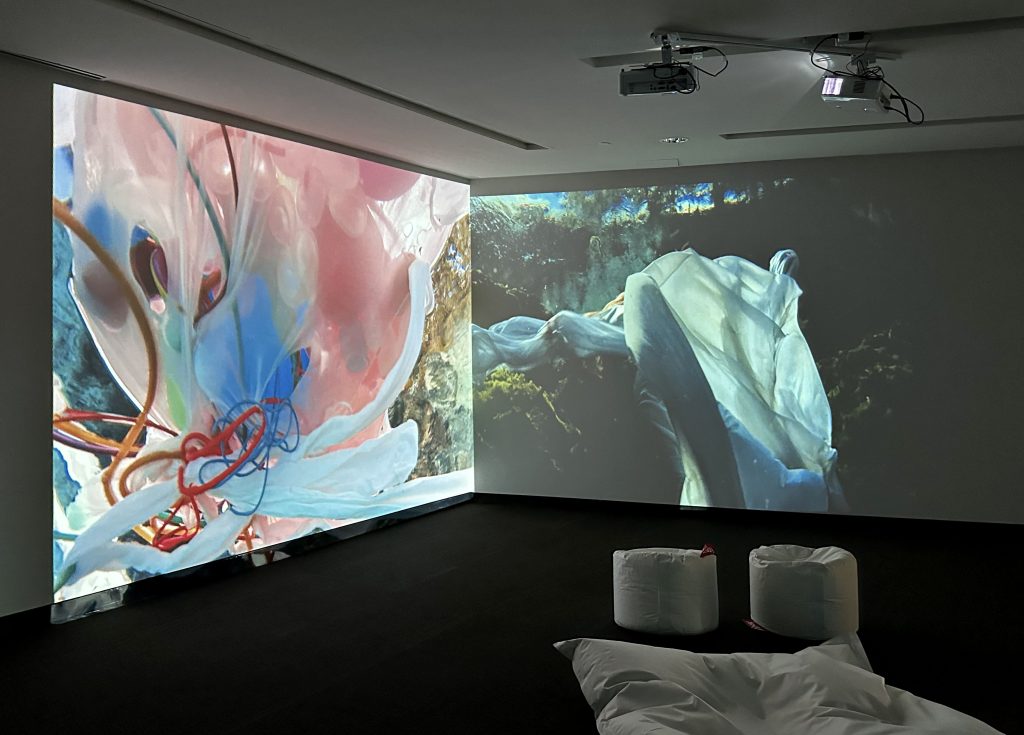
Nalani Stolz “Bread Bodies”, bread, ceramic, muslin

Nalani Stolz, “”like floating in thick waters”, fermented membrane, stainless steel

Nalani Stolz, “a small ocean swallowed” baking soda, ceramic, cheesecloth, vinegar, pump, latex

“a small ocean swallowed”, closer

Nalani Stolz, “a wild wetland in our gut” ceramic, plum vinegar, muslin, stuffing, salt

Nalani Stolz, “a wild wetland in our gut” ceramic, plum vinegar, muslin, stuffing, salt

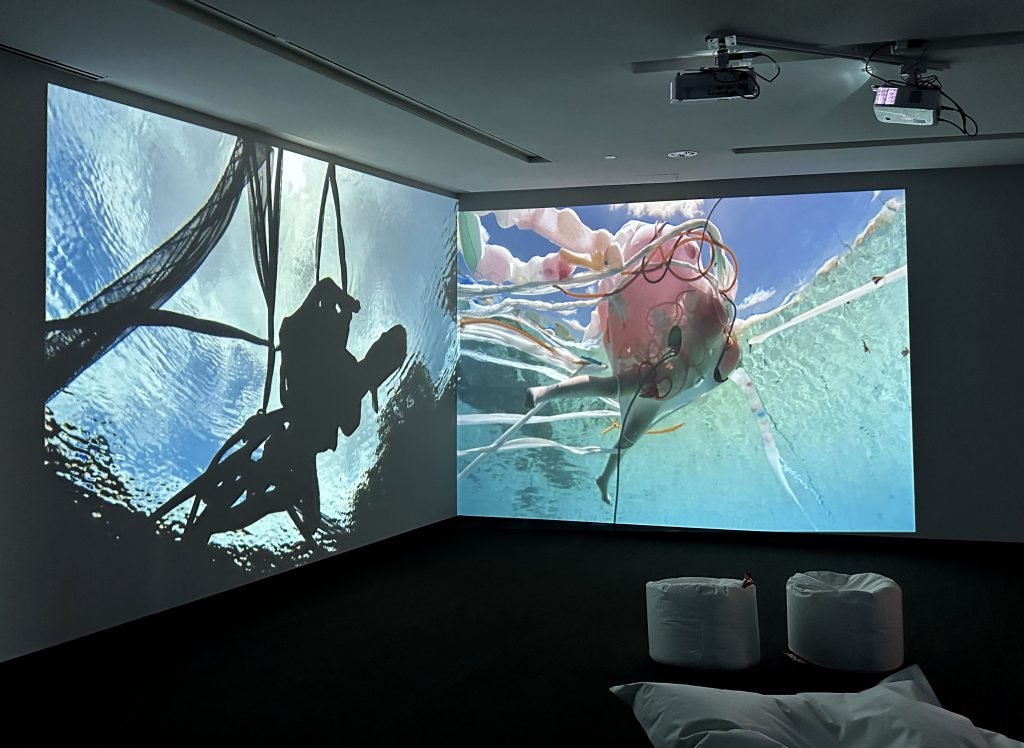
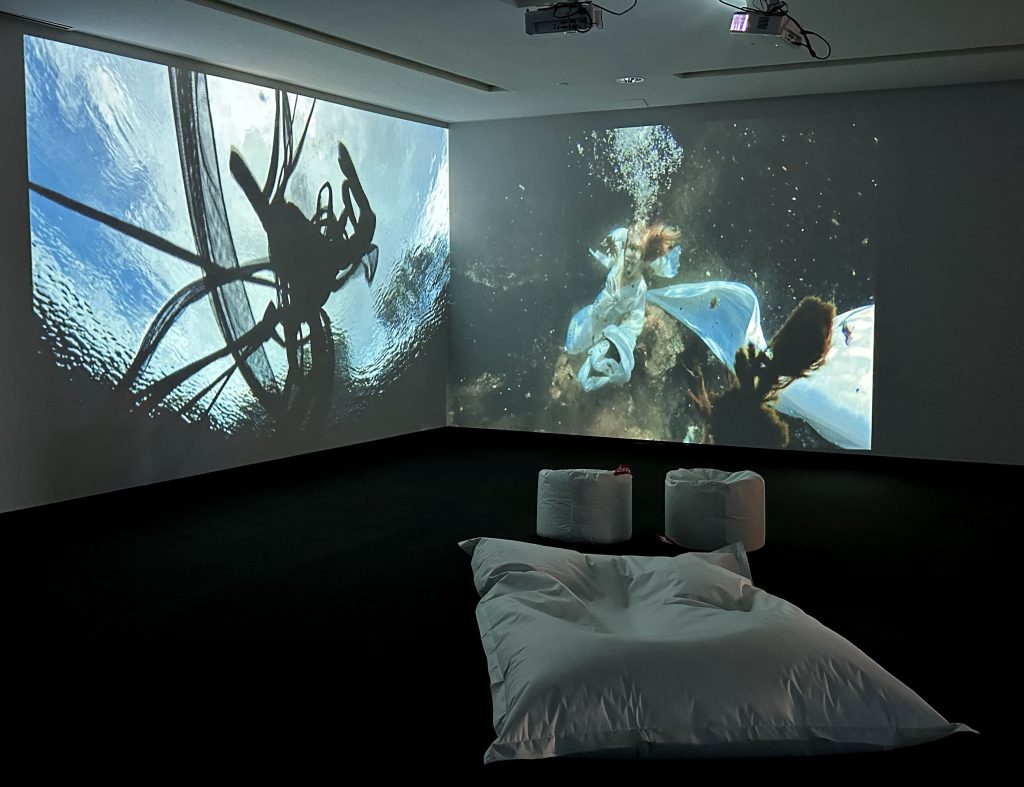
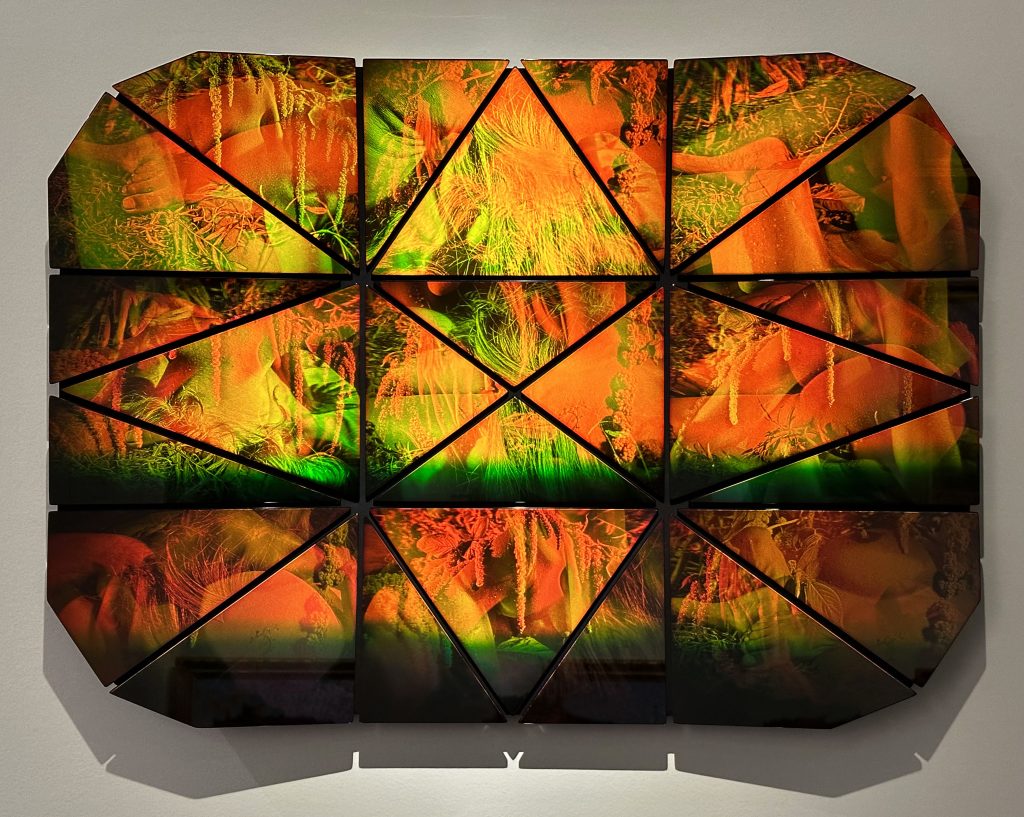
The Sculpture Center in Cleveland is currently showing Nalani Stolz’s Bodies Still Becoming and Zachary Smoker’s Inured.

With the sound of water dripping, the bread stretching fabric, and growth covered vessels leaking into mattresses- Stolz’s sculptures engage the viewers senses, at times viscerally.

She has also included her film Traces in the exhibition. For this work she and her mother slowly sew their hair together through a sheet of gauze.

From the gallery about the exhibition–

The bodies Nalani Stolz crafts bulge, grow, and break down. Materials such as rising dough expand and constrict, cloth sculptures leak and ooze, fermented membranes and porous clay forms seep vinegar, growing warts across their surfaces. These bodily processes draw on the often-gendered experiences of how our physical forms take in and expel matter; the feelings of expansion and fullness and those of emptying out, of breaking down when weeping, menstruating, and experiencing miscarriage, abortion, and pregnancy. These moments shift our seemingly solid edges and reveal our porous boundaries; reminding us that we are dying, changing, decaying vessels, loosely contained by skin, muscle, and bone.

Zachary Smoker’s sculptures for Inured address issues related to U.S. currency, power, capitalism, and material culture. In two of the works, familiar items ask questions about purpose. The whiffle ball bat /police baton combination mixes violence and play. Shopping carts now have associations with living on the street, as well as for buying goods in a store- which one will this be used for when assembled?

Zachary Smoker, “Crony Tikes”, Plastic Whiffle ball bats, pegboard, double hooks, 2024

Zachary Smoker, “Anyone can make Art, not everyone can buy it”, Demonetized U.S. currency, BFK Rives, Elmer’s glue stick, safety wire glass, poplar, enamel paint, paint marker, 2023

Zachary Smoker, “A place for everyone, and everyone in their place”, Steel shopping cart, polyurethane wheels, enamel paint, 2024

Both of these exhibitions close on 4/13/24.

Apr 032024
 

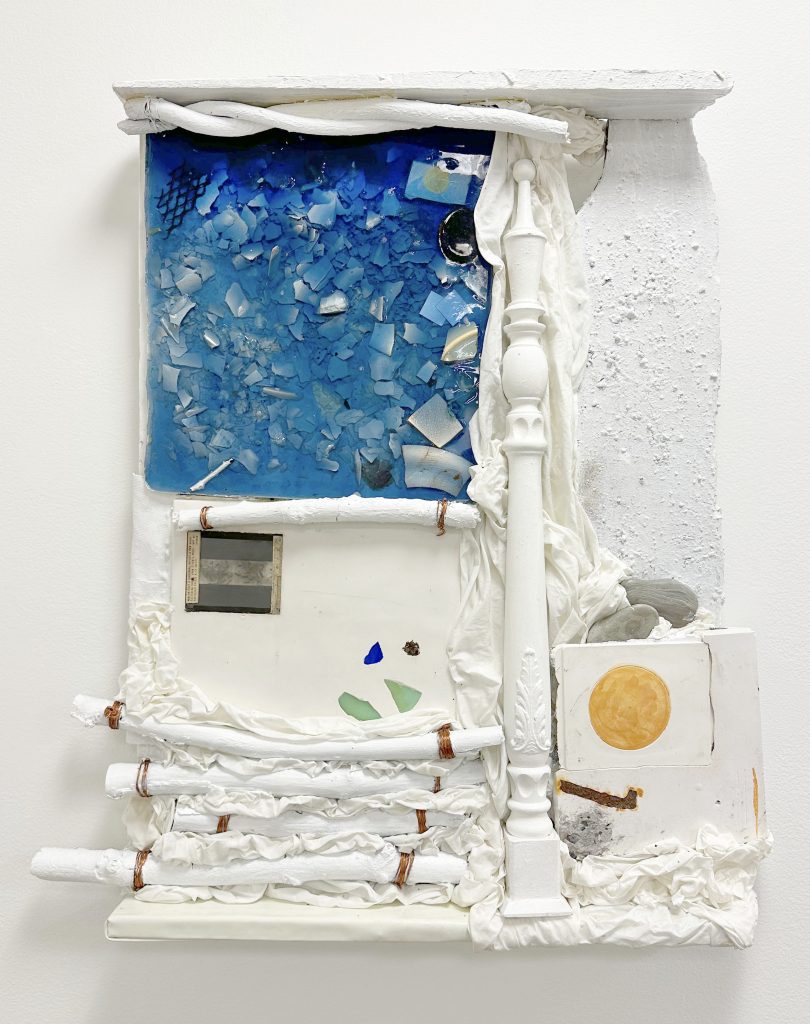
Julia Schenkelberg, “Blue Ocean”, 2020, Blue dye, resin, rusted metal from Detroit factory floors, plaster chips, vintage china, glass from Brooklyn beaches

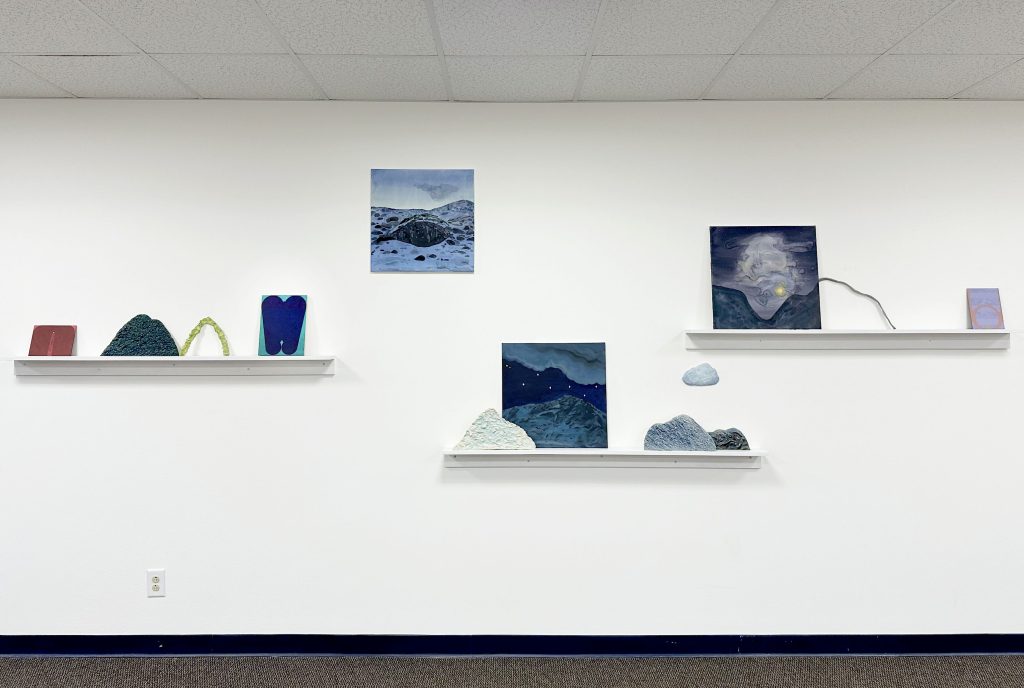
Malone University Art Gallery’s exhibition Healing Spaces features work by Northeastern Ohio artists Julie Schenkelberg, Chen Peng, Yiyun Chen, and Emily Bartolone. Although the mediums differ, the work flows together in the room. Below are some selections and more about each artist from the gallery’s documentation.

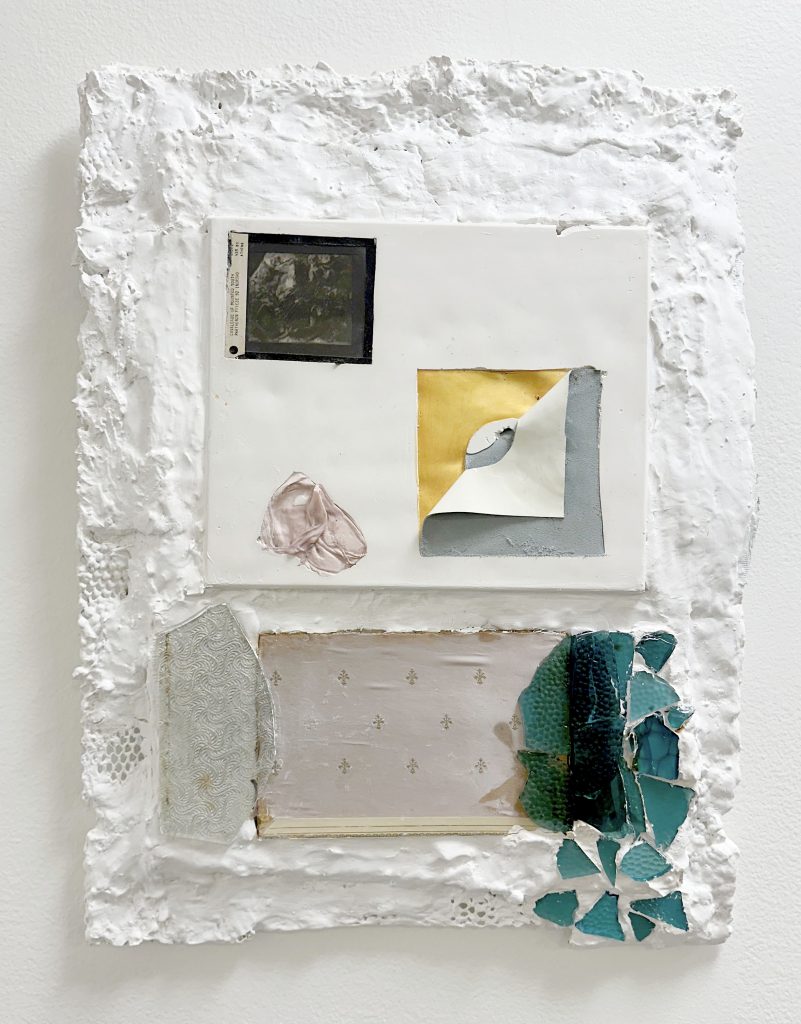
Julie Schenkelberg, “Modern Memorial”, 2020, Found screen, plaster, acrylic paint, vintage leather and fabric, jewelry box interior, glass gathered from Cleveland and Detroit auto and steel factory abandoned floors, vintage glass slide of the Parthenon Frieze

Julie Schenkelberg grew up in the post-industrial landscape of Cleveland, Ohio. Her mixed-media installations start with furniture, dishware, textiles, and marble, combined with concrete, resin, and construction materials, to transform notions of domesticity, and engage with the American Rust Belt’s legacy of abandonment and decay. Using the home as a playground for formal and conceptual subversions, the work aggressively disrupts cohesion within the physical sphere. Familiar furnishings rekindle memories or premonitions of collapse, suggesting both the utter destruction of war, calamities, or urban decay, but also the uncanny juxtapositions of fragile substances such as cloth and china, with industrial materials such as rusty metal, heavy concrete, and tool-made marks such as drilled holes and chain-sawed indentations.

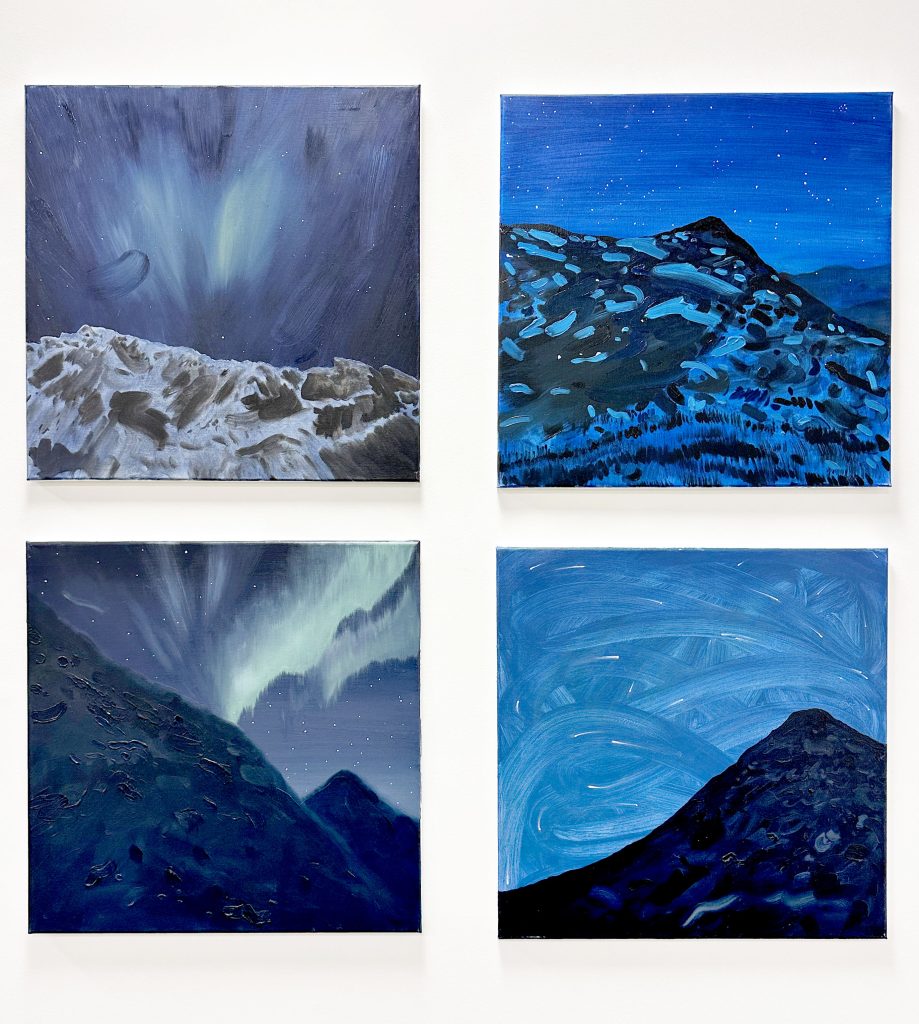
Chen Peng, Paintings from the “Mountains at Night” series, 2023, gouache, acrylic, and oil on canvas

Deriving from a desire to find stillness and grounding as an immigrant, Chen Peng explores the connection between landscape and the complexities of identity and belonging. She creates foreign landscapes from a combination of past experiences, memories, and imagination, delving into the disorienting sense of not knowing where home is. The moon, particularly in its fullness, becomes a symbol encapsulating emotions and metaphors associated with loneliness, reverence, and even terror. Her ceramic pieces extend this exploration of landscapes, featuring textures and marks that convey the essence of mountains, clouds, and the moon.

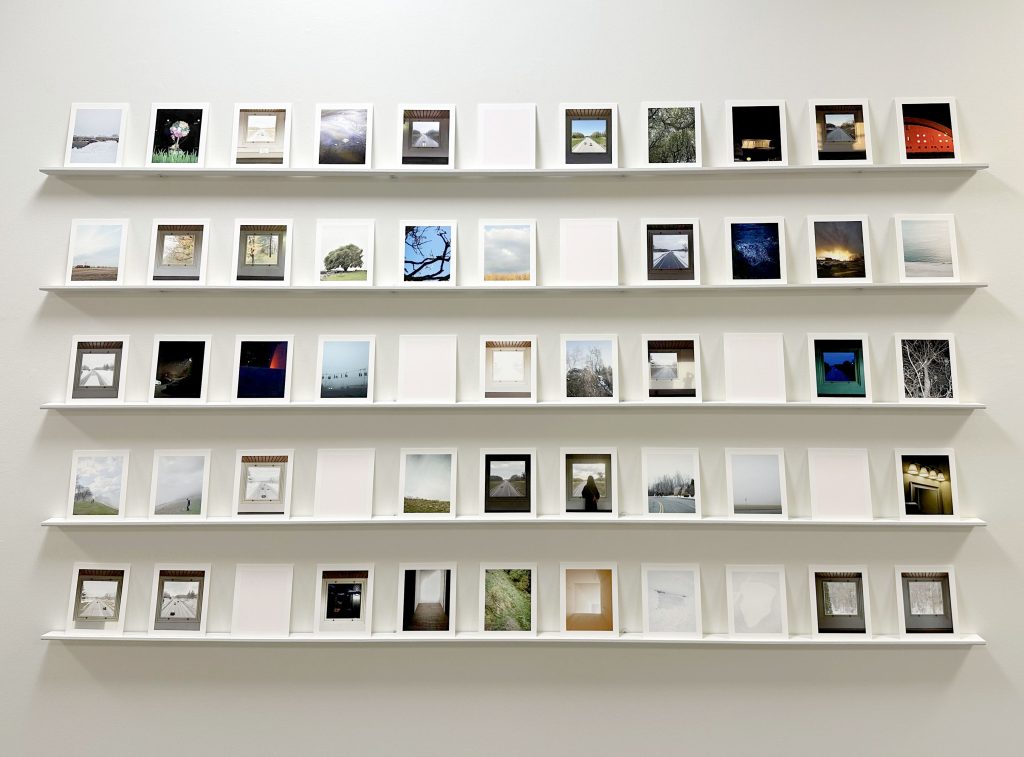
Photographs from from Yiyun Chen’s series “Velleity”, 2016-2018

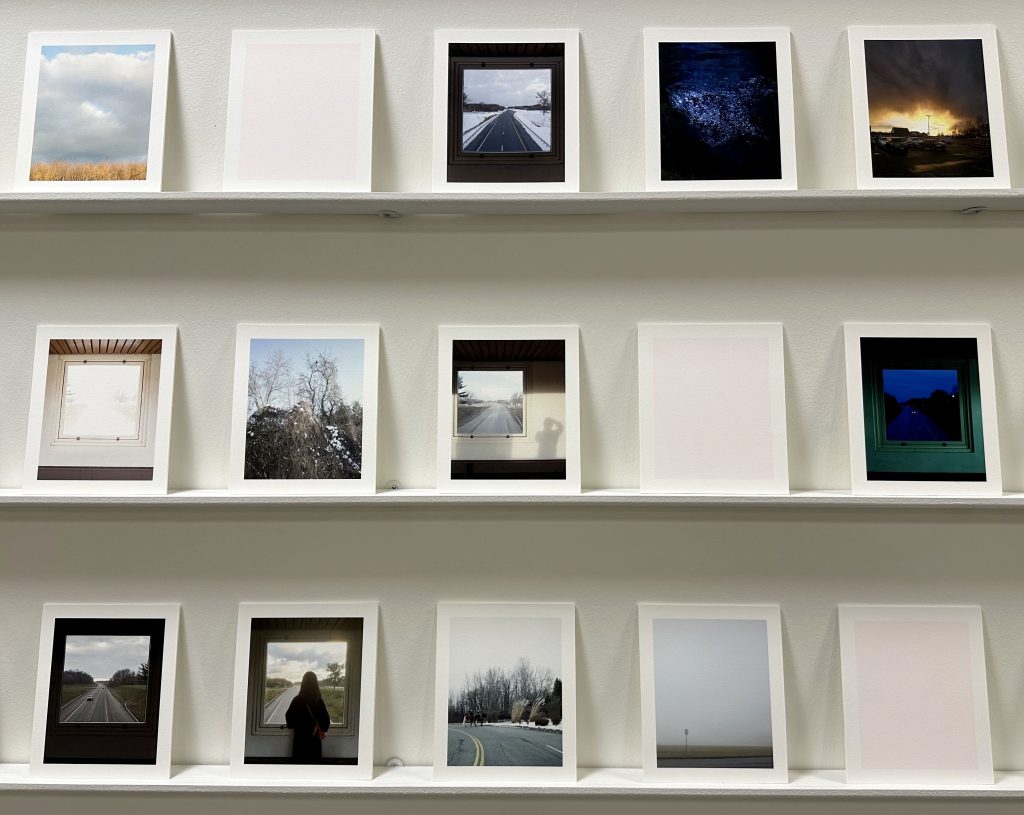
Yiyun Chen, “Velleity”, detail

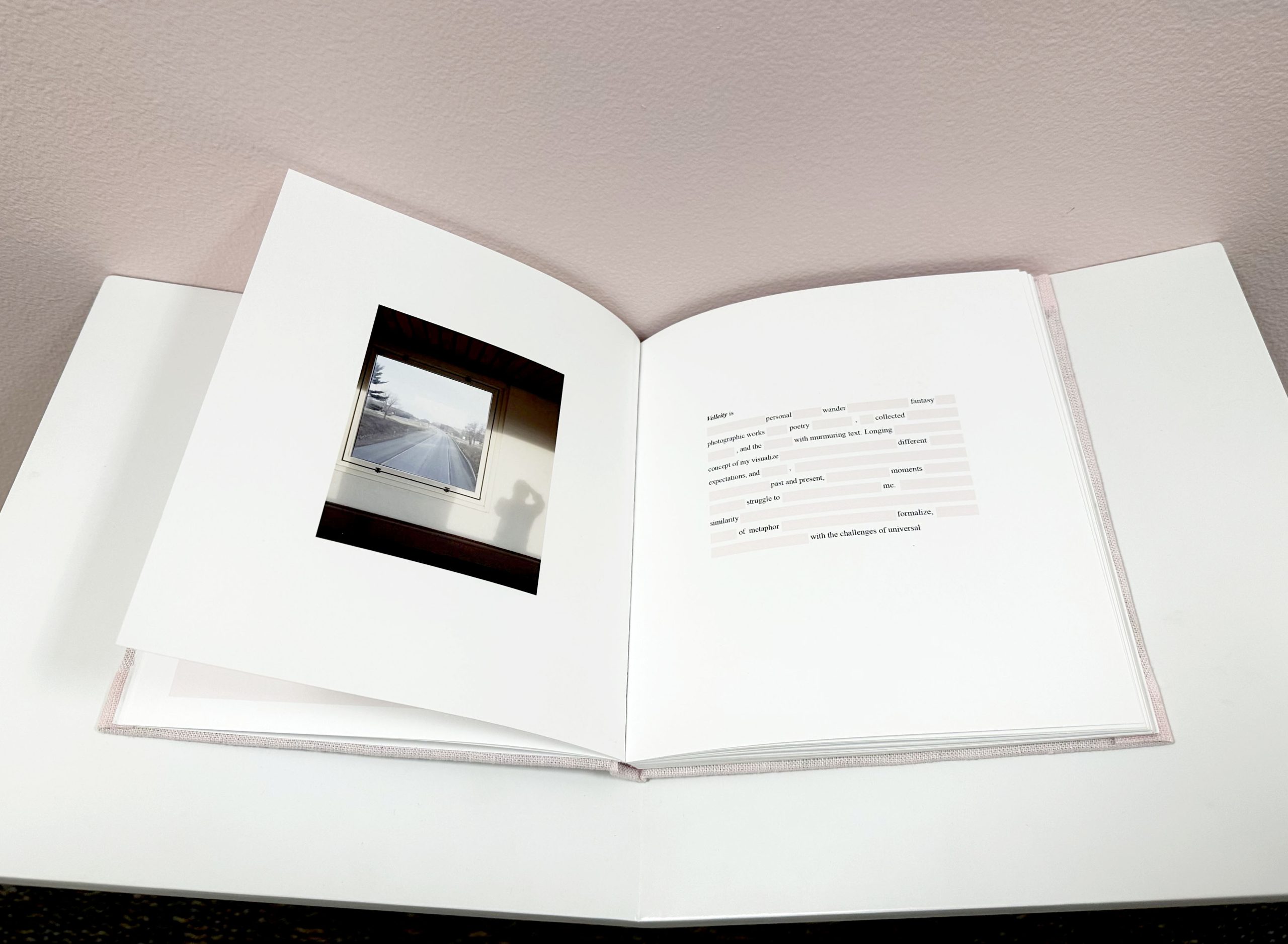
Yiyun Chen, Handmade photobook, 2018

The photography of Yiyun Chen is about the process of self-reflection and self-discovery as an Asian immigrant, exploring the relationship between people, environment and society, turning its personal experience and empathy into gentle conversations between humans and nature, capturing the poetic and distance of the environment around us. Through photography, we can take the essence of life seriously again and treat the people and things around us tenderly. Through his lens, they often have similar structure, people look tiny in nature scenes, creating an intimate visual experience. Most of his photographs are captured outdoors, with soft light and harmonious colors often used.

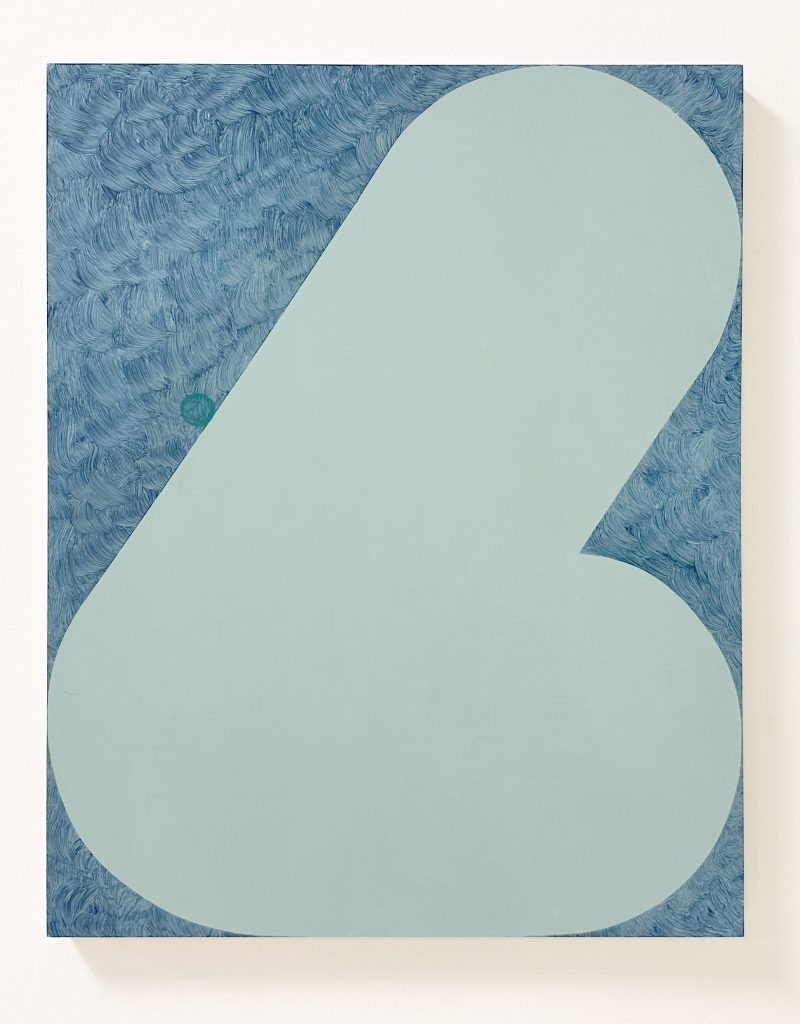
Painting by Emily Bartolone

Painting by Emily Bartolone

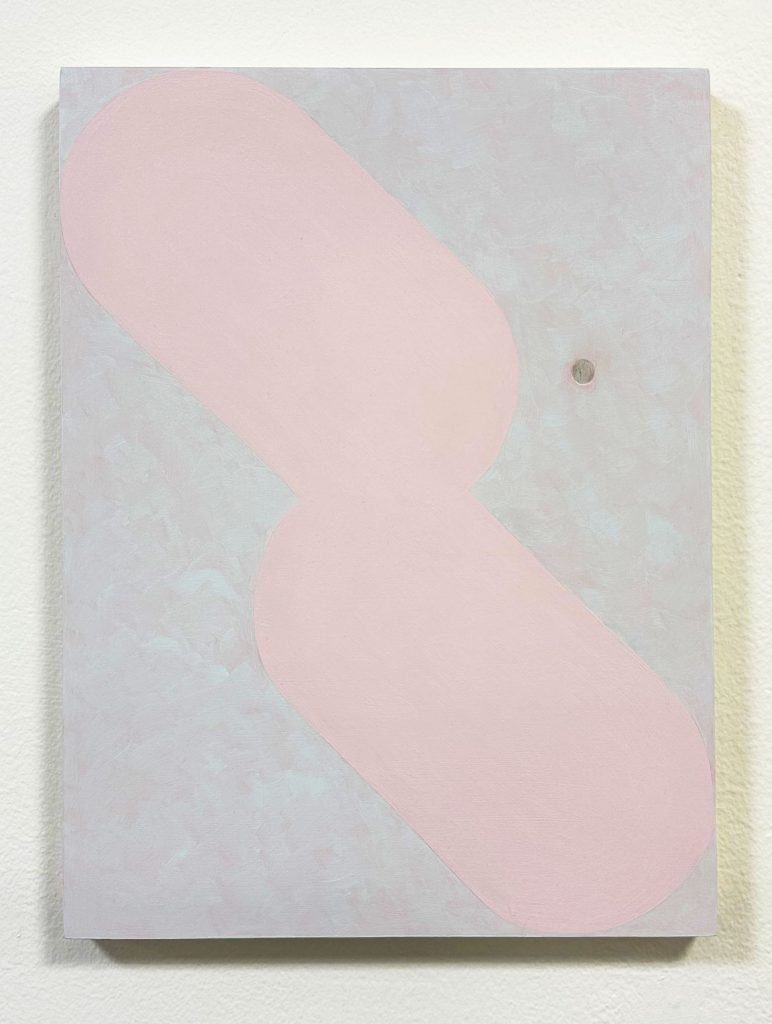
Stemming from her infatuation with the formal elements of painting, the work of Emily Bartolone pairs down simple, anthropomorphized shapes in an effort to explore paint and color theory while simultaneously creating tension and humor through color, edges, and texture. The playful, human qualities of painting are incorporated into the work through the use of amorphous shapes animated within the picture plane. Further informed by ideas of the mundane, the awkward, and the jovial that surround everyday life, the complexity of human relationships are mimicked by the shapes interacting on each painting’s surface. In acknowledging that life is not always cordial, moments of tension are placed within the satisfying surfaces in the form of an abrupt mark, a disparate color, or a shift in scale. These ideas are used to take viewers outside of themselves for a short period of time, hoping to offer a break from the bombardment of distractions, notifications, and news we encounter so often on a daily basis.

This exhibition closes 4/9/24.


Apr 032024
 

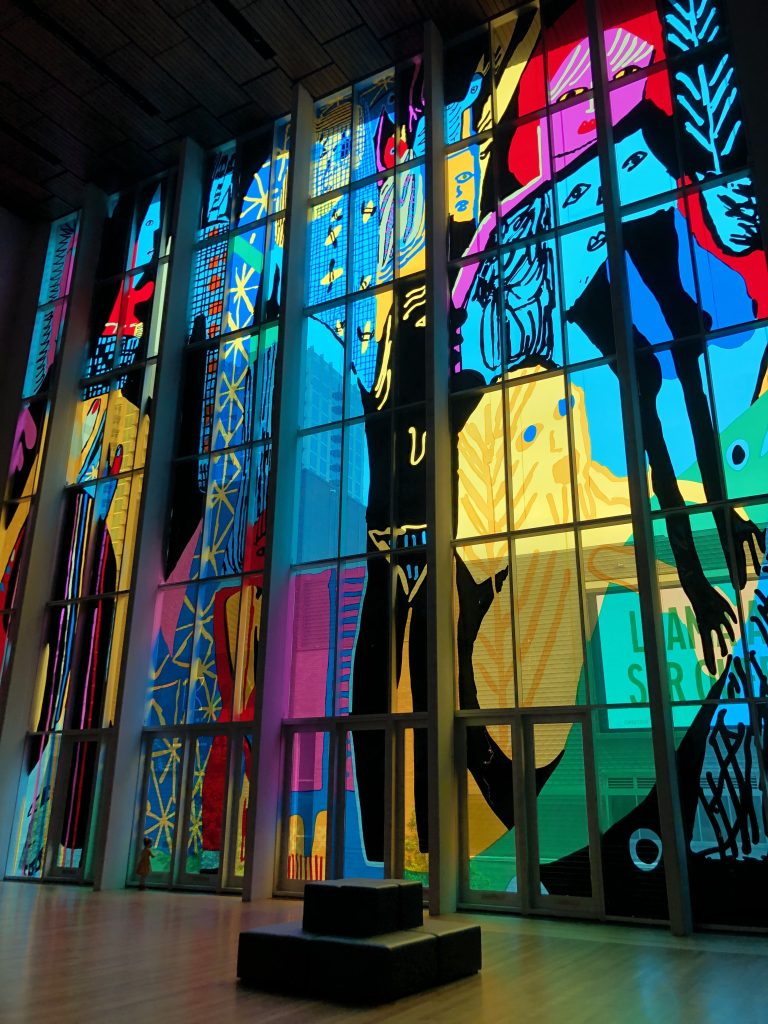
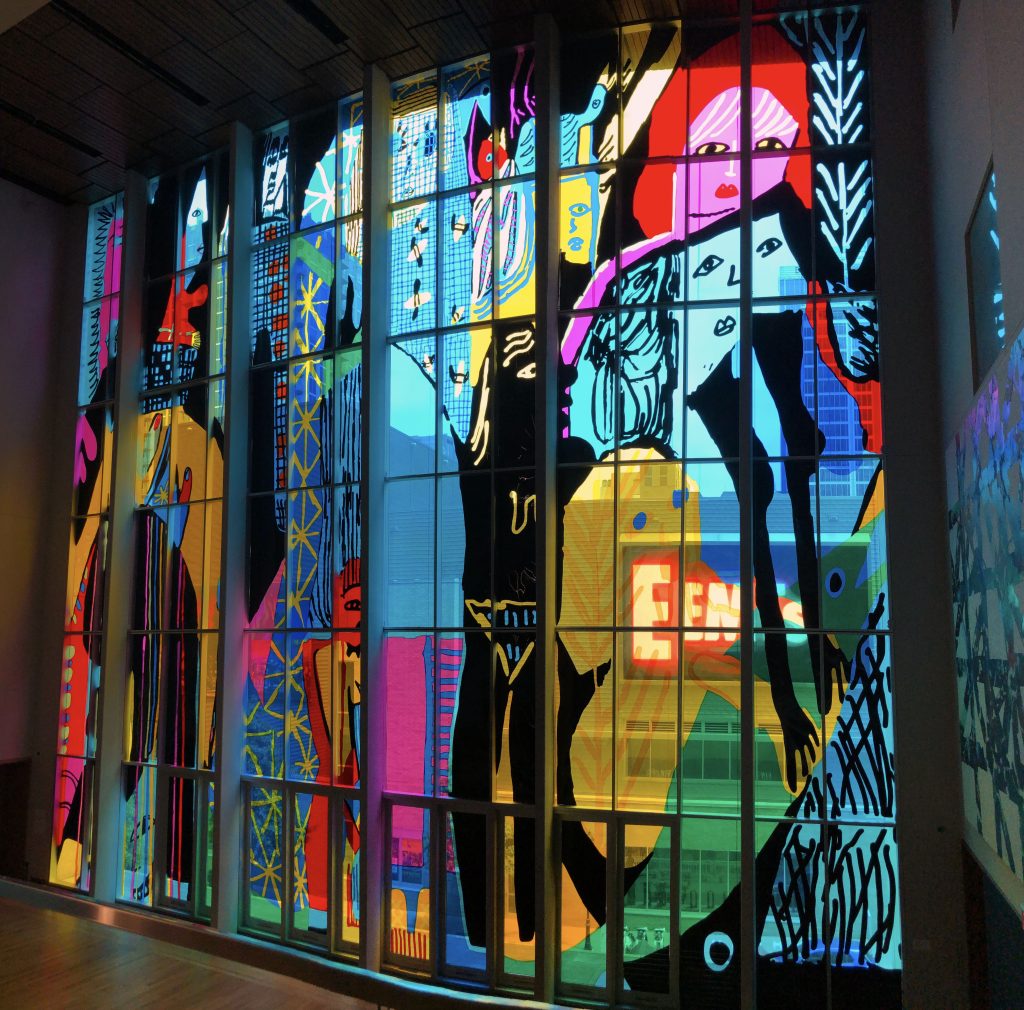
Summer Wheat created this mural, Foragers, in 2020 for the Mint Museum in Charlotte, North Carolina, where it remains on view today.

From the museum about the work-

This monumental “stained glass” installation celebrates the resilience of North Carolina’s community of makers and providers and creates a space where our present-day Charlotte community can gather for contemplation and inspiration. Collaging sheets of colored vinyl, Wheat has created a towering, prismatic composition that fills all 96 windows of the Mint atrium with female figures of varied sizes, ages, shapes, and races performing acts of labor: fisherwomen, beekeepers, hunters, mothers, caretakers, farmers, bankers.

Following the tradition of stained-glass windows found in places of worship, Wheat offers a narrative of hope and resilience that can be enjoyed in a few minutes or studied over hours. Wheat says that “Foragers presents a tradition in which women were the original hunters, technologists, and artists. This array of women connected by geometric patterns echoes the psychological space of women supporting each other. They are marching together, connecting to creatures from land and water, demonstrating their inherent link to natural elements and to the intricate depths of the unconscious.”

The women in Foragers also call attention to the underrecognized populations who have cultivated the land that we now call North Carolina, from the indigenous tribes to the colonial settlers to the enslaved Africans and all those who have followed. The region is home to myriad traditions-ceramics, basket weaving, quilting, furniture construction, textile production-and The Mint Museum specifically celebrates that legacy through its collection and exhibitions. Foragers salutes North Carolina’s history of creativity and industry, both by those whose names we know and those who remain anonymous.

Her latest exhibition, Fertile Ground, is currently on view at Nazarian/Curcio in Los Angeles, closing on 4/6/24. It includes new paintings and three stone mosaic sculptures.

Mar 292024
 

Richard Serra passed away on Tuesday, 3/26/24. In the video above, as part of PBS News Hour, Serra takes an interviewer on a tour of his 2007 MoMA exhibition, Richard Serra: 40 Years.

The program also provides some background on his history and discusses a bit of his creative process. One technique was to use a list of verb actions. He would choose one from the list and apply that to different materials. He explains in the video how he used “to lift” for a rubber sculpture in the exhibition.

Richard Serra, “Verb List”, 1967 (image via MoMA)

If you are in Los Angeles, one of his most famous sculptures, Band (2006), is currently on view at LACMA. In NYC you can see Equal (2015), which consists of eight forged steel boxes stacked in pairs, at the Museum of Modern Art.

Mar 292024
 

“The Last Supper”, 1986, Acrylic and silkscreen ink on linen

In the 1980s Andy Warhol created a series of paintings based around Leonardo da Vinci’s The Last Supper. The one above is currently on view at The Warhol Museum in Pittsburgh, Pennsylvania.

In 2010 it was on view as part of the Brooklyn Museum’s exhibition Andy Warhol: The Last Decade.

From their website about the work-

The Last Supper series was commissioned to inaugurate a new gallery in Milan, Italy, located across the street from the site of the Italian Renaissance artist Leonardo da Vinci’s iconic fresco (circa 1495–98) depicting Jesus’s last meal with his followers. Warhol worked obsessively for more than a year on this series, producing more than a hundred Last Supper paintings, both silkscreened and hand-painted, that were some of the largest paintings of his career.

Despite his public proclamations to the contrary, Warhol was profoundly moved by the series. Of these works, he remarked, “I painted them all by hand—I myself; so now I’ve become a Sunday painter. . . . That’s why the project took so long. But I worked with a passion.” These paintings manifest both his religious beliefs—his practice of Catholicism remained private until it was revealed at his funeral—and an irreverence toward the subject, expressed through ironic commercial logos and transgressive repetitions of Christ’s image.

Warhol created many variations using versions and pieces of da Vinci’s fresco and there is some debate as to the meanings behind them. In 2018, curator Jessica Beck wrote Warhol’s Confession: Love, Faith, and AIDs, an in-depth essay exploring possible meanings behind the work. She suggests Warhol was referencing AIDS, suffering, health, and mortality, along with his relationship to Christianity.

In this section of the essay she discusses the imagery from the painting-

The tension between Warhol’s sexuality and his religious life has its fullest expression in paintings such as The Last Supper (The Big C), in which signs and symbols create a private reference to AIDS. Hand-painted via a projection process, like paintings of 1961–62 such as Before and After, Wigs, and Dr. Scholl’s Corns, the canvas is left partly unfinished, and Warhol employs a light touch with an abstract brushstroke. On this canvas the figure of Christ recurs four times, while hands appear repeatedly. Thomas’s finger pointing to the sky, intimating that heaven knows he is free of guilt, appears prominently next to the “eye” in the Wise potato-chip logo.

…The source material for the painting, in the archives of The Andy Warhol Museum, Pittsburgh, is a collage made up of headlines from the New York Post, motorcycle ads, and clippings reading “the Big C” and “AIDS” cut from a front-page article in the Post. Warhol ultimately left out the AIDS headline while keeping the more covert “The Big C,” but given the direct references to “gay cancer” in his diaries, it becomes clear that this image of Christ was connected for him to the rapid rate at which people were dying around him. “The Big C” was synonymous with AIDS. The Last Supper (The Big C) reflects on sex and shame through appropriated images of Christ’s betrayal, the piercing owl’s eye (the Wise logo), and the numbers 699, appropriated from a price tag—$6.99—but indexing both the sexual position “69” and the “mark of the beast,” 666, in the Book of Revelations. Even the details of Christ’s feet at the far right of the canvas seem to point to the notion of punishment: for Steinberg, writing on Leonardo’s Last Supper, “as [Christ’s feet] rejoin the rest of the body, they foreshadow it glorified; and they foreshadow it crucified.”34  The image of Christ offering his flesh in the Eucharist was a symbol of salvation during a time of suffering, an unusually personal and emotional image for Warhol. In keeping with the complexities of his construction of death in the Death and Disasters, and with its repression in the diaries, the painting speaks of sex and of judgment. It is an allegorical triangulation of mourning, punishment, and fear.

For more on Warhol an his diaries, the Netflix documentary is really informative as well as entertaining. It’s a moving portrait that goes beyond what most people know about Warhol, both as an artist and as a person.

Mar 282024
 

Jazzalyn Palma, “21st st”, Oil on canvas, 2023

Rachel Augustson, “Gaze”, Ink on Paper, 2023

Ashton Burton, “…”, Oil on canvas, 2023

Cleveland Institute of Art’s 78th Student Independent Exhibition is currently on view in their Reinberger Gallery. The juried show is organized by the students and includes work from all mediums.

There are so many great pieces in this show, above and below are just a few selections.

This exhibition closes 4/7/24.

James Schaffer, “Bound”, Oil on canvas, 2023

James Schaffer, “Bound”, Oil on canvas, 2023 (detail)

Gwen Putz, “Viv!”, Monoprint, 2023

Tristen Kovacs, “897”, Spray paint and acrylic on canvas, 2023

Emily Fontana, “Untitled”, Acrylic and spackle on fabric, 2024

Emily Fontana, “Untitled”, Acrylic and spackle on fabric, 2024 (detail)

Mar 262024
 

The mural above was created by artist Lauren Pearce and is located in Cleveland, Ohio. You can also find her work on Instagram.

She will also be part of the upcoming group exhibition How Do You Want to See Yourself, curated by Larry Ossei Mensah, at Galleria Anna Marra in Rome, Italy. That show will open on 4/10/24.

Mar 222024
 

Pictured is Jacob Hashimoto’s This Particle of Dust, on view at Tampa Museum of Art through 2025.  At first glance, it may seem monochromatic, but on closer inspection the blue color and star patterns begin to emerge on the darker pieces. It also changes depending on the viewer’s vantage point and the changing natural light.

From the museum about the work-

The artist takes inspiration from cloud formations and the cosmos, with each navy blue kite featuring star-like markings. Depending on the time of day and the natural light filtering through the atrium skylights, the kites will shift in color intensity. This Particle of Dust explores the visual poetics of light and dark, color and form, as well as space and architecture.

Created from over 2,500 handmade kites, This Particle of Dust is a site-specific installation and unique to the Tampa Museum of Art’s architecture. The installation represents Jacob Hashimoto’s exploration of abstract landscape and his interest in blurring the boundaries between painting and sculpture. This Particle of Dust evokes the experience of observing the night sky through various cloud clusters. Thousands of transparent and opaque white discs hang suspended from a bespoke armature. Navy blue kites, imprinted with white and cerulean blue star patterns, hang amidst the cloud shapes and catch the light as the sun rises over the Museum and dips into the horizon over the Hillsborough River. Depending on one’s vantage point, either from the lobby, stairwell, or galleries, the experience of This Particle of Dust shifts—from below the cloudscape appears to drift into the sky while at eye-level the viewer looks directly into the stars.

Hashimoto began making kite sculptures twenty-years ago while an art student in Chicago. Inspired by traditional Chinese kite making in the city of Weifang, where the artform of sculptural dragon kites originated, Hashimoto has made hundreds of thousands of kites from Japanese paper and resin. He appreciates kites as a universal object of joy that is recognized across the globe. Transformed into monumental artworks, Hashimoto’s kites convey happiness, wonder, and serenity.

Below is Tampa Museum of Art’s video of the artist discussing this installation.

Hashimoto is also showing several wall-mounted sculptural works for his solo exhibition, Fables, at Rhona Hoffman Gallery in Chicago. It will be on view until 4/20/24.

Mar 212024
 

Niki Zarrabi created this mural in 2019 for the Ladies Who Paint event in San Diego.

She is currently showing work at ABV Gallery in Atlanta for their Spring Group Exhibition, REFRESH, on view until 3/23/24.

Mar 202024
 

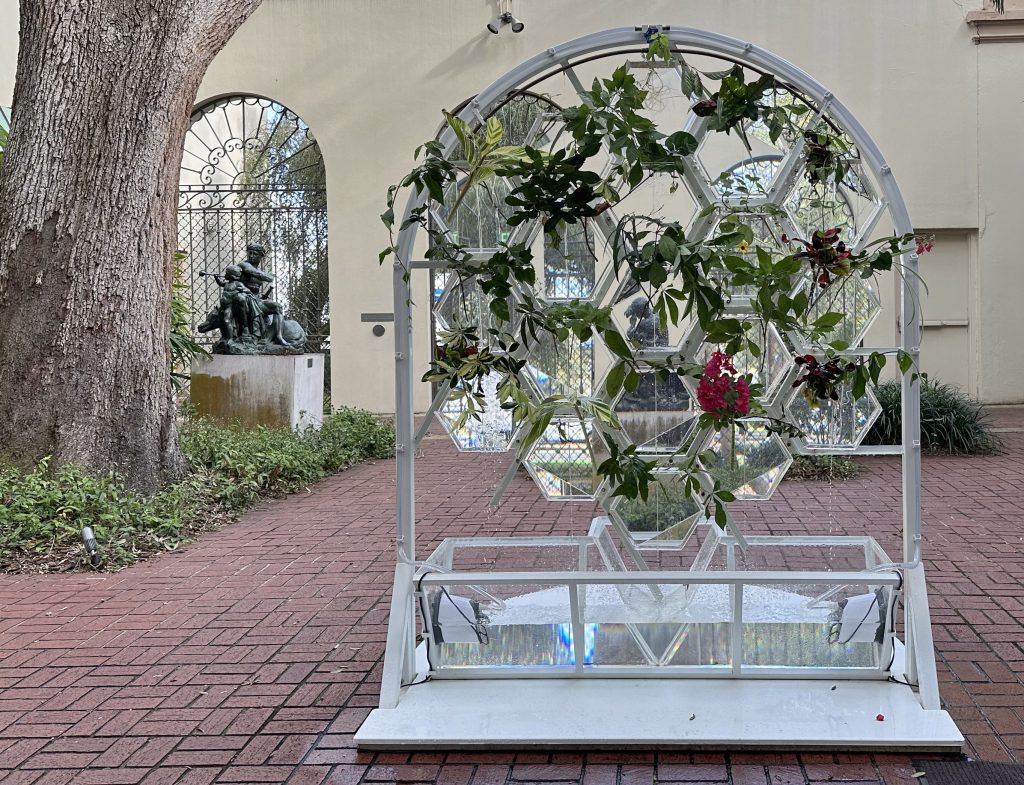
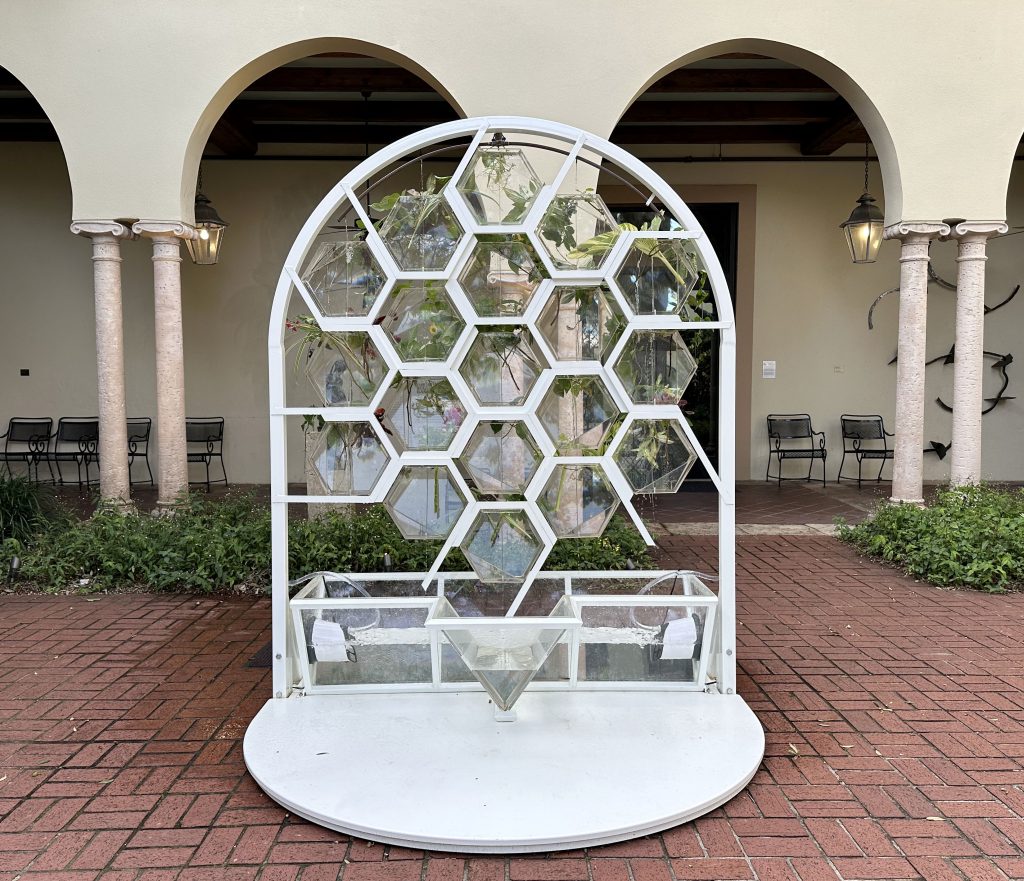
Akron Soul Train supports local artists through a residency program, exhibitions, and a shop in the front of the gallery which sells their work. Currently the gallery is showing work by Matthew Kurtz (work seen above) and Thomas Smith (work pictured below). Both artists are approaching the environment in different and interesting ways. Several of Kurz’s video pieces are focused on his upcoming performance for the solar eclipse. His photographs, for which he’s created additions to scenes he finds, are charming- as is his sculpture- a piano that moves his natural additions when played.

From the gallery-

Performance artist Matthew B. Kurtz presents Drumroll for a Total Eclipse: A Preliminary Exhibition, a prelude to his upcoming live performance with this year’s solar eclipse. Kurtz’s work fuses place, nature, sound, rhythm, and movement to question the mystery of existence. With humor, curiosity, and in tandem with his surroundings, Drumroll explores the process of trying to understand wonder.

For his upcoming performance on April 8, 2024, Kurtz will invite an audience to celebrate the total eclipse. Collaborating with the cosmos, he will perform a drumroll before “totality” passes over Northeast Ohio and creates the natural phenomenon known as “the blackout.”

“When I engage with a site for an art piece, I consider its history, recontextualize its objects, and insert my identity through intuitive gestures. I was raised to believe that humans are supposed to connect the lines between their innate feelings and the unknown. Making art is [my] attempt to reclaim this existential directive. These experiences are documented so outside viewers can participate in my examination of ambiguities, systems, and the sublime.” — Matthew B. Kurtz

Kurtz is also a musician. Check out his Instagram and Bandcamp to listen to his 2021 album 107.

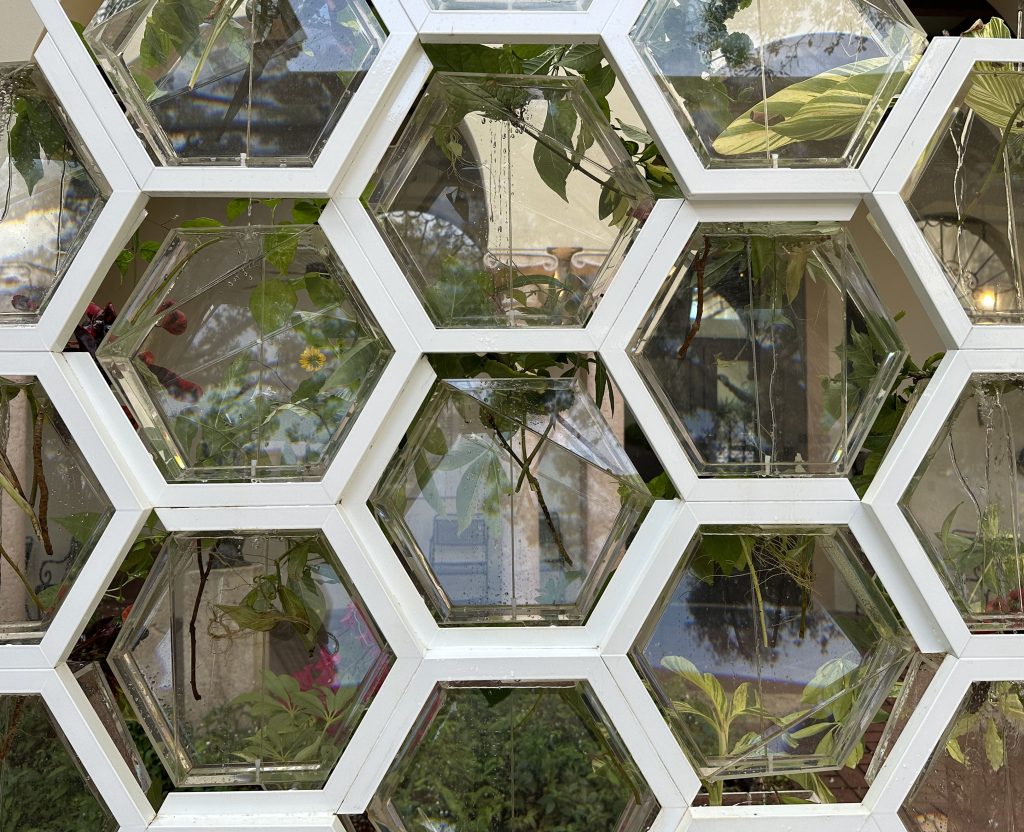
For Thomas Smith’s sculptures he creates natural environments within man-made structures and uses the results as a commentary on the growth and sustainability of suburban development.

From the gallery-

In SUBARIUM II reprise, Thomas Smith combines materials from big box stores with contained terrariums to generate a sense of security and quality. However, upon second look, the viewer may see past the façade of what may look safe to what is substandard. Perhaps it is even denying growth and positive change. Smith’s sculptures dare to ask questions about survival, public image, and the landscape of today.

“Akin to an ecosystem enclosed in a terrarium, my sculptures depict a vibrant but, ultimately, unsustainable artificial environment. As plants within the terrarium grow, competition for space intensifies, turning the once-comfortable space into a struggle for survival. The metaphor extends to suburban America, where curated living conditions prioritize aesthetics over functionality, reflecting an impermanent American Dream.”

— Thomas Smith


Both of these exhibitions close 3/23/24.​