Feb 242023
 

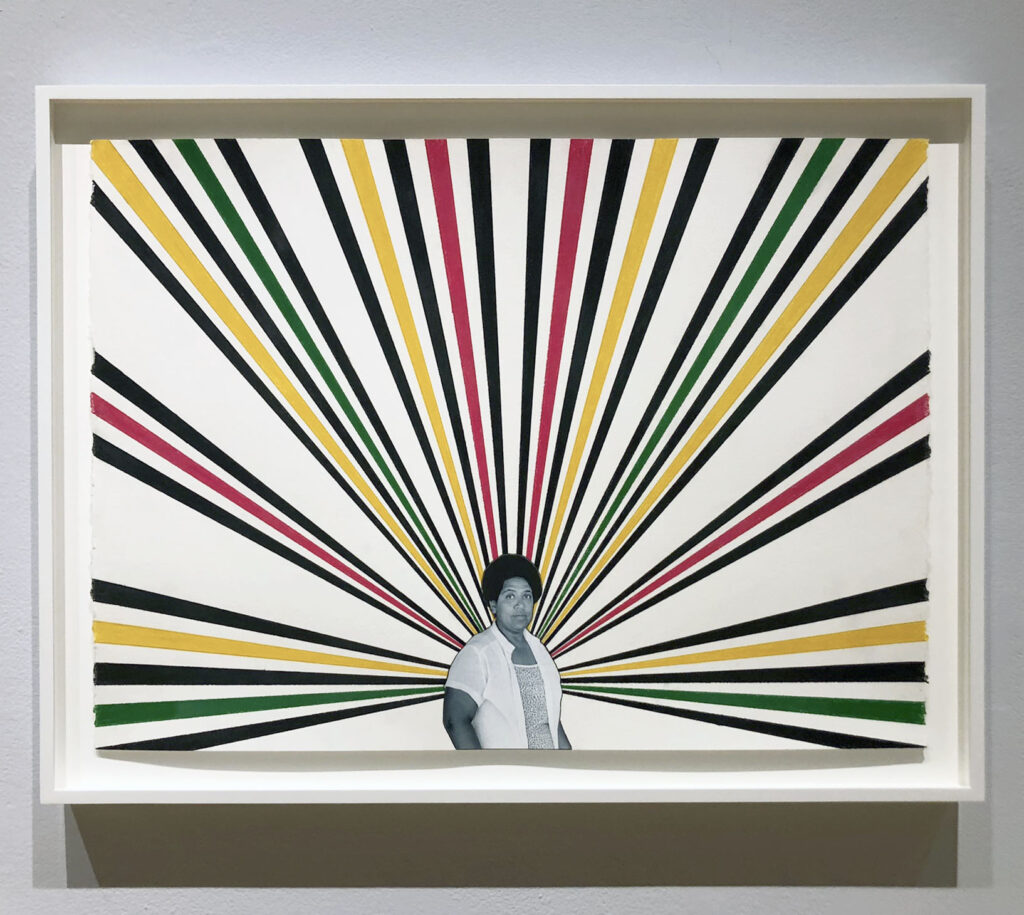
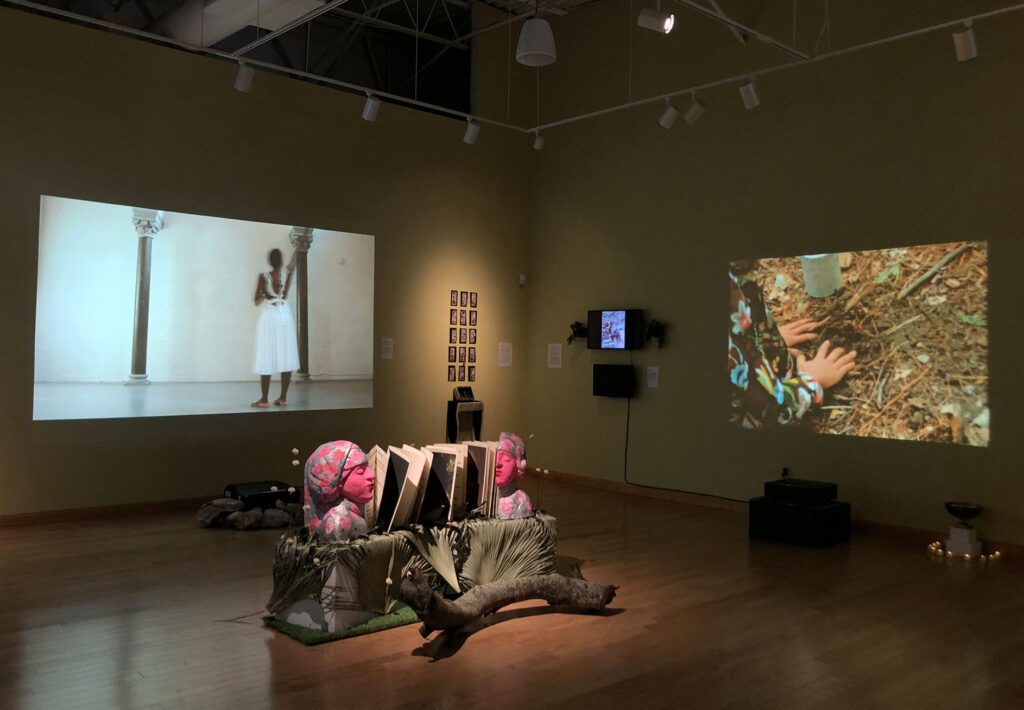
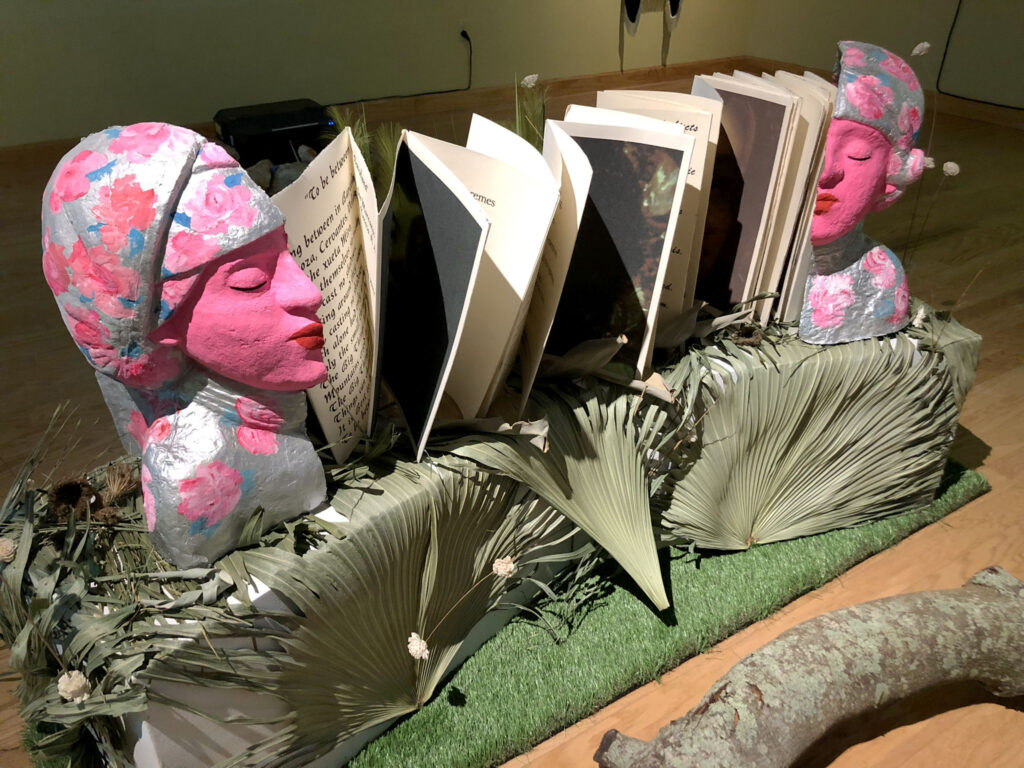
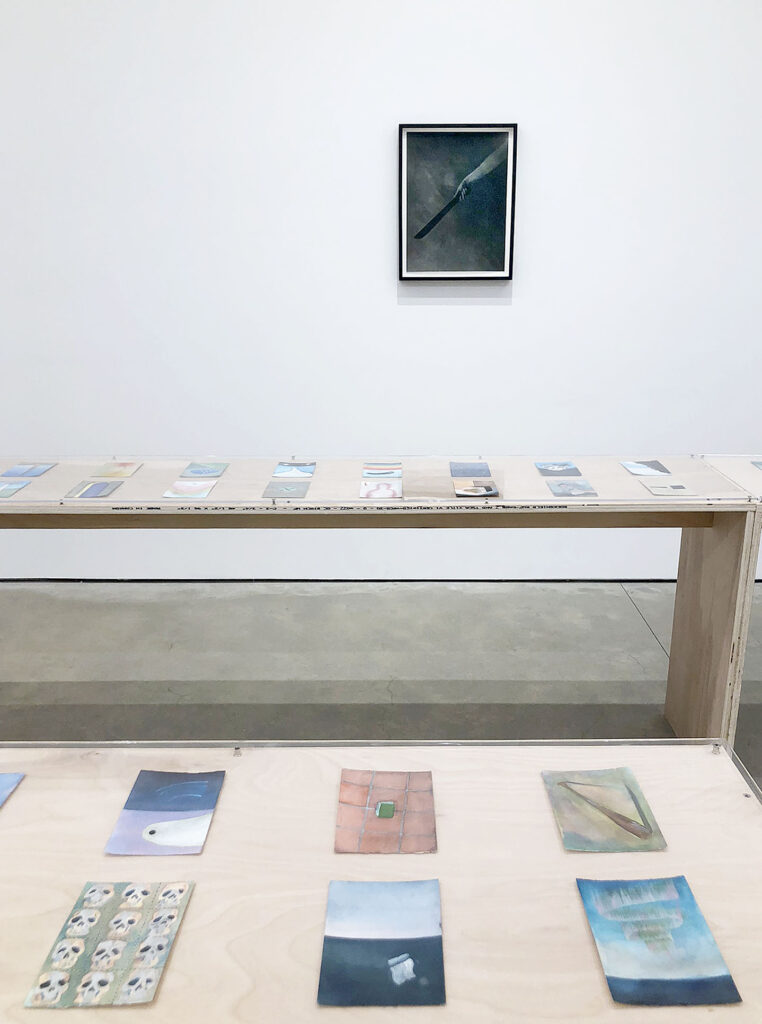
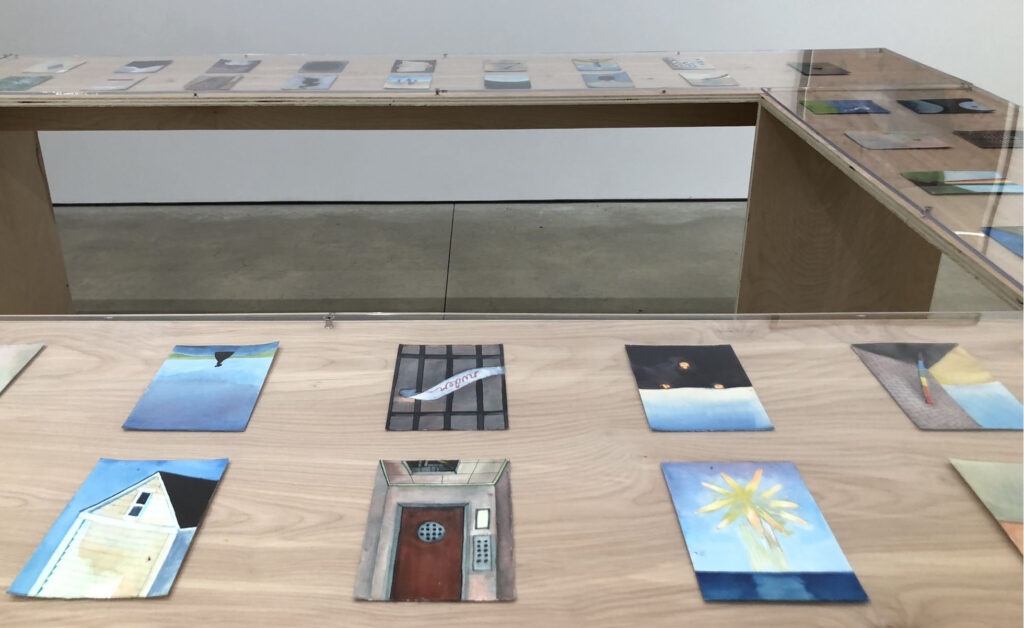
Micaela Amateau Amato, “Yoran Por Aire (contes brevas)”

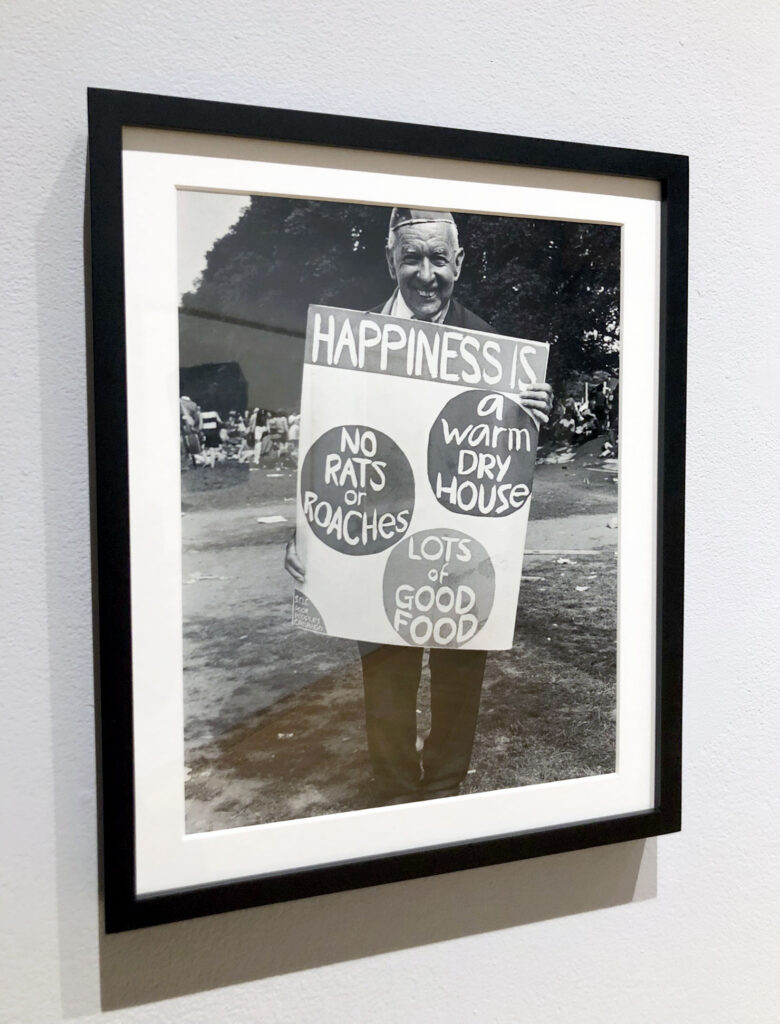
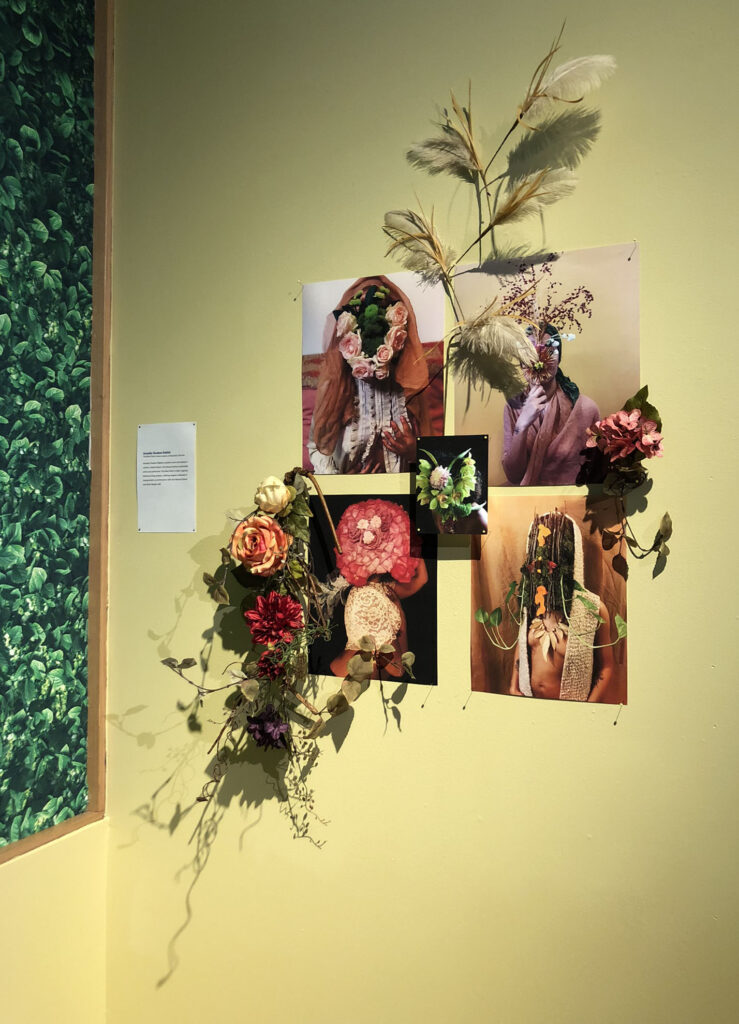
Photographs by Amadia Shadow Rabbit

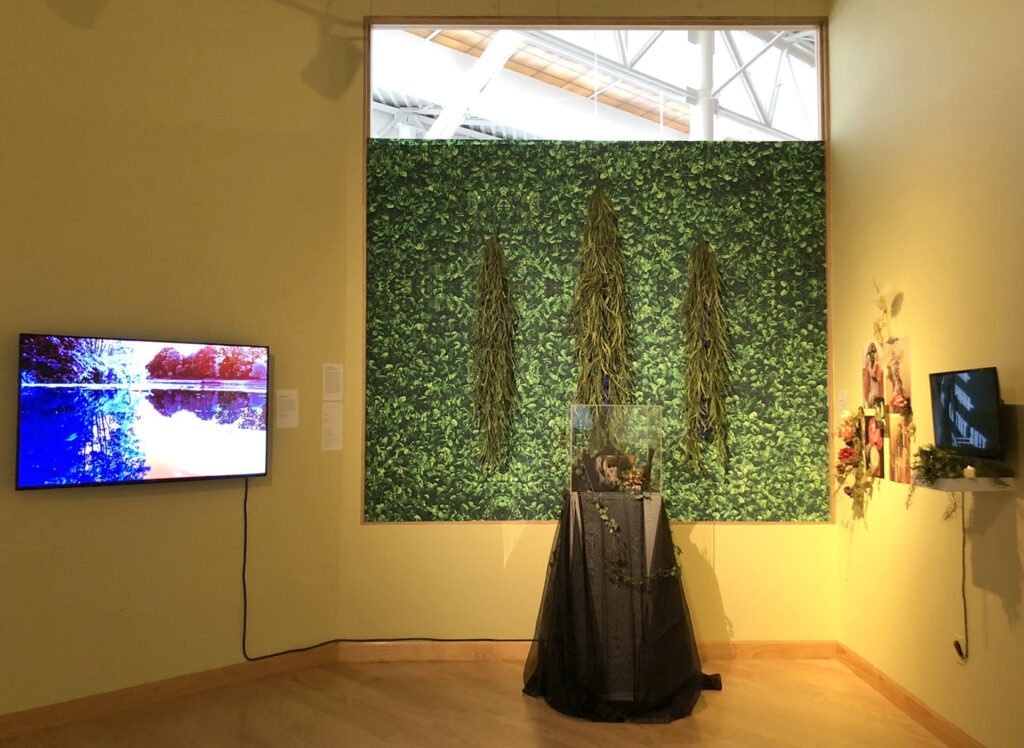
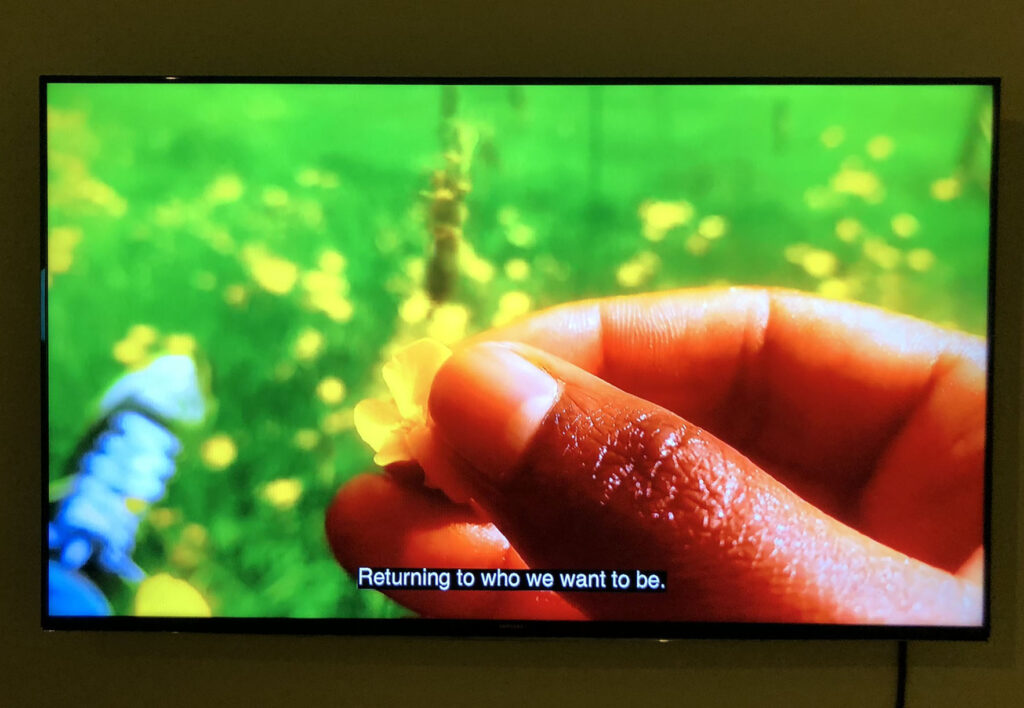
Film still from Kiara Mohammed Amin’s “Black Presence”

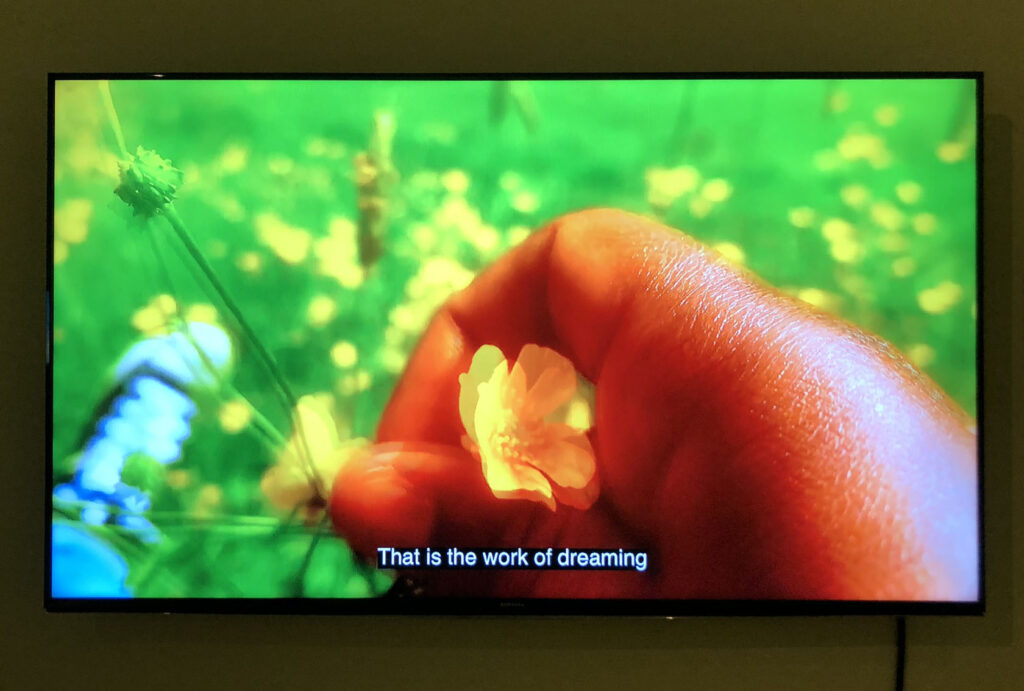
Film still from Kiara Mohammed Amin’s “Black Presence”

Soonoqo: We Become Body in Waves of Light and Sound at Dunedin Fine Art Center is a multimedia exhibition of 18 artists from around the world who “share a common desire for healing, communal growth and interdependence with nature” curated by S. Toxosi.

S. Toxosi’s statement about the exhibition (from the gallery wall)-

I do not possess the language to truly describe the be-holdings within Soonoqo. As a term within the Somali language, it would be difficult to translate into contemporary English. It considers a pluralistic worldview that allows ‘becoming and returning’ to bear witness of itself, within oneself while conjoining through space and time. Soonoqo, basks in the universal soul. Its otherness is imbued as the ‘physical cosmos’ and all its avatars and manifestations.

To speak in metaphor or in a sense of ‘poetic meditation’, one would engulf whirling vortexes, volcanoes and maelstroms that end up in other universes from which bring new revelations or images, The senses are engaged as viewed in Bruno Ferreira Abdala’s video art When Mother Breathes. It is here we can see a pluralist’s sensibility where the cohorts of Soonoqo ‘become and return’ with offerings that contend with the mythical genesis through the acknowledgement and practices of ancestral wisdom, queering mores, spirituality and love. Thus creating fission through initiating and remembering. There is a subtlety of conjuration, ritual, humility, vulnerability in K. Tauches’s Q.A.L. video-making that unfolds and reveals the sentience of a Nature that provides true sustainability.

Soonoqo is a web of interconnected lights in continuous synchrony. It enables manifestations from varied domains of areas of perceptibility through human inner weavings of life experiences and becomes a variety of communicative prowess that encompasses video arts, film, photography, the written word and sonic compositions. These forms all ultimately resonate with and point toward healing where one/all is purified, catalyzed and cleansed through cooperation with nature, technology, shadow matter, dark matter and invisible matter. As can be seen in the film Womb not Tomb by Dea, where she investigates and yields to the teaching of the four elements or in Kiara Mohammed Amin’s Black Presence, a short film of talismanic energy and transformation.

Artists included in the exhibition- Brandy Eve Allen, Viveka Krumm, Harry Wilson Kapatika, Cara Judea Alhadeff, Sadie Sheldon, Chelsea Rowe, Micaela Amateau Amato, Saudade Toxosi, Jennifer Pyron, Amadia Shadow Rabbit, K.Tauches, Javier T. Dones, Bruno Ferreira Abdala, Sall Lam Toro, Kiara Mohamed Amin, Nayetesi, Dea

For more information on this exhibition check out @soono.qo and this conversation with S. Toxosi and DFAC Curators Catherine Bergmann and Nathan Beard which is very informative.

Feb 242023
 

Lars Fisk, “Court Tennis (v.1)”, 2023 with “das Ding (v.3)”, 2023

Lars Fisk, “Court Tennis (v.1)”, 2023 (right side)

Lars Fisk, “Court Tennis (v.1)”, 2023 (left side, closer) with “das Ding (v.3)”, 2023

Lars Fisk, “das Ding (v.1)”, 2023

Lars Fisk, “das Ding (v.1)”, 2023 (back view)

Lars Fisk, “das Ding (v.2)”, 2023

For 10SNE1, Lars Fisk’s exhibition at Broadway Gallery in NYC, he has created an immersive environment that is really fun to walk around in or even try playing in.

From the gallery’s press release-

Whatever isolation people experienced during the 2020 pandemic lockdown was, to residents of the remote enclave of Red Hook Brooklyn, both compounded and barely noticed at all.  Lars Fisk, who lives and works there in a stacked shipping container house and an adjacent studio, mostly carried on with his solitary practice fashioning astonishingly complex sculptures from glass, steel, brick and wood.  Apart from the occasional neighborly drop-in, he saw very few people.

As a result, when New York emerged from the fearful slumber of Covid, Fisk himself blossomed in late spring with a hunger for human connection. As luck would have it, he was invited by a Red Hook neighbor to join their softball league. Fisk had never really played before, but took a chance and shook off the isolation to give it a shot. He has described the profound uplift of multi-generational camaraderie and shared purpose; of competition and physical exertion in almost euphoric terms.

As summer wound down, Fisk was determined to find a way to perpetuate this endorphin rush. Simultaneously, he had also been playing tennis with some regularity, and, as is his inclination, had been researching the history of the game. He was delighted to discover that the game (known first as Court Tennis) originated in the Middle Ages with opponents paddling a cord-wound leather ball back and forth off of the sloping roofs of the stalls at the close of the public market—a version of what many a contemporary suburban kid would recall as a game of “Roofball”.

This gave Fisk the idea of creating a winter-ready racquet sport inside his studio. This portion of his workspace had been set aside for formal display of works that were complete but hadn’t yet been shipped out for exhibition—a place to present works to his now close-knit Red Hook community in an in-crowd acknowledgement of the locals’ contribution to his work and happiness. Therefore, this site (a White Cube with an absurdist twist of the traditional wattle and daub and timbering of Tudor architecture) became the obvious location for the court. Here, any neighbor or visiting friend that came to play and help develop the rules of this makeshift new sport became de facto performers—became the artwork that this space was designated to display. A low net was set up and a loose set of rules were developed to keep the play lively and competitive. Fisk experimented with different wall treatments (clapboard, asphalt shingles, etc.) that complicated the angle of rebound of volleyed shots and produced a controlled chaos that slowly refined itself as his visiting collaborators learned the peculiarities of the court.

Fisk was pleased that his passions for architecture, sculpture, competition and bonhomie had successfully converged in this new sport/performance/artwork and he began to develop the idea and how it might be realized within a more formal exhibition space.  In preparation for the show, he expanded upon the theatrical possibilities (both in presentation and potential for audience) that the commercial gallery setting in Tribeca would provide. The result is a kind of non-site environment that evokes an outer borough environment of vinyl sided clapboards and shingled rooftops that form the irregular angles and planes that recalls the architecture of Court Tennis. A basement bulkhead door emerges from the floor at a 45-degree angle perfect for bewildering bank-shots; a pre-fab bay window presents a multi-faceted surface refracting the ball in unexpected ways; an open garage shelters a sculpture based on a boxy 1970s Volkswagen “Thing” whose windshield is also fair play. Two more of these themed vehicle sculptures (one evoking a military ambulance and the other a preposterously tricked out off-road vehicle with aftermarket flood lights and winch) are arrayed in the court’s adjacent “gallery” acting alternately as obstacles, artworks and seating for viewers of the match. The sculptures’ angular geometry acts as a catalyst for the court’s faceted architecture, unifying the exhibition as a whole.

Formal concerns aside, the development of the game has naturally teased out conversations about court etiquette, dress and decorum as signifiers of class, and the twinned elitisms of the tennis club and art world. Within the exhibition these are reflected in the players’ tennis whites and the ritualistic manners of play. Perhaps as an antidote to this reality, the hope is that Fisk can expand his community by inviting exhibition visitors to engage with both the built environment and discrete artworks and to become a part of the artwork itself.  In the process, he may simultaneously democratize the lofty status of tennis and the gallery space itself.

This exhibition closes Saturday 2/25/23.


Feb 232023
 

Cynthia Talmadge, “Goodbye to All This: Alan Smithee Off Broadway”, 2023 installation view

Cynthia Talmadge, “ACT 2: The Cabana”, 2022

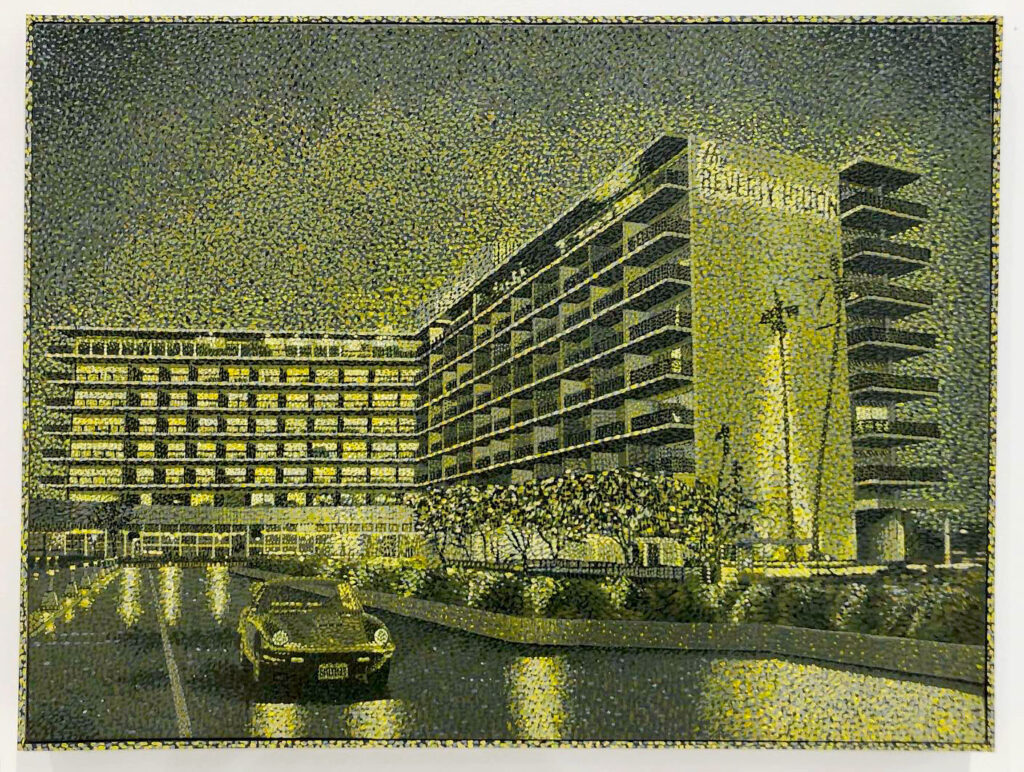
Cynthia Talmadge, “Maserati (Dream Sequence)”, 2022

Cynthia Talmadge, “Maserati (The Strasberg Institute)”, 2022

Cynthia Talmadge, “Walk of Fame” 2023

Currently in Bortolami’s upstairs gallery is Cynthia Talmadge’s imaginative exhibition, Goodbye to All This: Alan Smithee Off Broadway.

From Bortolami’s press release-

“We find the narcissist in a reflective mood.” — stage directions penciled into a draft of act III, scene 1 of Alan Smithee’s Goodbye to All This

“Alan Smithee” is a pseudonym used by Hollywood directors to remove their names from movies over which they have lost creative control. In this exhibition Cynthia Talmadge animates Smithee, imagining him in the mid-1980s as a down-on-his-luck, middle-aged baby boomer, trying, elaborately but ineptly, to revive a career defined by burned bridges, bad behavior, and commercial failure. The show takes as its premise a fictitious play, an autobiographical avant-garde off-broadway Bildungsroman written and directed by Smithee in an effort to engineer his come back. The play–entitled Goodbye to All This is what Talmadge imagines as Smithee’s clumsy inversion of the title of Joan Didion’s essay about leaving New York for California – tells Smithee’s version of his rise and fall in Hollywood and his subsequent departure for New York, culminating in his redemption as a New York theater artist.

The only substance to the real-world “Smithee” is an extensive filmography of more than 80 credits. Talmadge takes this output at face value, envisioning for us the detailed biography and personality of a director whose career persists despite every job he’s done having gone badly awry amidst professional conflict. For Talmadge, this makes him a dubious American icon: an epitome of privilege and unwarranted confidence; a guy who – at least until recently – could only ever fail up.

Several Los Angeles and New York landmarks and former landmarks are included in the paintings along with Smithee’s Maserati- the Director’s Guild building, Chasen’s, the Friars Club, Scientology Celebrity Center, and the Beverly Hilton in Los Angeles and Elaine’s and The Lee Strasbourg Institute in New York. The Maserati’s final destination is 39 Walker in NYC, the address of the gallery.

The Playbill paintings have an incredible amount of detail within them and highlight the three acts of Smithee’s journey. The room includes a fallen column, a box of headshots, and Smithee’s set design model for Goodbye to All This, his autobiographical play.

Both Bortolami and Talmadge’s Instagram pages expand on the Smithee story in a few of their posts and are worth taking a look at as well.

This exhibition closes 2/25/23.

Feb 222023
 

Diana Al-Hadid “The Long Defeat”, 2017-2023

Diana Al-Hadid “The Long Defeat”, 2017-2023 (detail)

Diana Al-Hadid “The Long Defeat”, 2017-2023 (detail 2)

Bianca Bondi, “The Antechamber (Myths of descent and return)”, 2023

Bianca Bondi, “The Antechamber (Myths of descent and return)”, 2023 (detail)

Bianca Bondi, “The Antechamber (Myths of descent and return)”, 2023 (detail)

Closing today at Kasmin in NYC, is Shades of Daphne, curated by Stephanie Cristello. It is a “timely survey of painting, sculpture, installation, and film by a group of 11 international and intergenerational contemporary artists, many of whom have not previously exhibited in the United States.”

From the Kasmin gallery website-

Bringing together recent and historical works spanning over three decades from the 1990s to the present, the exhibition includes new commissions, site-specific performances and installations that respond to the architecture of the gallery space.

Celebrating the spirit of resistance and revolt, the exhibition takes the figure of Daphne—the Ancient Greek nymph who turned herself into a laurel tree to escape Apollo’s pursuit—as metaphor to explore work that engages with hybrid figures, metamorphoses, and suspended states of becoming. Highlighting deconstructed impressions of the body in relation to mythologies of transformation, the exhibition focuses on work that features remnants of presence even when the figure is absent—objects that hold the memories of living things. Acting as portals, thresholds, and containers of shifting states, each work also engages with architecture as a framework, both in reference to the body and to spaces constructed for both personal and collective ritual.

Information on Diana Al-Hadid’s sculpture, The Long Defeat

Diana Al-Hadid’s (b. 1981 Aleppo, Syria) sculpture takes the Flemish primitive painter Hans Memling’s Allegory of Chastity (c. 1475) as a starting point. The work pictures the bodice of a female figure, her head bowed, hands interlaced at the waist, surrounded by the mouth of a volcanic mountain. Al-Hadid’s first interpretation of the painting culminated in the monumental sculpture Citadel (2017–18), a hollowed silhouette of a woman framed by the base of an embankment whose porous mass extends like a root system toward the ground. Her face is vacant of features, delineated instead by two severe lines like one would find in the initial sketch of a portrait artist, that indicate her gaze remains lowered. Yet in contrast to the demure painting, the massive scale of the work allows for her downcast eyes to stare straight into those of the viewer below.

Information on Bianca Bondi’s installation, The Antechamber (Myths of descent and return), 2023-

An iteration of Bianca Bondi’s (b. 1986, South Africa) installation for Busan Biennale 2020, The Antechamber (Myths of descent and return), grew from a translation of Kim Hyesoon’s poem, “Tundra Swan.” As Bondi states: “salt is essential for life but too much brings death.” Taking inspiration from paintings such as Henri Gervex’s Rolla (1878) or John Everett Millais’s Ophelia (1851–52), we observe a clinical but feminine bedroom setting composed of a bed with a pond at its center, echoing a circular mirror above a dresser at the end of a pathway through the tundra. Salt surrounds the installation, representing both preservation and resurrection. A swan stands alone, symbolizing the force of art and poetry. This is the third chapter of the installation, following the Thailand Biennial in 2021.


Feb 212023
 

For Adam Putnam’s recent exhibition Holes at P.P.O.W gallery in New York, he takes the visitor on a multimedia journey into the self.

From P.P.O.W’s press release-

Through the building up of imagery by means of photography, drawing, sculpture, film, and performance, Adam Putnam continues an ongoing exploration of the boundaries between architecture, nature, the physical and the internal self, often using one as a stand in for the other.

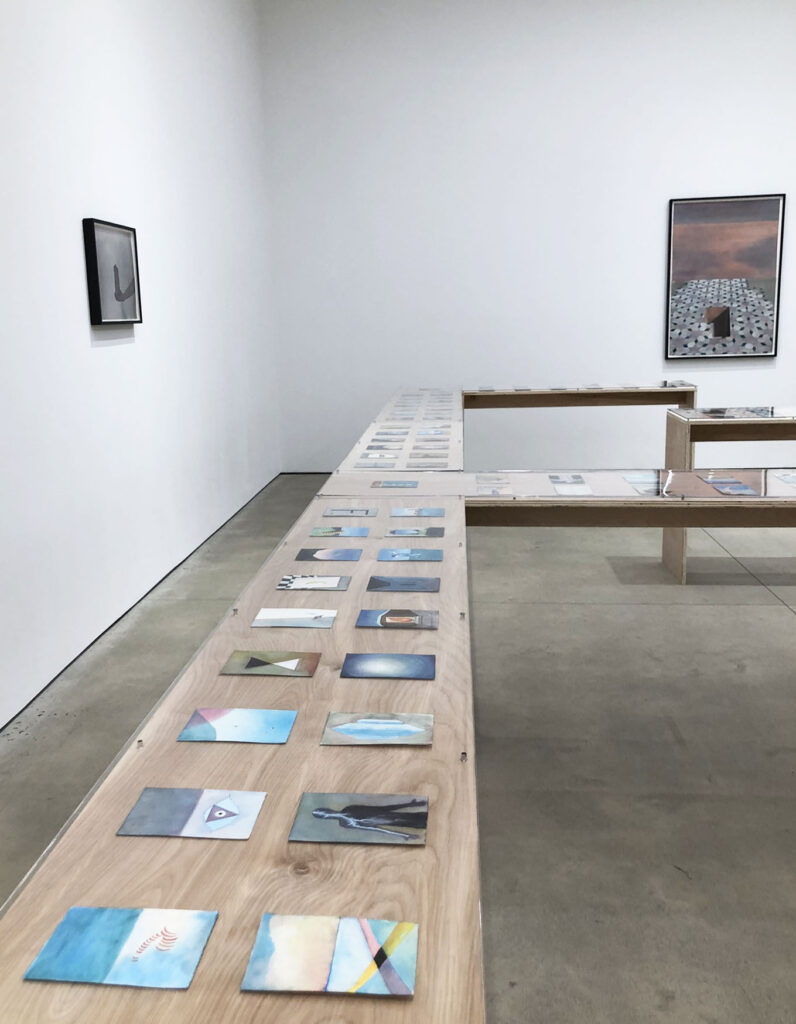
A single, hand-carved wooden finger beckons the viewer toward a labyrinth of 365 “visualizations.” Initiated during the long months of lockdown, this mass of miniature drawings takes on an elusive arrangement, like an archaic diagram of the unconscious mind, with patterns emerging and dissolving as the visitor weaves through the space. Accompanying this accumulation are a new series of drawings and photographs, depicting architectural inversions and other implements such as a crumbling brick column and a rusty sword.

The labyrinth ultimately leads to a shadowy monolith vibrating with light, smoke and bubbles. Based on a 2022 site- specific, multi-sensory work commissioned in response to the experiential interests and preferences of a small group of people with Profound Mental and Learning Disabilities (PMLD) living in Midlothian, Scotland, the tower, which can be viewed alternately as a lighthouse, clocktower, steeple and sundial, aims to connect through touch, scent, light and sound. As we enter a post-pandemic world, Holes offers an opportunity for collective experience and contemplation of the otherworldliness imbedded in the everyday.

Putnam’s Instagram is currently private, but you can check out his Tarot influenced artwork here. He was giving Tarot readings throughout the duration of the show using his handmade cards.

Feb 202023
 

Pictured L to R: Peter Cotroneo, Alexander Nixon (foot), and Joshua Haddad

Pictured: Molly Evans (sketches installation) and Kendra Frorup

Pictured L to R: Chris Valle; Emma Quintana and Rick Hanberry; Joseph Scarce

This is the last week to check out the Art+Design Faculty Exhibition at University of Tampa’s art gallery, Scarfone Hartley. It’s a wonderful chance to check out the talent that is teaching at the school as well as some impressive work.

Artists included: Jaime Aelavanthara, Peter Cotroneo, Molly Evans, Kendra Frorup, Corey George, Jennifer Guest, Joshua Haddad, Ry McCullough, Samantha Modder, Alexander Nixon, Eric Ondina, Angelina Parrino, Emma Quintana, Joseph Scarce, and Chris Valle.

Below are more selections from the exhibition-

Feb 042023
 

Le’Andra LeSeur, “In Reverence (An Honoring)”, 2019

Le’Andra LeSeur, “There are other hues of blue”, 2019-2022 (ongoing)

Le’Andra LeSeur, “There are other hues of blue”, 2019-2022 (ongoing)

Le’Andra LeSeur, “The CD Man”, 2017

Le’Andra LeSeur, “Superwoman”, 2018

Spirit, Rhythm, BluesLe’Andra LeSeur’s exhibition at Gallery221@HCC Dale Mabry Campus is a multimedia exploration of life, death, and rebirth- all bathed in blue.

From the Gallery 221 website-

LeSeur’s body of work—a celebration of Blackness, queerness, and femininity—seeks to dismantle systems of power and achieve transcendence and liberation through perseverance. In “Spirit, Rhythm, Blues” at Gallery221@HCC, LeSeur’s installation encourages viewers to contemplate themes such as identity, family, grief and joy, the experience of invisibility, and the power of language.

From the Gallery 221 press release description of Superwoman

This video is a documentation of a self-baptism that took place in the summer of 2018. The work speaks to the cyclical process of the emotional “waves”- highs and lows- experienced in life. As LeSeur conducts the baptism Donny Hathaway’s rendition of Superwoman plays over the visual, and the words “Where were you when I needed you last winter” repeat as the video proceeds then visually plays out in reverse. The words in the song symbolize the internal struggle present when asking how we show up for ourselves during moments of transition and change. Instead of putting pressure on ourselves to be better or do better, those words bring us back to a place of understanding the importance of self-love in how we overcome and get back to a place of grounding and balance in our lives.

It is a moving piece and works well as a balance to the other video works that reference the police killings of Akai Gurley and Alton Sterling (The CD Man, 2017, pictured above).

This exhibition is on view until 3/2/23.


Jan 312023
 

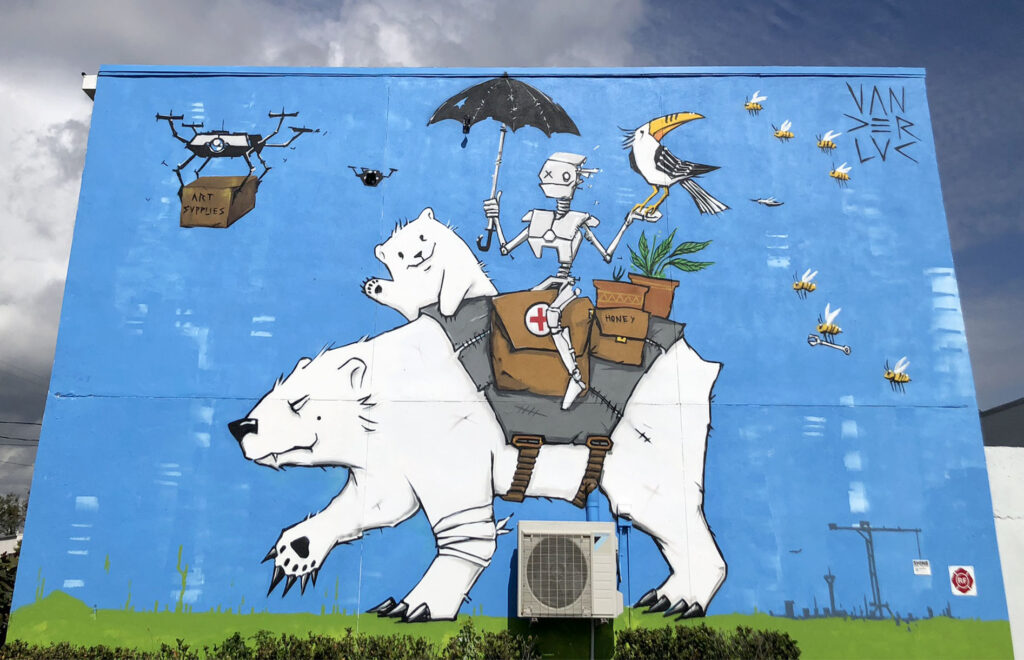
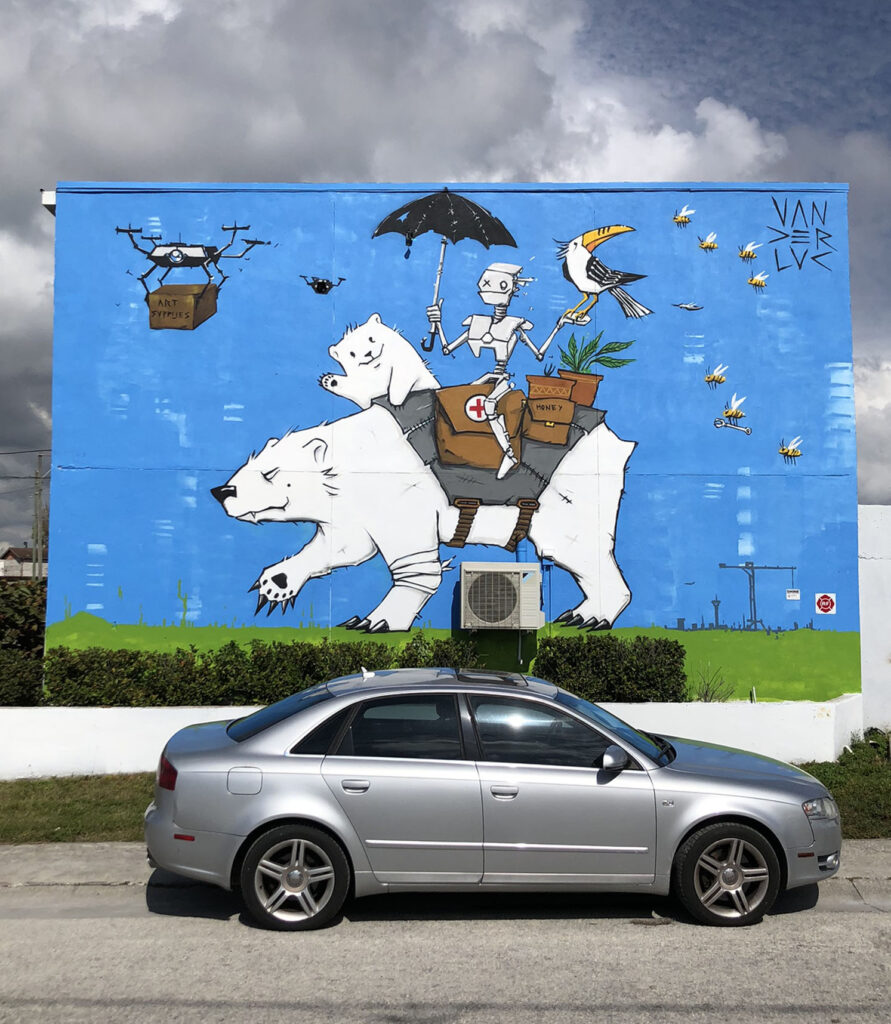
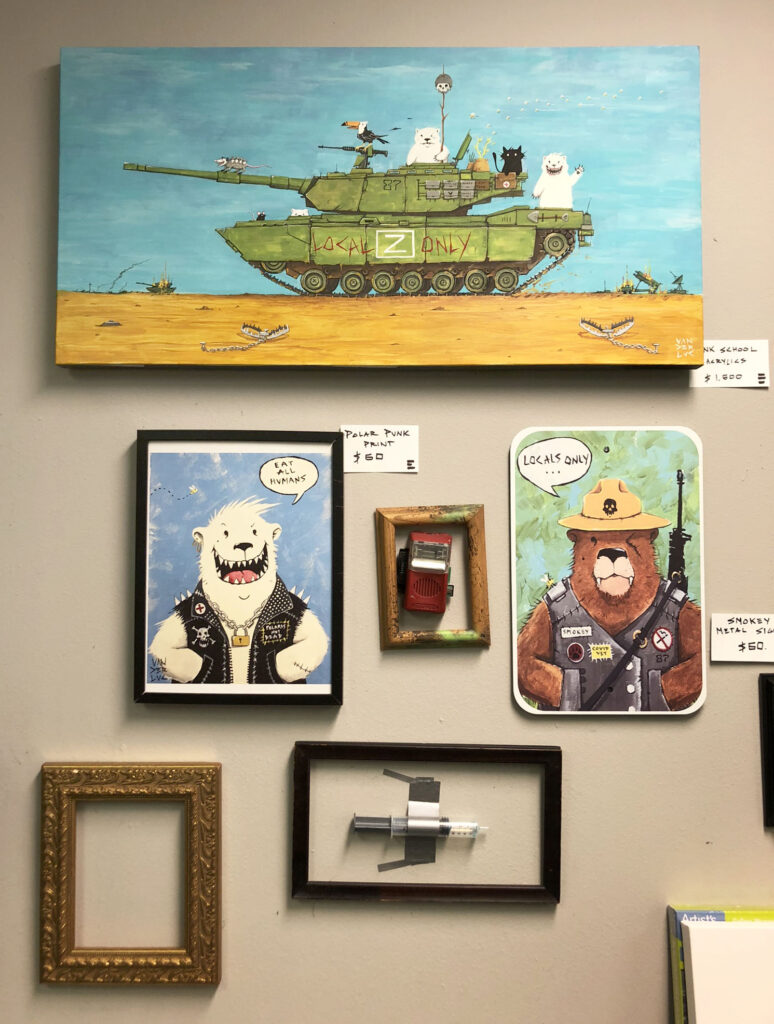
Pictured at the top is local artist Van Der Luc’s mural for the 2022 edition of SHINE Mural Festival in St. Pete.

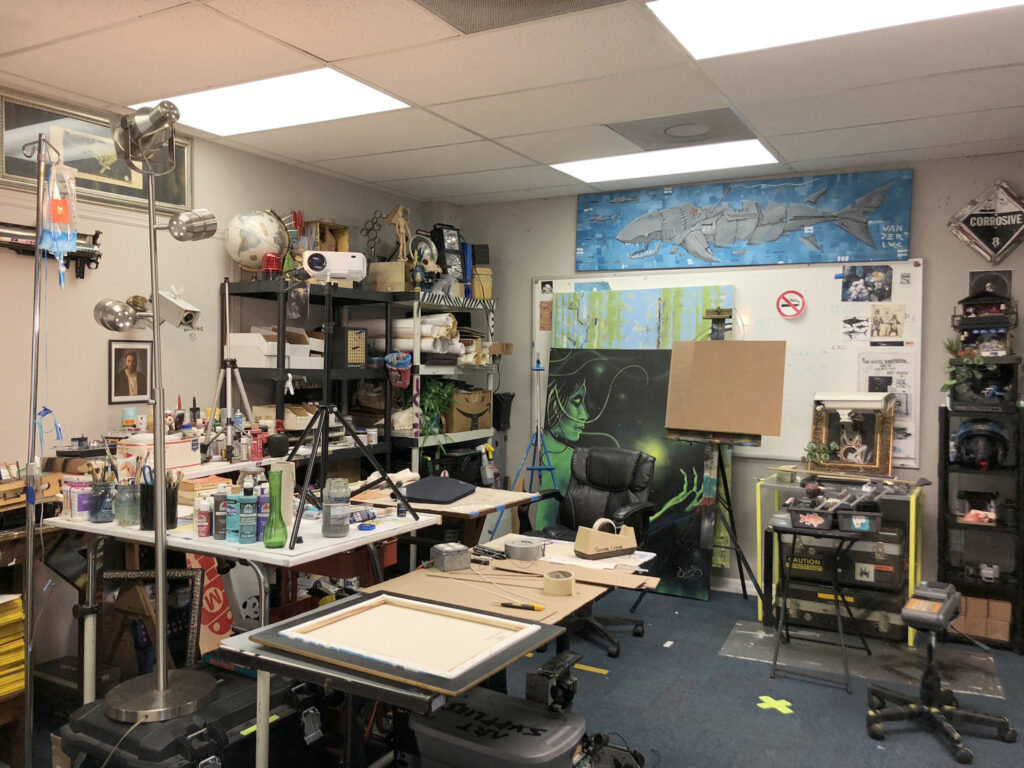
He is one of the artists at The Studios @5663 in Pinellas Park. It’s a great place to see what local artists are making and working on.

On the fourth Saturday of the month Pinellas Arts Village hosts a block party with vendors, open galleries and studios, crafts, live music, and food. It’s a fun event that offers the opportunity to check out what local artists are working on.

Jan 252023
 

Now it Makes Sense

iFA Peddler

Conquering Pride

Internal Dialogue

Currently at the Tully-Levine Gallery at the ArtsXchange ( part of  The Warehouse Arts District Association) is The Wiz Reimagined a collaborative art exhibition by iBOMS (Jabari Reed- Diop) and Zulu Painter.

The imaginative paintings accompany sculptures and an installation which also at times includes video projections.

Tonight (1/25/23) there will be a screening of The Wiz, hosted by Hillary Van Dyke of Green Book Tampa Bay and an artist talk with both artists and Scott Terry of Mahogany Gallery.

Jan 052023
 

Héctor Zamora’s site-specific installation, Lattice Detour, located on the roof of The Metropolitan Museum of Art in 2020. It opened at the end of August of that year after being delayed when the museum shut down due to the pandemic.

The installation’s curved wall of terra cotta bricks measured at 100 feet long and 11 feet high. The bricks were not solid, as they first appeared, but hollow so viewers could see through to the other side. Throughout the day light would pass through the wall creating different patterns and shadows.

Zamora discusses the work in the video below from The Met’s website