Feb 112024
 

“1958 Championship Game ( Colts/NY Giants )” by artist Jack Howard-Potter

“Formation of the American Football League (1959)” by artist Katherine Stanek

The sculptures above are two of The ELEVEN, a public art project created by The Pro Football Hall of Fame and Arts in Stark, located in downtown Canton, Ohio. The commissioned art works each represent one of the eleven greatest moments in professional football.

The first sculpture pictured, Colts/NY Giants Championship Game (1958) is by Jack Howard Potter. The 30-foot tall steel sculpture celebrates Baltimore Colts player Raymond Berry.

The second, Formation of the American Football League (1959) is by artist Katherine Stanek. The concrete sculpture represents the founders of the league and the use of television as part of its growth. On a nearby information plaque the artist states that she “wanted to celebrate the AFL founders by putting eight giant heads on top of 1960’s TV sets, as if they were ancient heroes in some Roman ruins”. Stanek also runs her own gallery in Philadelphia.

 

Feb 092024
 

This sculpture, The Only Other, 2021, by the artist Midabi, was located in Union Square Park in NYC from June 2021- June 2022.

It is currently located adjacent to Palm Springs Art Museum in California.

Feb 062024
 

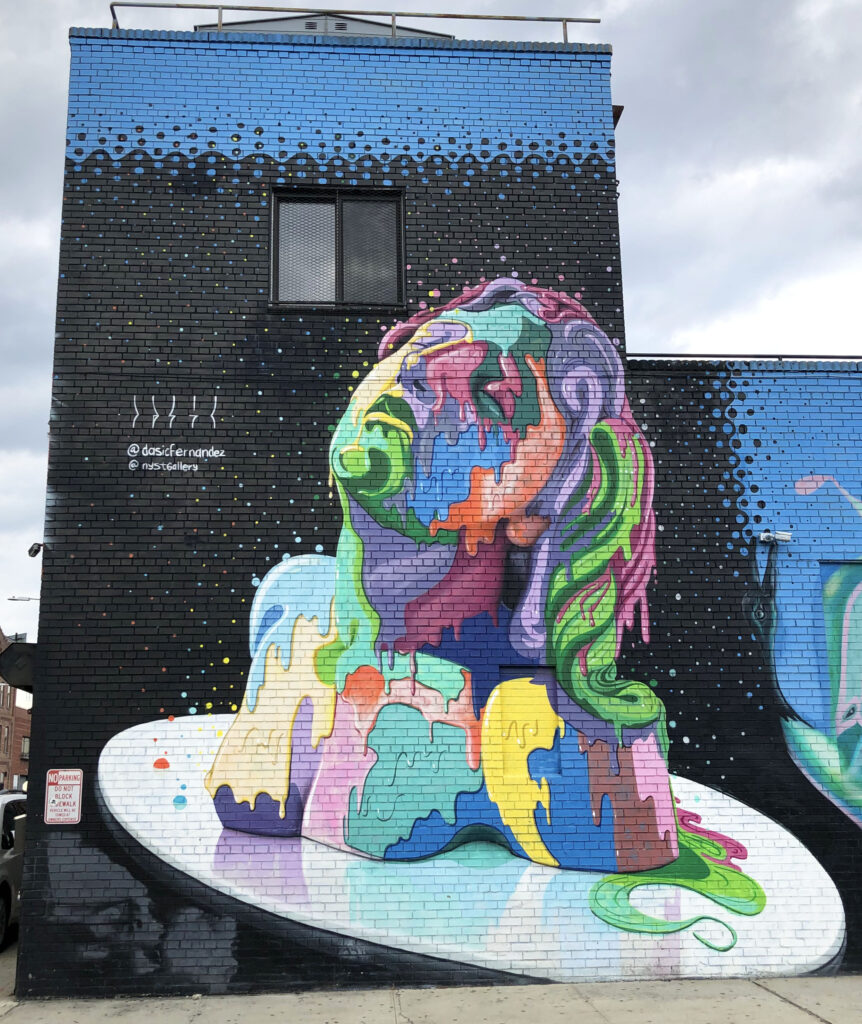
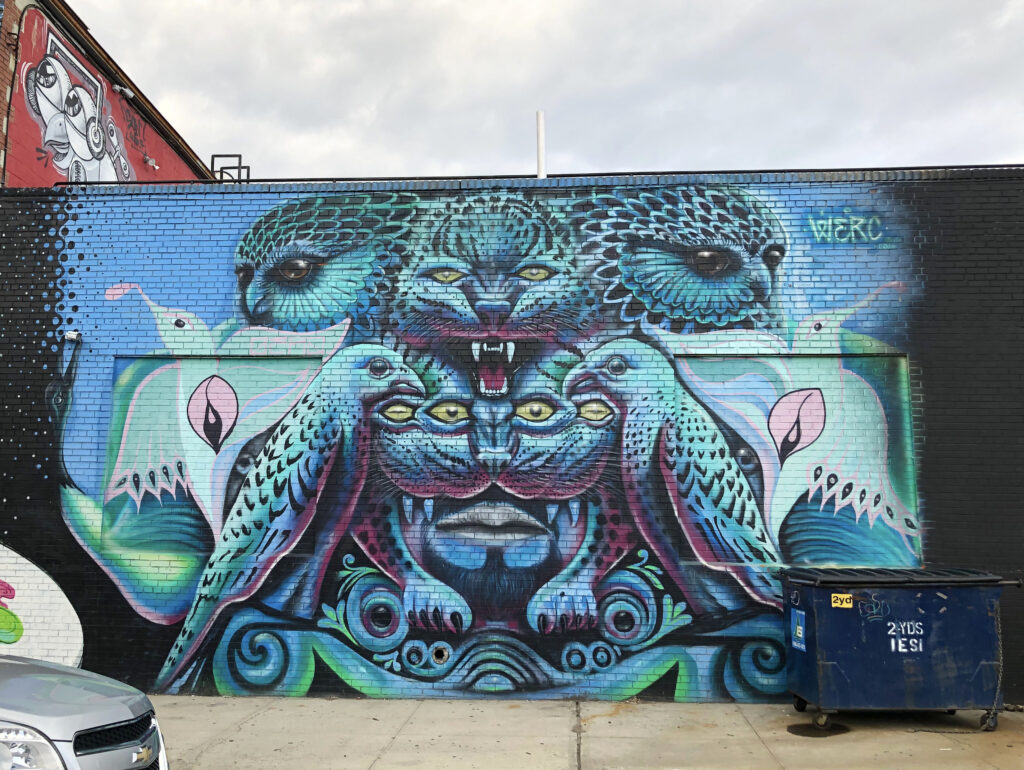
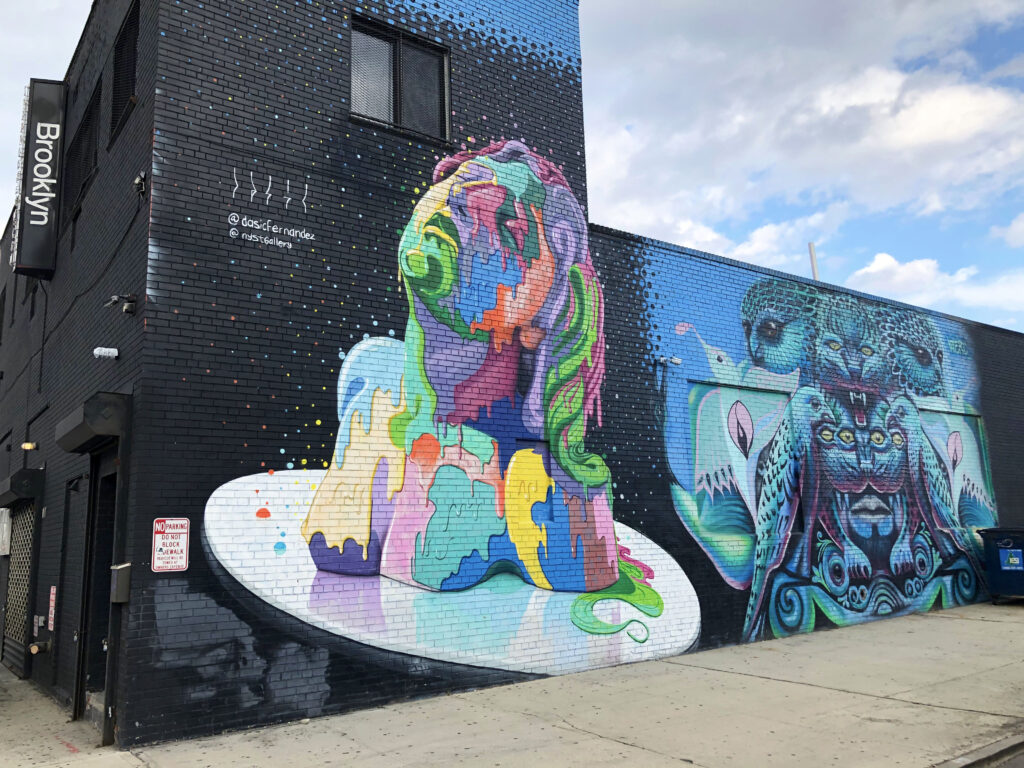
These two murals, created by artists Dasic Fernandez (left) and Werc Alvarez (right), are located in the Gowanus neighborhood in Brooklyn, New York.

Feb 062024
 

Multicolored Lady by Dasic Fernandez was created for the 2016 edition of SHINE Mural Festival in St. Pete, Florida.

Also check out his Instagram for more recent work.

Feb 012024
 

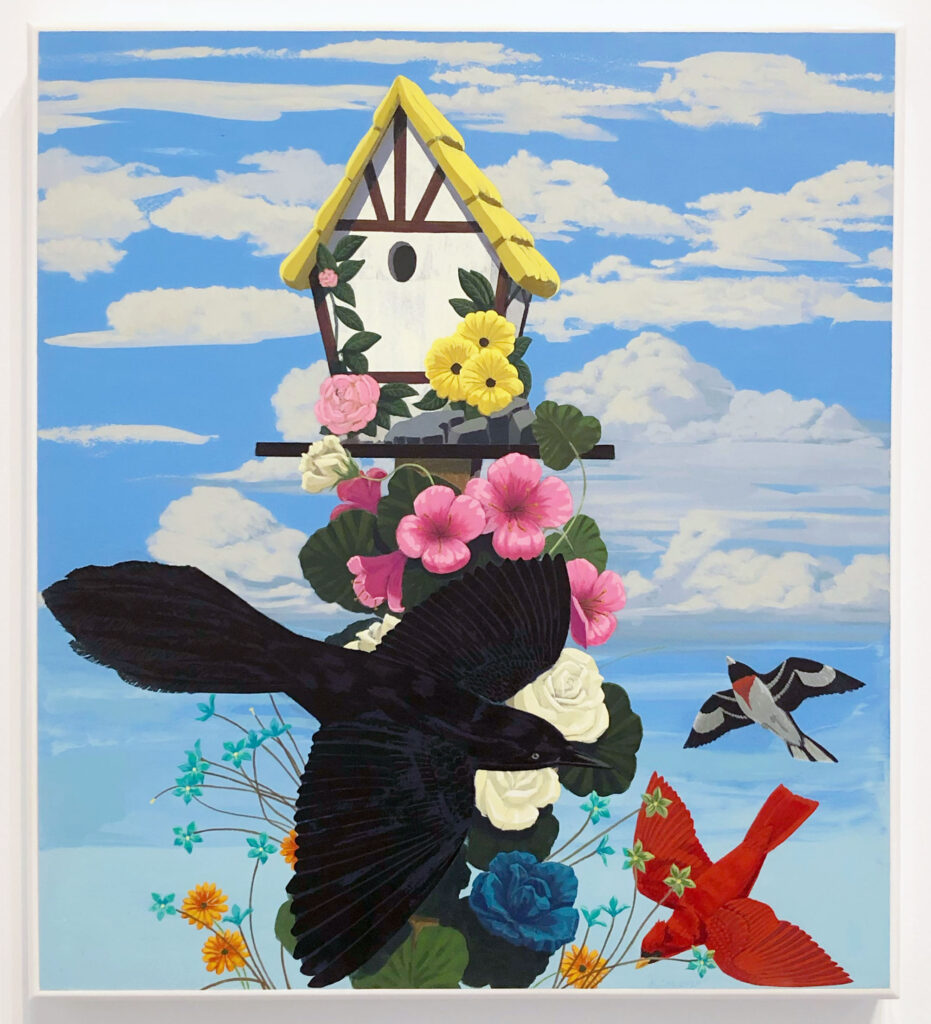
Black and part Black Birds in America: (Grackle, Cardinal & Rose-breasted Grosbeak), 2020, by Kerry James Marshall, was part of the group exhibition 20/20 at David Zwirner gallery in NYC in December of 2020. The painting is part of a series that explores black identity, his love of birding, and by the history and work of John James Audubon.

Below is an excerpt from a New York Times article about the work and its Audubon connection-

“There’s a disconnect between the house that’s built and the birds,” Mr. Marshall said of the crow and grackle. “It’s not designed for them, you know?” The scene considers, he said, “the pecking order.”

The series itself has been brewing in Mr. Marshall’s mind for eight or nine years, he said, and he began painting the works just before transmissions of the coronavirus accelerated in the United States in March.

A casual bird enthusiast who has been fascinated by Audubon’s draughtsmanship since he was a child, Mr. Marshall has long put Black protagonists at the center of his complex, richly layered compositions. “Many Mansions” (1994), one of his large-scale depictions of housing projects, features three Black men gardening — and, not incidentally, there are two bluebirds holding up a banner, too. The pointed inclusion of Black figures is part of what he has called a “counter-archive” to the familiar, white-centered story of Western art.

For the new series, the images hinge on Audubon’s own racial heritage: Many people believe he was, as Mr. Marshall’s title suggests, “part Black” — born in what is now Haiti, as Jean Rabin, to a white, plantation-owning father and a Creole chambermaid who may have been of racially-mixed descent. But, the theory goes, he was able to pass as white.

Jan 312024
 

This mural by Ernesto Maranje was created for Florida Wildlife Corridor, located in The Factory complex in St. Pete.

For more of Maranje’s work, also check out his Instagram.


Jan 292024
 

Whimzeyland, the “Bowling Ball House”, is a local landmark located in Safety Harbor, Florida, created by artists Todd Ramquist and Kiaralinda.

About the house from their website–

In 1985, they purchased the beige house on Third Street in Safety Harbor, Florida. They traveled everywhere, actively seeking out inspirational and unusual places. Inspired by these travels, they began transforming their house. One of the earliest additions were the wooden triangles to the eaves of their house. The beige house became bold in color, too.

One day, they went to a flea market and saw a sign that said that anybody could take 10 free bowling balls. They took the bowling balls and began painting and placing them around the property. This is how they became known as the bowling ball house of Safety Harbor.

Todd and Kiaralinda even branched out of decorating their home, creating two different art cars, designed a restaurant, and making public sculptures, among other things. They began calling themselves the Whimzey Twinz because they work together on all of their projects.

Their travels soon included visits to folk artists and artists that they met at their shows. These friends visited them, too. Todd and Kiaralinda’s bowling balls inspired many of them. They would create bowling balls for Todd and Kiaralinda, who got so many of these works from artist friends that they started a gallery in their home. They created a “Call for Balls” which made a lot more of these art works roll into their home. Today, they have over 80 bowling balls from various artists around the world and people still bring them bowling balls as gifts.

If you are in the area, make sure to also stop by Safety Harbor Art and Music Center (SHAMc), a nonprofit they opened in 2017. It has an art gallery and shop, and hosts music events and art classes as well.


Jan 262024
 

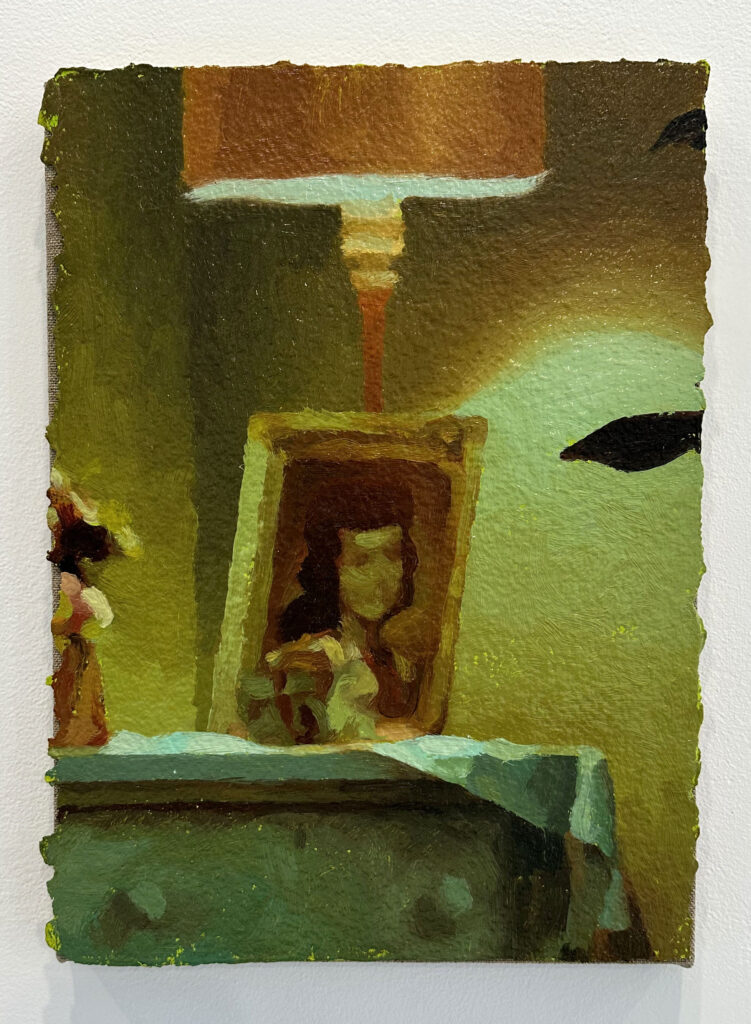
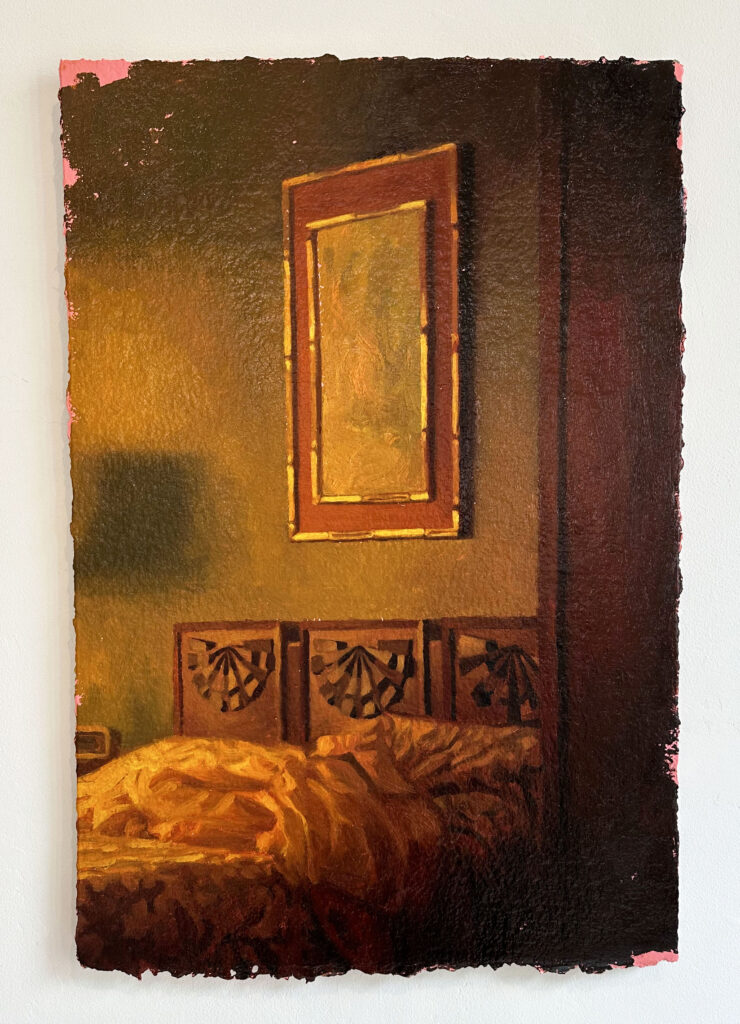
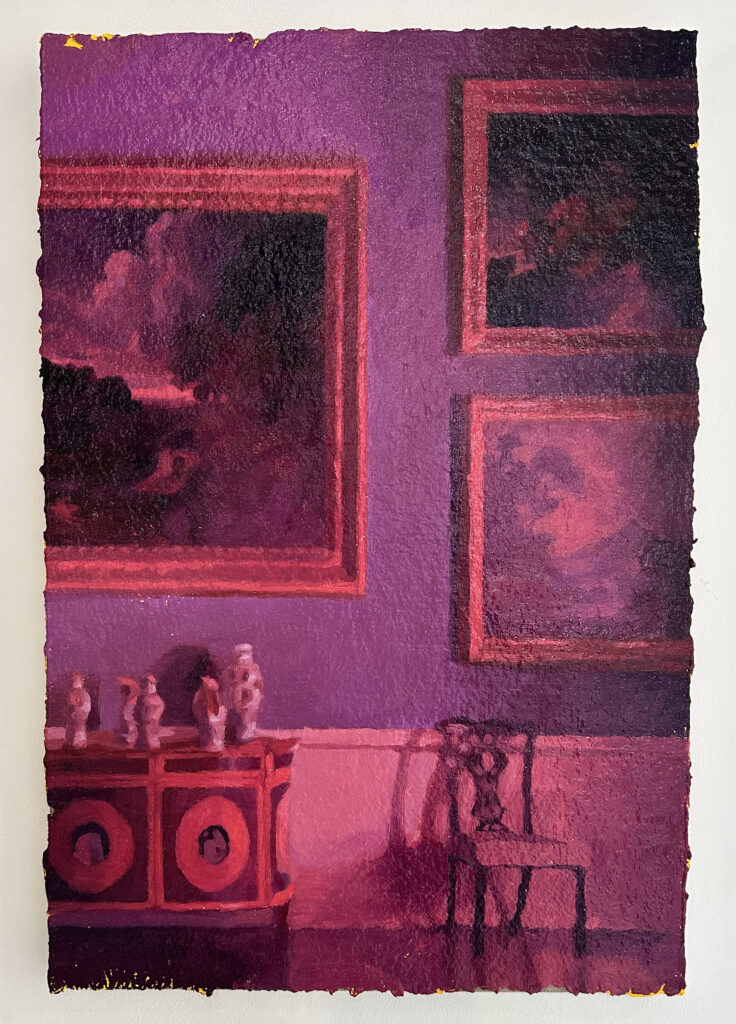
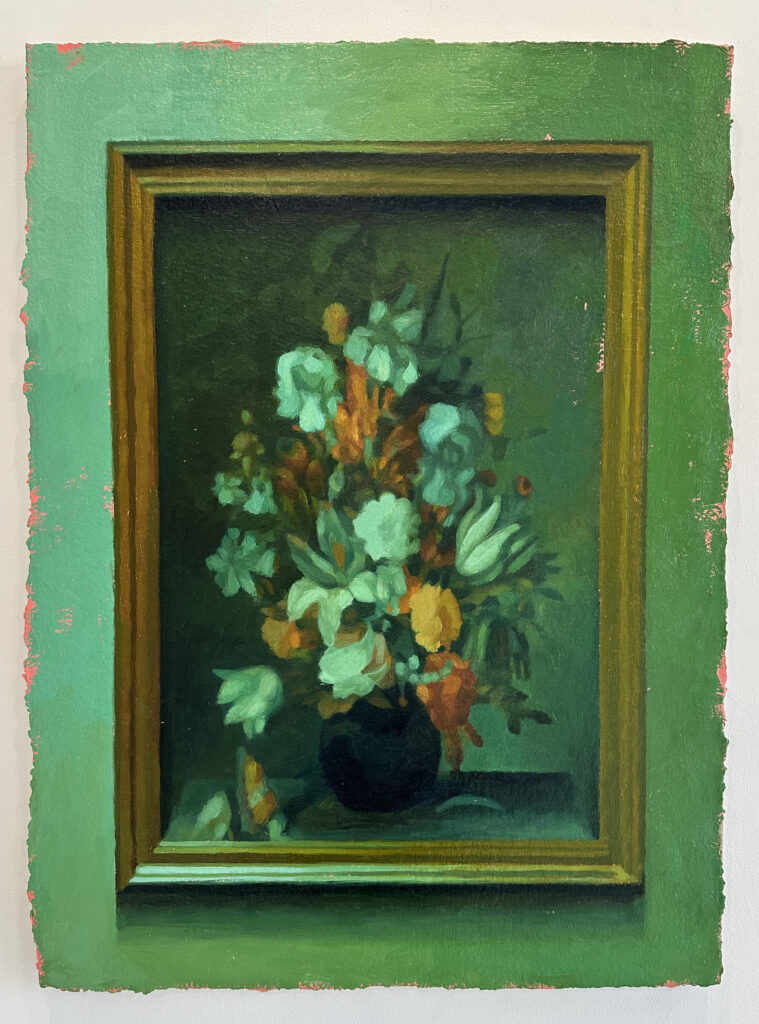
Paintings by Tim Wilson from his 2023 solo exhibition, Pictures Aside, at Nathalie Karg gallery in NYC.

From the press release-

“Everything is deceptive, only the mask never lies.”
—Pierre de Marivaux

On the surface, Wilson presents a group of paintings depicting an assortment of mirrored reflections, paintings, prints, photographs, and reproductions. These pictures within the paintings adorn a variety of provisional spaces; foyers, waiting areas, bedside tables, drawing rooms, and motels. Like his previous work, Wilson recasts images of interior spaces and set dressing found in the seemingly endless availability of streaming television and film. These repurposed screen grabs are then filtered through the historical lens of premodern tendencies in representation. This practice, an attempt at slowing the viewer down for reflection remains, yet here, Wilson doubles down by zooming in on the re-depiction of those quoted histories within his own pictures. This reframing literally and metaphorically rearranges the conditions with which one engages in that contemplation.

“To me, the recursive nature of these paintings is analogous to the infinite regress of thought and meaning—in the way that the definition of words require the use of other, yet to be defined, words to describe them, and so on. Painting is a way of re-contextualizing these strange loops and harnessing meaning indirectly. For example, to quote me speaking now in this context is altogether different than the previous paragraph, despite the fact that I wrote them both.”
—Tim Wilson

He is currently showing work at JDJ gallery in Tribeca, for the group exhibition, Feels Like Home, running until 3/2/24.