Mar 152024
 

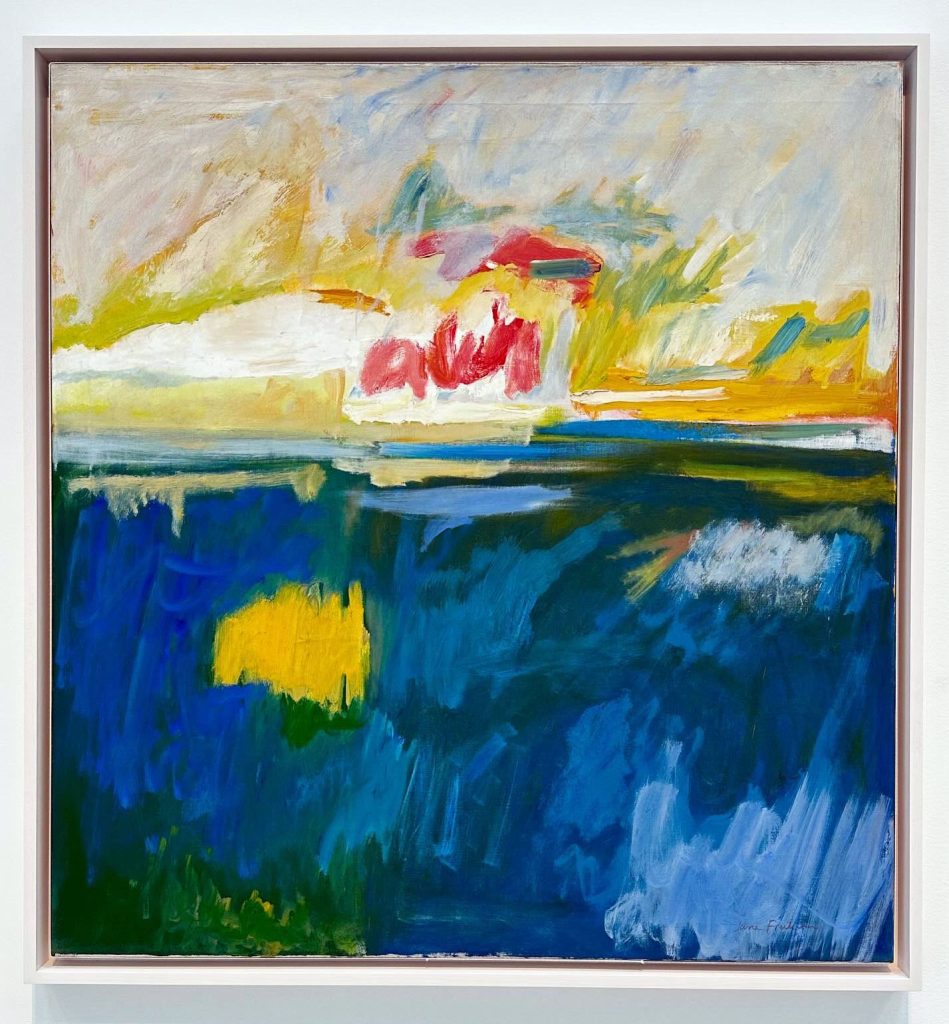
“Northern Lights”, 1959, oil on linen

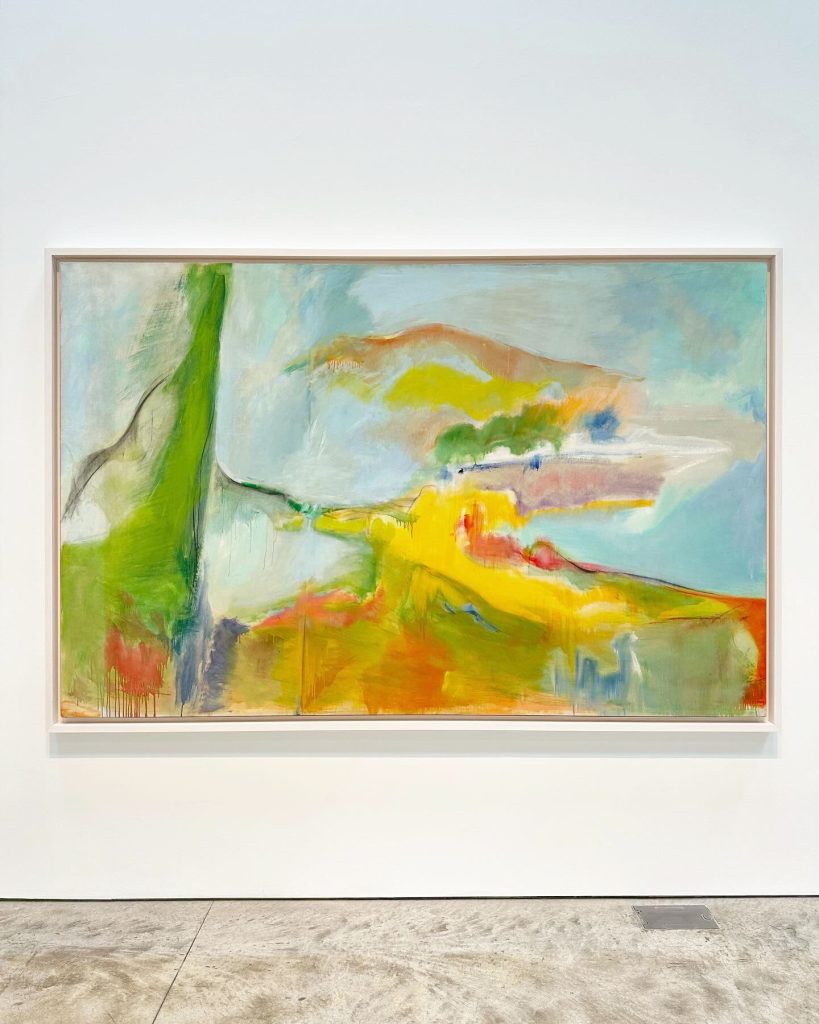
“Untitled (Near the Cove)”, c. 1958, oil on linen

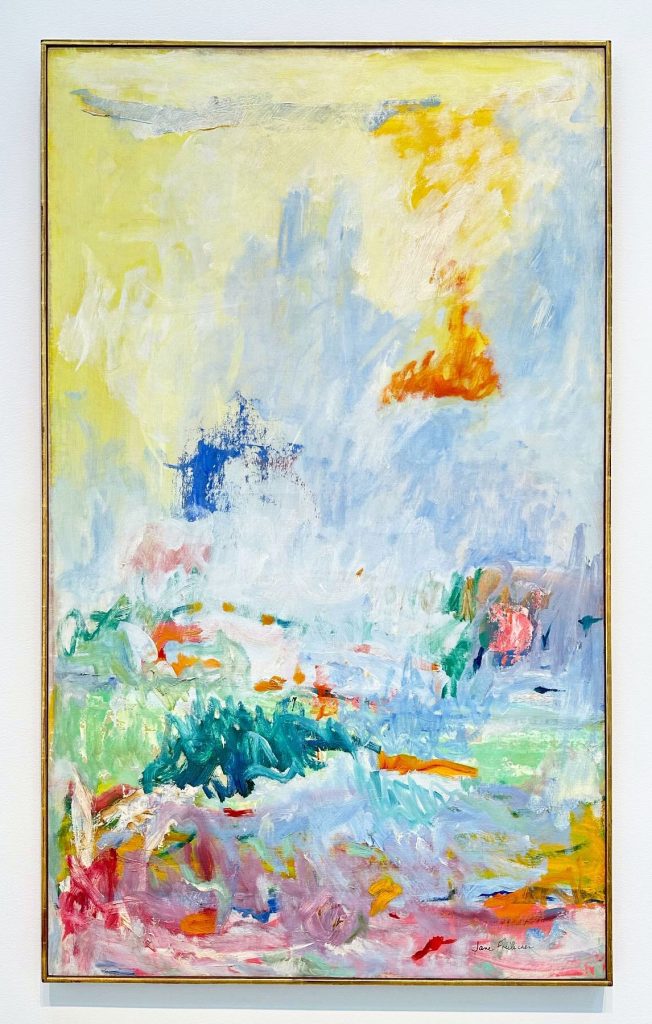
“Fresh Air”, c.1958-1962, oil on canvas

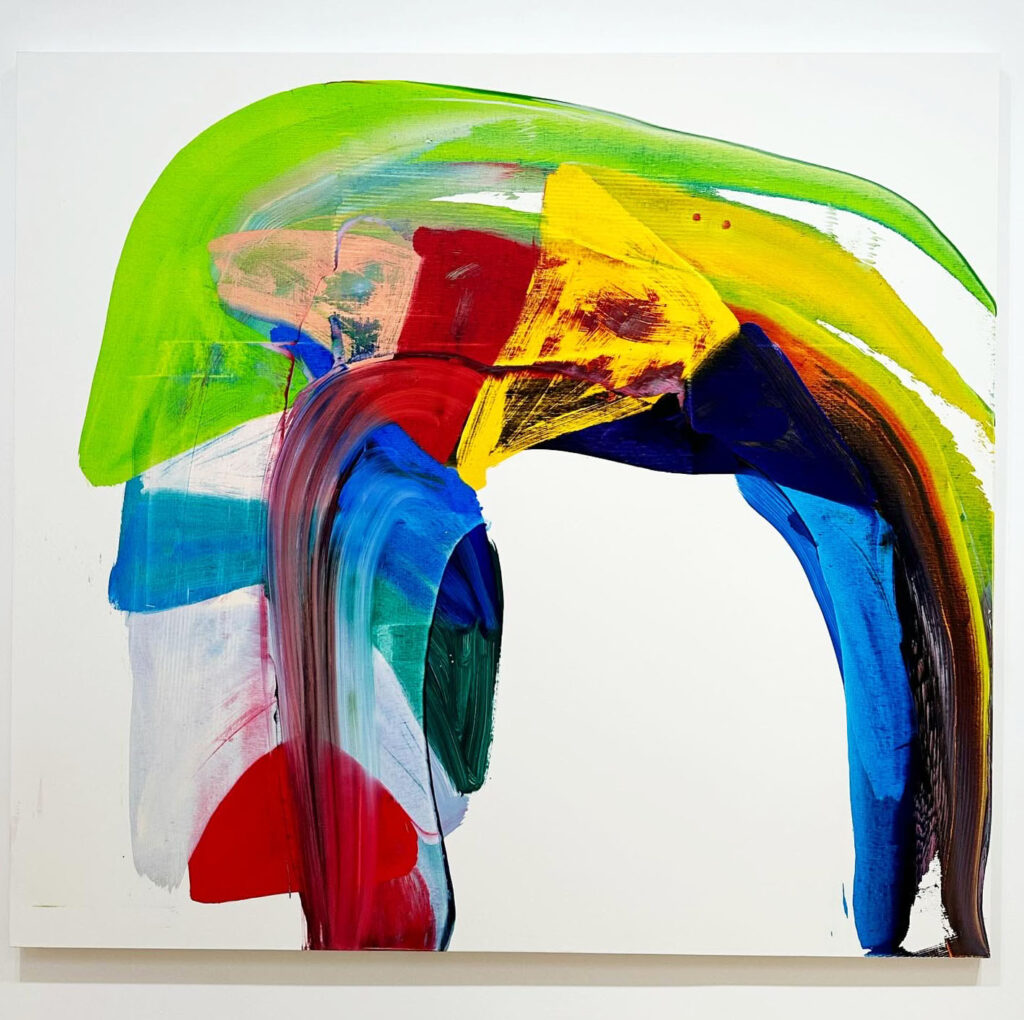
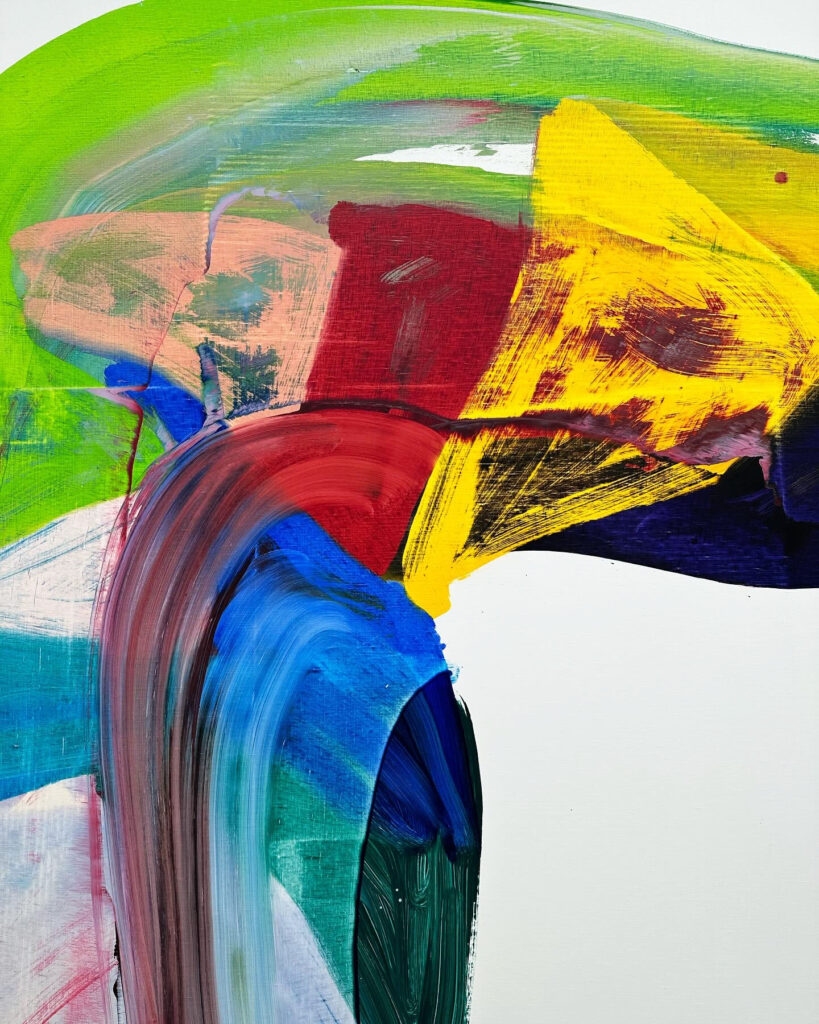
Although better known for her figurative paintings, Jane Freilicher also created several large abstract paintings which were on view last year at Kasmin gallery in NYC.  The paintings hint at a recognizable landscape, but through her use of color and energetic brush strokes she evokes the feeling of being immersed in the beauty of nature- without the boundaries of a more realistic representation.

From the gallery about the work-

The exhibition presents a group of paintings in degrees of abstraction, realized by Freilicher between 1958 and 1962, a period of great inventiveness when the artist was spending stretches of time in Long Island but had yet to establish a studio there. The series marks a crucial moment of discovery and focus for Freilicher, who went on to integrate the freedom, fluidity, and confidence developed during this period into her more recognizable still lifes and landscapes of later decades.

Freilicher’s abstractions have their roots in observation, informed by her studies with legendary abstract painter Hans Hofmann at his schools in New York and Provincetown. In this group of paintings, pastoral landscapes from Water Mill, Long Island, are translated through the lens of the artist’s memory into confident gestural compositions defined by their use of color and sensitive depiction of light. In a 2006 interview for The New York Sun, the artist tells writer Jennifer Samet of this evolutionary moment in her practice: “I remember being overwhelmed by aqueous light and the obliteration of the horizon by fog.” Freilicher’s palette returns repeatedly here to a combination of off-white and light blue, rendered in loose brushwork across an expansive pictorial space to give a palpable impression of the airy, open landscape of the country.

Breaking out of the domestic scale necessitated by previous studio spaces, this generative period saw Freilicher regularly visiting Water Mill and then returning to her Manhattan studio where she would collapse the formal elements of the rural and coastal environments into energetic, improvisational paintings that were significantly larger than her earlier works. While approaching pure abstraction, the paintings from this period retain a compositional recognition of their ordering principles—the horizon line, a boat’s mast, the position of the sun in the sky, and, in the artist’s words, “long vistas of clouds and water.”

The metamorphosis of landscapes that figure prominently in the artist’s life are representative of, as Roberta Smith identified in 2006, “a more personal, grounded version of Color Field painting.” This observation bridges Freilicher to a loose group of contemporaries whose considerations of their immediate environments brought great warmth and aliveness to varying shades of abstraction—Milton Avery, Etel Adnan, Joan Mitchell, Agnes Martin, and Willem de Kooning (whose own abstract landscapes inspired by his time on Long Island went on view at Sidney Janis Gallery in 1959).

Mar 092024
 

The mural above, Celestial Tigers, located outside the Oceanic Market building in Tampa, is by Florida artist Michelle Sawyer.

She is currently showing recent paintings at Parachute Gallery, located in the Kress Contemporary building in Ybor City.

Also check out her Instagram for recent work.

Mar 082024
 

“Valentine”, 2022, oil on linen

“Braid”, 2022, oil on linen

“Braid”, 2022, oil on linen (detail)

The two colorful paintings above are from Andrea Belag’s 2023 solo exhibition, Currents, at Bienvenu Steinberg & J in New York.

From the gallery’s press release-

Since the 1990s, Belag has constantly modified her approach to abstraction through various transitions and mutations. Her internal genealogy matters as much as her relationship to a tradition of abstraction. In the words of artist and critic Julian Kreimer: “it’s not hard to metaphorize those traces, lines left behind by larger swaths of paint that were wiped away, lines whose own shifting colors reveal how they are made by what they’ve touched and changed. But as with so many of Belag’s paintings, the point isn’t to nail down the metaphors (…) Belag’s work becomes an edge condition for painting without flirting with minimalist near-nothingness; it tests out where beauty can emerge, and what we can get to work. It opens up from a few wiped shapes into a sophisticated object able to transport one into a reverie about slippage, slipping away, the here and not hereness of life, death, and the varieties of love”.

Geometry and order have progressively given place to swirling swaths of color, solidity replaced by suspended motion. Painting is an all consuming action. She paints standing up, leaning over and often walking around the canvas placed horizontally. It starts with the arm and as she walks around the canvas her whole body gets involved. Transparent colors on the surface are not fixed and can create form or dissolve into light. She rubs, smudges, and scraps to create translucent, softly luminous surfaces where the brushwork is strikingly visible. “My paintings are contemporary because I paint in the here and now. It’s unavoidable. The artists I feel indebted to are Henri Matisse, Mary Heilmann, Joan Mitchell, Gerhard Richter, Bill Traylor, and Japanese Zen gardens. Style is a dead-end, but I have a point of view. I love transparency and the touch of materials, so I have created a way of painting where I make this possible. I use mostly transparent pigments and fine linen, and I paint wet into wet. The marks are on one layer of the painted surface with very little overlap or pentimento. Color makes space and light come through the paint and emotion comes through as well. There is fear and desire in painting, and that’s addictive. Haptics are the touchstones.” (Andrea Belag, 2023)

Her current solo exhibition, Twombly’s Green, opened this week at Steven Harvey Fine Art Projects.

From their press release-

This grouping of work is, as the title suggests, inspired by Belag’s recollection of Cy Twombly’s use of the color Hooker’s green in his “Pond Paintings.” She writes-

These paintings are inspired by my memory of Twombly’s green and white paintings that I first saw in the Menil Collection in Houston in 2015. I was stunned by his paint handling and his use of Hooker’s Green.

Since then, I learned he painted quickly and directly with his hands. Discovering the “Pond Paintings” was unexpected and I kept thinking about them. Hooker’s green is opaque and dark. But the dark value doesn’t overwhelm the hue. Instead, there is richness and depth without a trace of yellow.

When I identified the pigment and started to paint with it, I felt a vibration. There was a time when painting with green was taboo and now it is ubiquitous.

Is green in the zeitgeist?

All painted within the last twelve months, these works are a continuation of the artist’s practice of lush, energetic abstraction. Playing with circularity in an ongoing attempt to “get away from the grid,” Belag uses color as forms in space, bodies set in motion. Citing foundational inspirations in Matisse and Guston, who she later studied with at the New York Studio School, Belag’s work can also be related to vanguard practitioners of 80s abstraction such as Bill Jensen, David Reed and Mary Heilmann. Her immediate peers Christopher Wool and Joyce Pensato are also compass points in the stripped down dedication to raw painterly brio they share.

This exhibition is on view until 4/13/24.


Mar 012024
 

This mural is by NYC artist Chris Stain and was spotted in Bushwick, Brooklyn in 2020. It is part of Bushwick Collective’s ongoing street art project.

For Chris Stain’s most recent work, check out his Instagram.

Feb 282024
 

The images above are from Brianna Lynn Hernandez’s exhibition Anticipatory|Después, one of three currently on view at Spaces gallery in Cleveland. Her moving video and sculptural installations focus on themes of end-of-life-care, grief, and mourning.

From the gallery about the work-

Anticipatory|Después visualizes the anticipatory grief of caregiving and the process of dying through performative videos and photography. Each piece shares the physical and emotional state of the dying, the caregiver, and at times the two concurrently. Ranging from fast and aggressive dance-like movement to slow and meditative contemplation, the enacted scenes capture a range of emotions and thought processes of understanding and untangling the intertwined traumas of caregiving and acute grief.

As her mother’s caregiver in the final year of her life, Hernández translated her personal experience of grief into her studio practice in order to combat the isolation and shame many grievers face in our death-avoidant culture. Through several series including Anticipatory | Después, the works aim to normalize honest conversations of grief and act as an entry point into education on end-of-life planning. Hernandez states that while we will all eventually experience the pains of loss, preparing for the logistics of death and nurturing supportive communities for grievers can provide comfort and lessen the unnecessary stressors attached to loss.

A Botanical Conversation, Mehdi-Georges Lahlou’s exhibition, explores environmental, identity, and cultural issues using the natural world as a backdrop. The two large murals are of an enlarged palm tree cell as seen through a microscope.

The exhibition statement by curator Conor Moynihan-

The palm tree is a central component of Mehdi-Georges Lahlou’s practice, a motif he has explored to highlight themes of exoticism, migration, and cultural heritage. Recently, Mehdi- Georges Lahlou has used the palm tree to explore themes of colonization, climate change, and history. While members of the Arecaceae family- palm trees- can be found in many parts of the world, they are not found here in Ohio. Unless, of course, you go to the Cleveland Botanical Garden as Mehdi-Georges Lahlou did for his residency at Spaces.

For A Botanical Conversation, Mehdi-Georges Lahlou has created four new video works using the Cleveland Botanical Garden as the setting and backdrop. While many of the plants visible in these works come from elsewhere across the world, his collaborators Diwe Augustin-Glave, CHIMI x Nature, and Dr Lady J are based in Cleveland. In many ways, this body of work imagines the conversations that might happen if the flora in the Cleveland Botanical Garden could speak, sing, chant, and educate, and then transports this dialogue in the gallery space.

Microscopy, the mural that extends over two walls in the gallery, serves a double function. Based on the cell of a dead palm tree, it enlarges from an unusual perspective a motif central to the exhibition. And it also serves as a container and a frame for the four videos. This conversation emerges within the boundaries of the palm tree cell, transporting this exhibition into the botanical garden.

Characteristic of his practice, Mehdi-Georges Lahlou draws our attention to how plants and botanical gardens become ways to highlight histories of colonization, compulsory heterosexuality, and climate disaster all contained under canopies of glass. Yet, especially through the performances of Diwe Augustin-Glave, CHIMI x Nature, and Dr Lady J, they also celebrate new queer ecologies and configurations, melding African and African American musical traditions, queer theory and scholarship, ecological history, and environmental justice towards new ends.

A Botanical Conversation is a cacophony. It asks us to listen carefully to hear all the voices that make up this chorus.

Aaron D. Williams has created a video installation, ESCAPING AAWFUL LAND, that continues the work created for his previous Aawful Friends exhibition. This new creation addresses the issue of anxiety and the power of collaboration as a way to combat it.

From the gallery-

ESCAPING AAWFUL LAND is an immersive exhibition that builds upon the success of Aaron D. William’s previous Aawful Friends showcase at Zygote Press. This new showcase explores the creative journey between Williams and collaborating artists. By delving into anxiety through art, we seek to acknowledge its profound impact on our collective well-being. We must address anxiety as a shared concern and foster a future community that supports and uplifts one another. Through individual and collective artistic expression, we can overcome the gravity of the situation and find healing and unity. In our fast-paced society, anxiety affects people from all walks of life, taking various forms and manifesting in relentless thoughts, paralyzing fear, and an overwhelming sense of unease. Despite its grip, we encourage you to embrace your inner courage and take the leap. The installation will be held at The Vault in SPACES gallery, where you will be transported to AAWFUL LAND – a hidden realm within our city accessible only to those who know it exists. Guided by the mysterious GUARDIAN, you will journey through its enigmatic mysteries. As you step into AAWFUL LAND, you will be captivated by a mesmerizing video presentation. Witness AAWFUL AARON engaged in a gripping game against a formidable opponent, reminding us that we have the inner strength to persevere and pursue our dreams even amidst anxiety. In Aawful Land, anxiety takes on tangible forms and bursts forth in vibrant colors. CREATURE is at the heart of our narrative, an overbearing shadowy figure personifying anxiety and serving as the central antagonist. Aawful Aaron is locked in a fierce battle against CREATURE, desperately seeking escape from this hidden world. However, a subtle hint suggests that Aaron may need assistance to overcome his challenges. Within Aawful Land, a group of trapped artists may hold the key to their collective liberation. Together, they offer a glimmer of hope, representing collaboration’s power in overcoming Aawful Land’s perils. This work serves as a proof-of-concept or work-in-progress, paving the way for Aawful Friends II. In the forthcoming installation, we will feature this newfound group of artists, showcasing their collective efforts and unveiling the transformative power of collaboration. Their shared experience demonstrates that collective creativity and expression can lead to freedom and transcendence. ANXIETY IS HARD – TAKE YOUR SHOT ANYWAY.

All three of these exhibitions close 3/1/24.

Feb 262024
 

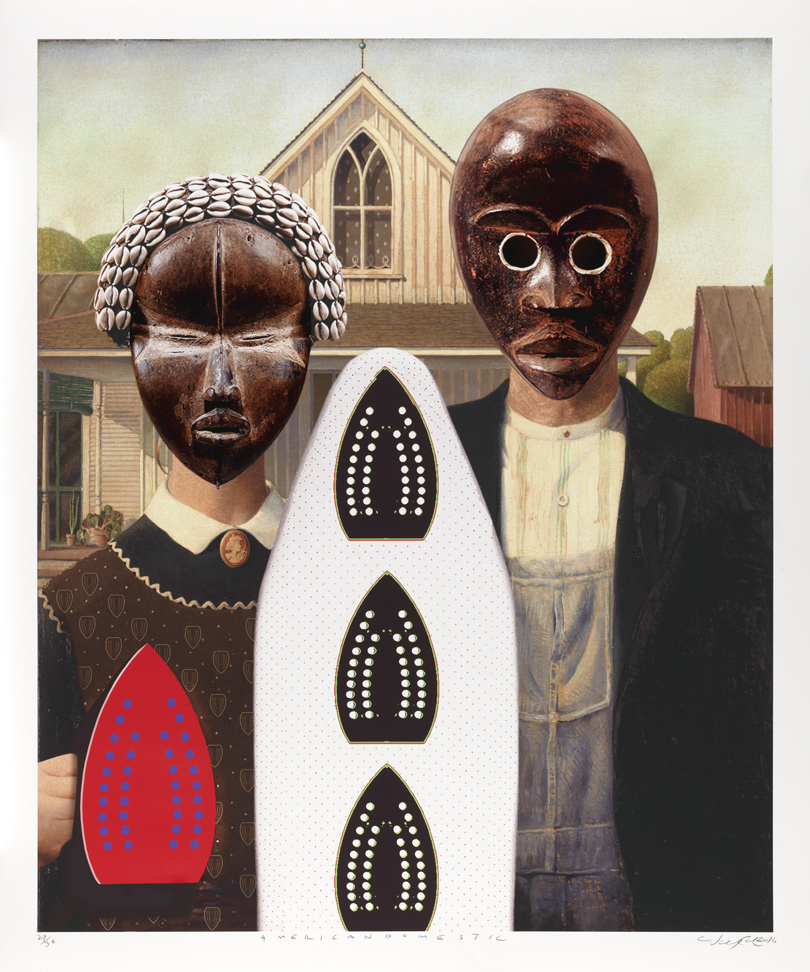
Willie Cole, “American Domestic”, 2016, Digital Print

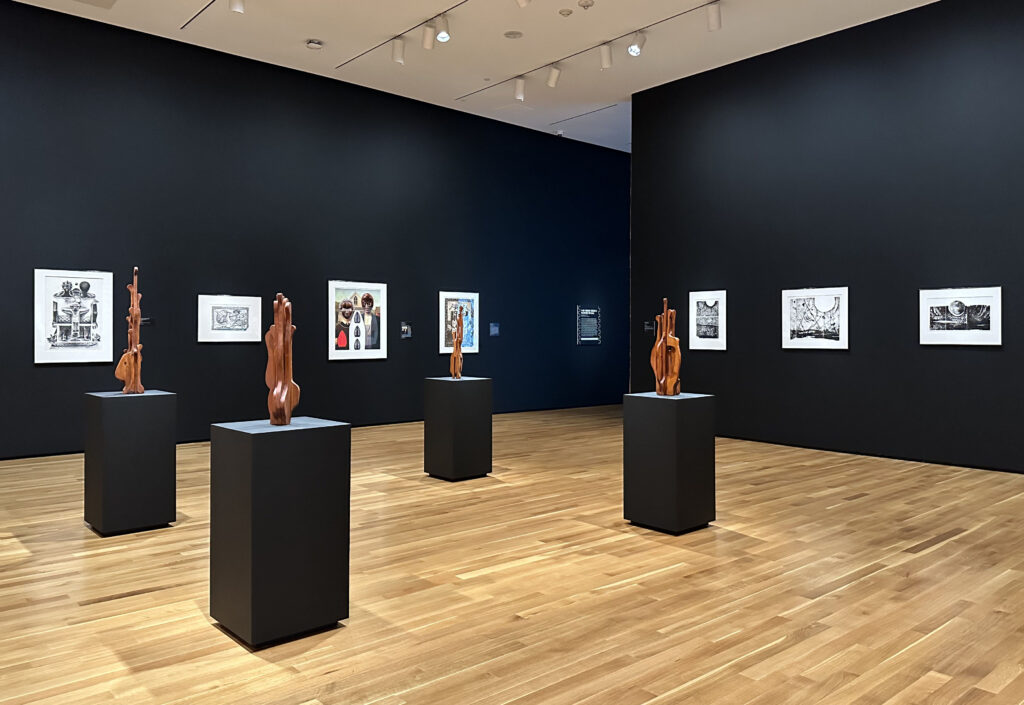
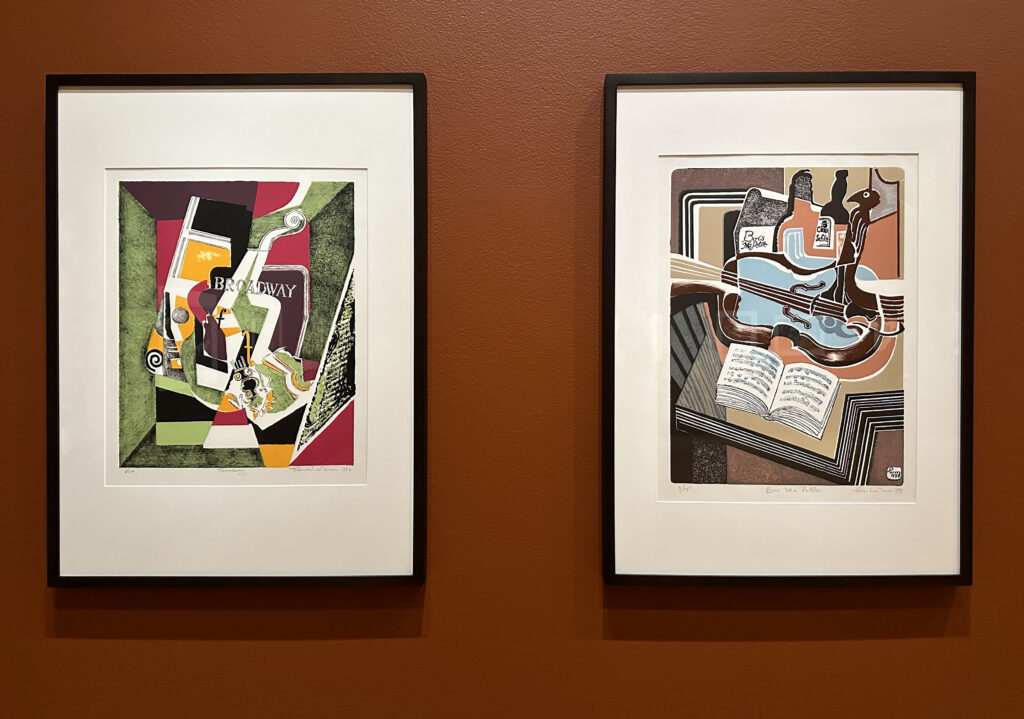
Tom Laidman, “Broadway”, 1993 and “Bois Ma Petite”, 1999, Lithograph on paper

Currently on view at Akron Museum of Art is RETOLD: African American Art and Folklore, a collection of art from the Wesley and Missy Cochran collection, organized into themes exploring aspects of African American history and culture. The show features many well known and lesser known artists including Amiri Baraka, Beverly Buchanan, Willie Cole, Trenton Doyle Hancock, William Pope.L., Tom Laidman, Jacob Lawrence, Alison Saar and more.

From the museum about the exhibition-

African folklore has been around as long as humankind, and the African diaspora in America has added new dimensions to its rich history. African American folk stories teach about culture, the mysteries of life, and the survival of a race of people bought and sold who continue to thrive in an unjust society.

“RETOLD: African American Art and Folklore” focuses on four themes: Remembering, Religion, Racialization, and Resistance. These themes provide a comprehensive retelling of the works featured in the exhibition. In many of the pieces, the artist’s muse connects closely with stories that have been told generation after generation. Folklore texts are featured throughout the space as a means to retell a richer, deeper story of African American culture.

There are more than forty artists represented in this exhibition, all holding one similar truth: their story of joy and struggle in the African American experience.

In addition to the artwork, there is also an educational video produced by Josh Toussaint-Strauss of The Guardian that explores the misconceptions about Haitian Voudou that is worth a watch.

How ‘voodoo’ became a metaphor for evil

Feb 242024
 

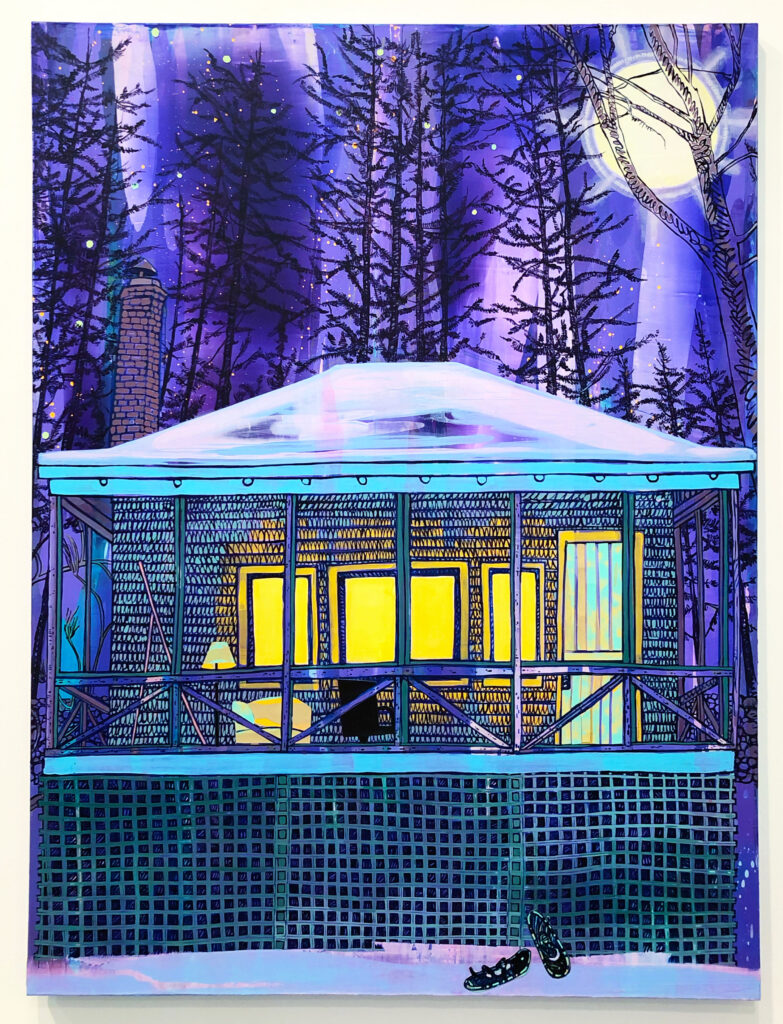
Hope Gangloff’s painting MacDowell Cheney Cabin in the Winter Super Moon, 2019, was shown at her 2019 solo exhibition at Susan Inglett Gallery in NYC.  It is one of several created during her residency at MacDowell Colony in Peterborough, New Hampshire.

Feb 232024
 

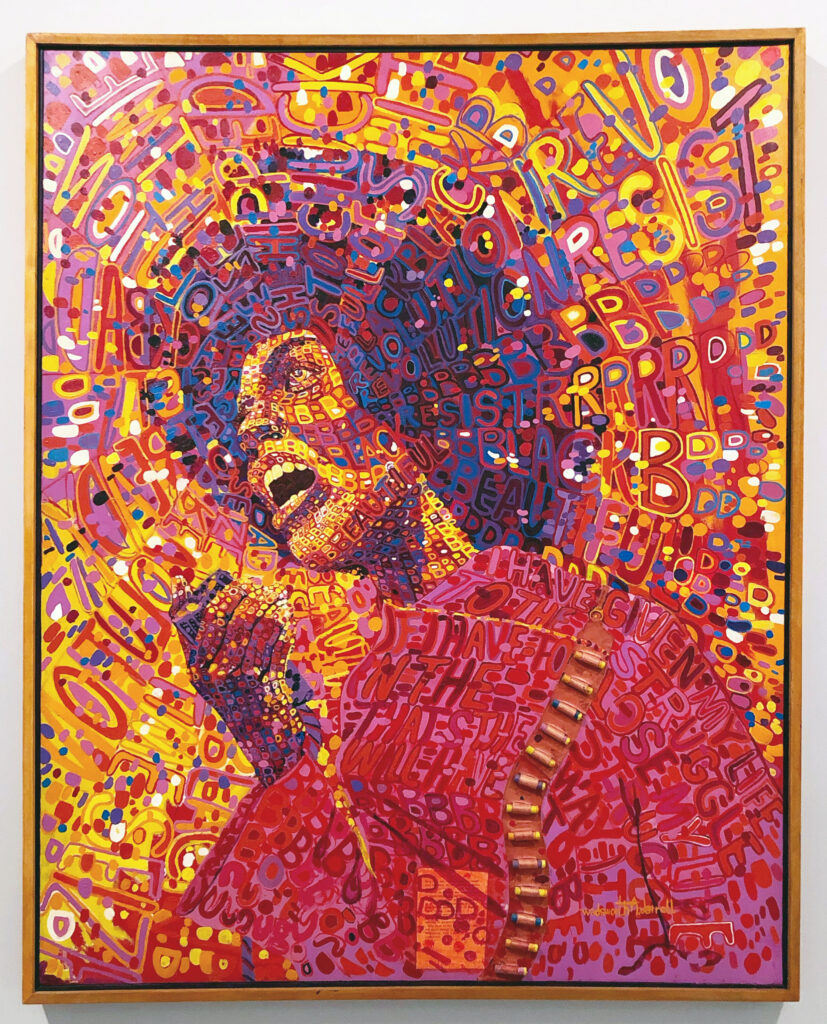
Wadsworth A. Jarrell’s Revolutionary (Angela Davis), 1971, spotted at Brooklyn Museum in 2020, is based off of a photograph of the activist.  The colorful painting includes words from her speeches and actual bullet cartridges.

From the museum about the work-

Wadsworth Jarrell’s Revolutionary (Angela Davis) is one of the most recognized paintings associated with the Black Arts Movement, a cultural manifestation of the Black Power Movement. Artists of this movement sought to create uplifting images that called upon Black people to harness their collective power. The power of communal action is here expressed through a chromatic swirl of individual colors that coalesce into a unified image of the radical activist and intellectual Angela Davis. Davis’s militant clothing—complete with bullet cartridges—was modeled after the Revolutionary Suit designed by artist Jae Jarrell, Wadsworth’s wife. An icon of Black Power, Davis continues to lead the prison abolition movement today.

Jarrell, along with his wife, is part of the African American artist collective AFRICOBRA, formed in Chicago in 1968.

Below is part of a statement about the group from their website by another of the founders, Gerald Williams.

AFRICOBRA began very loosely in 1968 as an association of visual artists. We decided to commit our selves to the collective exploration, development, and perpetuation of an approach to image making which would reflect and project the moods, attitudes, and sensibilities of African Americans independent of the technical and aesthetic strictures of Euro-centric modalities.  Jeff Donaldson, who spearheaded the movement,Wadsworth Jarrell, Jae Jarrell, Barbara Jones-Hogu, and myself, Gerald Williams opened the lid on what we called AFRICOBRA – African Commune of Bad Relevant Artists.  It was an original name that came to identify our place within the broader context of Black art.

Our mission was to encapsulate the quintessential features of African-American consciousness and world view as reflected in real time 1968 terms.  For months, beginning as early as 1967, we examined and talked about the forms of expression and images produced by previous generations of artists.  We came to the realization that there was not the existence of a consistent, unequivocal, uniquely Black aesthetic in visual arts as there was in other disciplines, notably music and dance. Many of our contemporary artists, at the time, generally said that they “were artists who happened to be black”, or held the view that their work was expressing universal ideas or concepts that were not tied to such a narrow category as Black art.   The notion of an intrinsically Black view point, expressed in characteristically “Black ways”  was a relatively alien idea for the most part.  That notion begged the question as to whether it was possible to create a style or approach to art that at its core could be identified as African-American or Black, notwithstanding  the presence of Black imagery or subject matter.  If imagery and subject matter were the sole criteria then the question was moot.  One could conclude, thereby, that Winslow Homer or any number of artists produced Black art when they painted Black images.  After numerous brain storming sessions where such topics were discussed, after test projects and critiques,  the five of us mapped out the core principles that became the foundation of AFRICOBRA.


Feb 162024
 

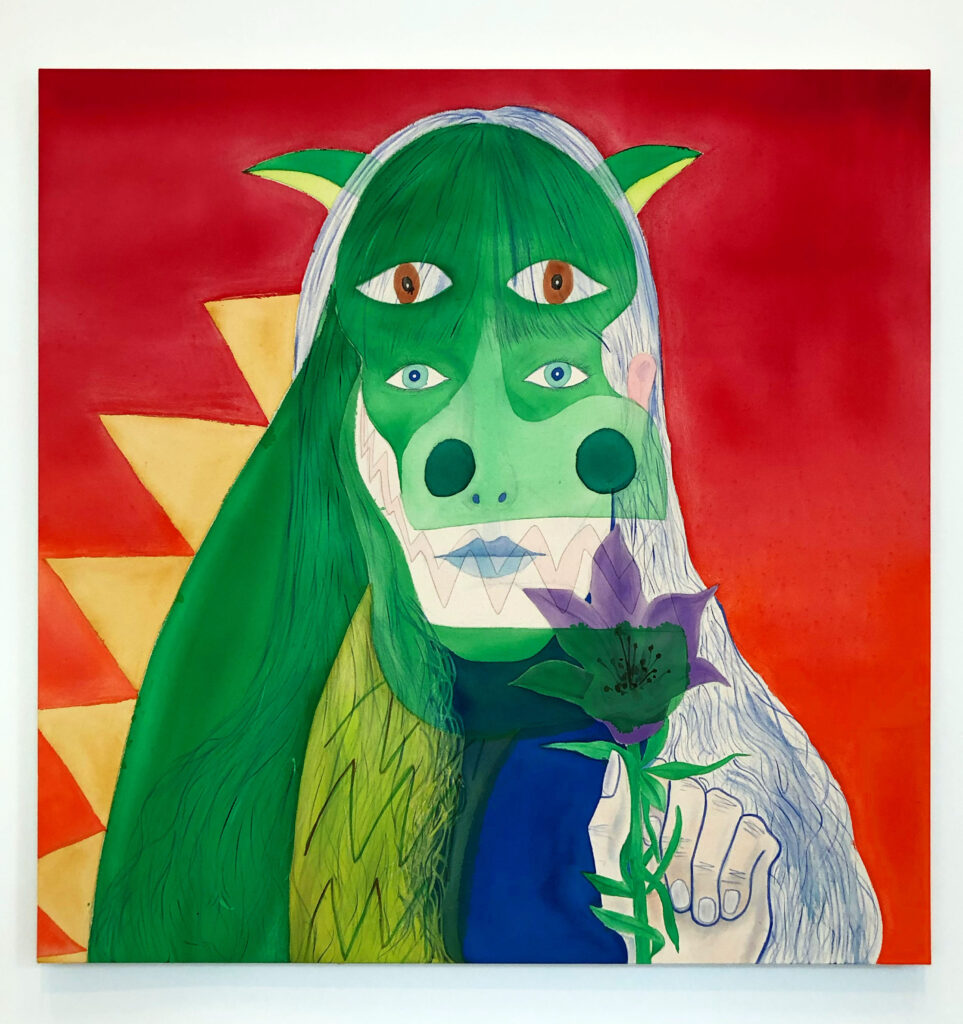
Gentle Ladies Dragon Man, 2021, (Acrylic and graphite on canvas) by Jason Fox was part of the group show Time-Slip at Petzel Gallery in New York in 2021.

Feb 162024
 

This mural was created by Jose Mertz for the 2017 edition of the SHINE Mural Festival in St. Pete, Florida.

For more work by the artist, also check out his Instagram.