Aug 062026
 

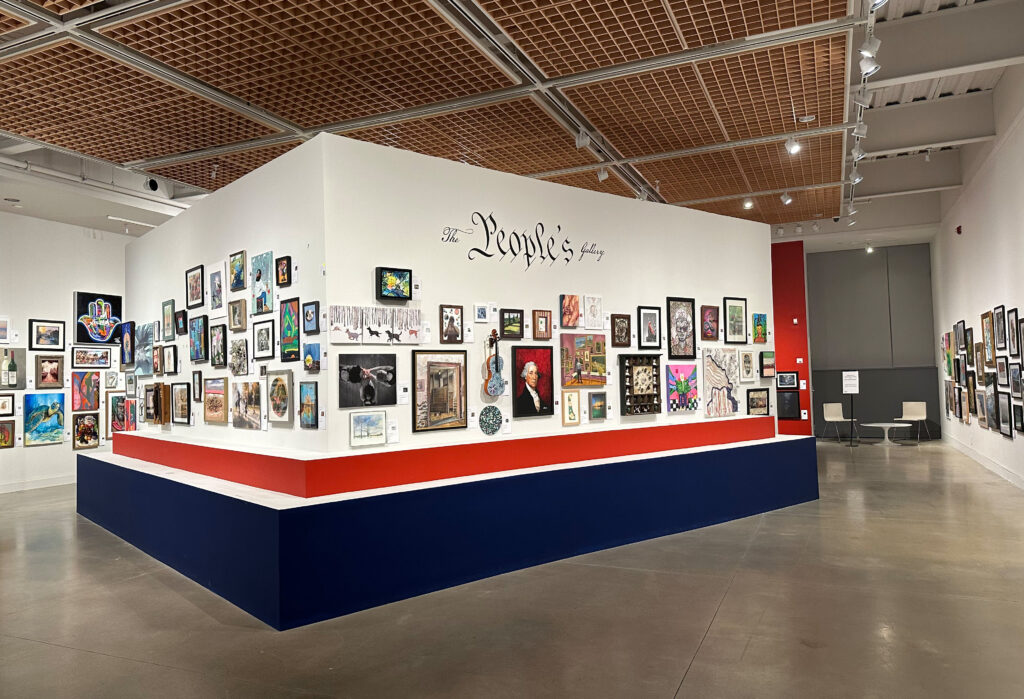
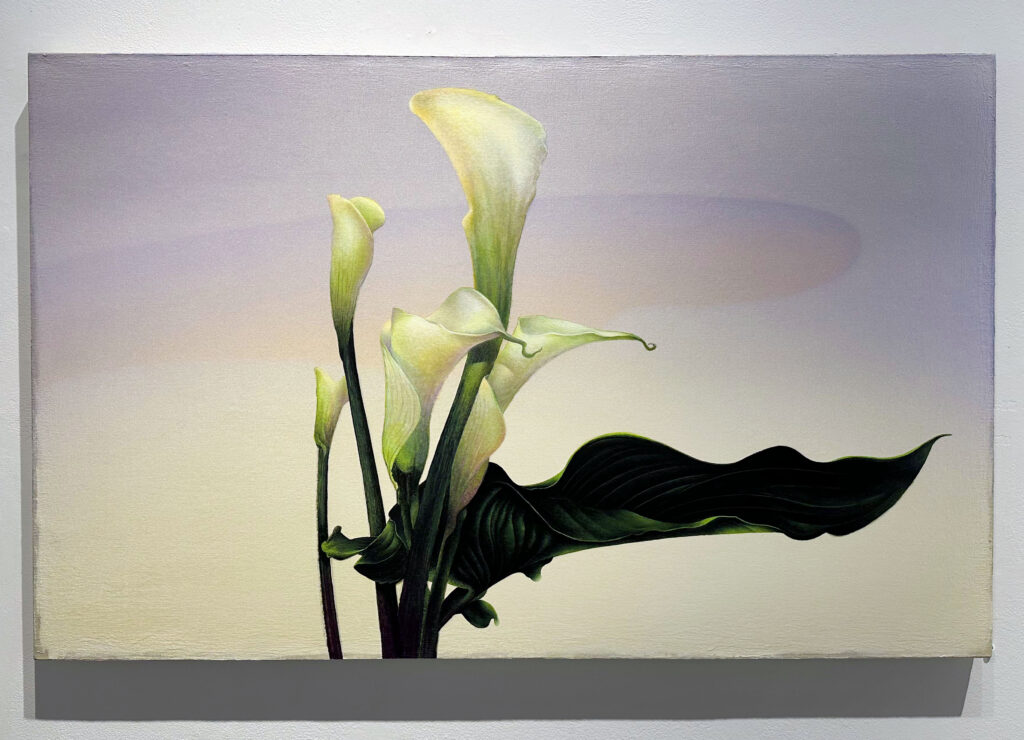
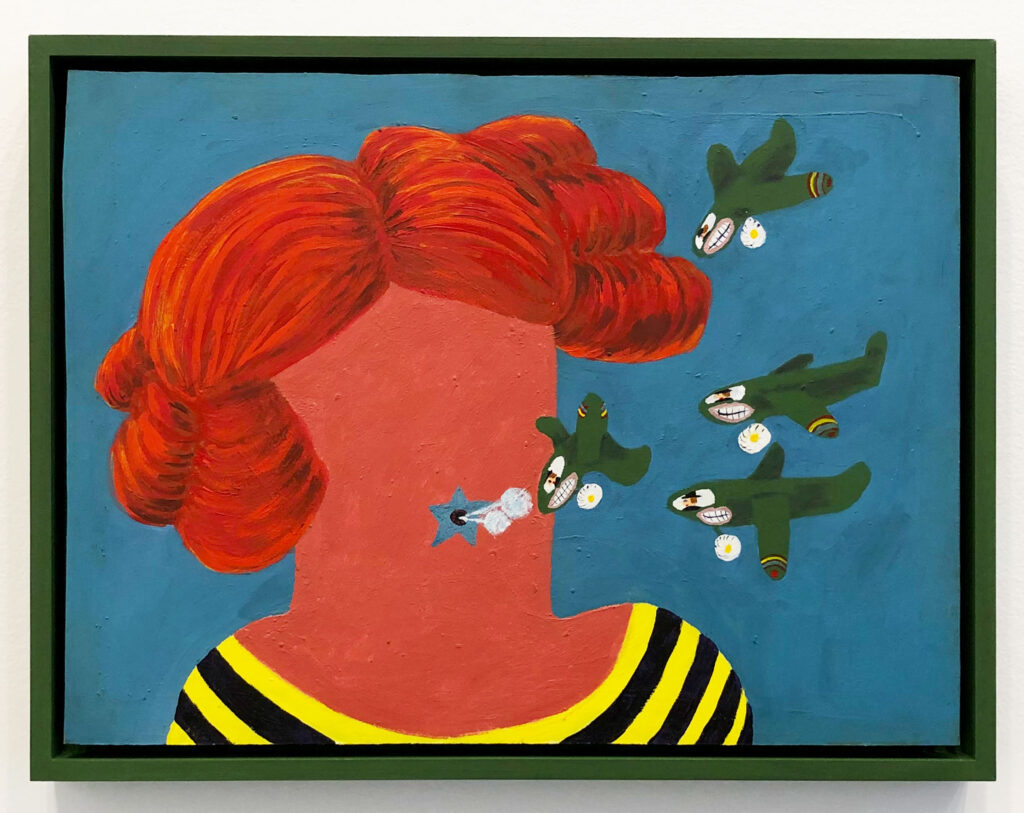
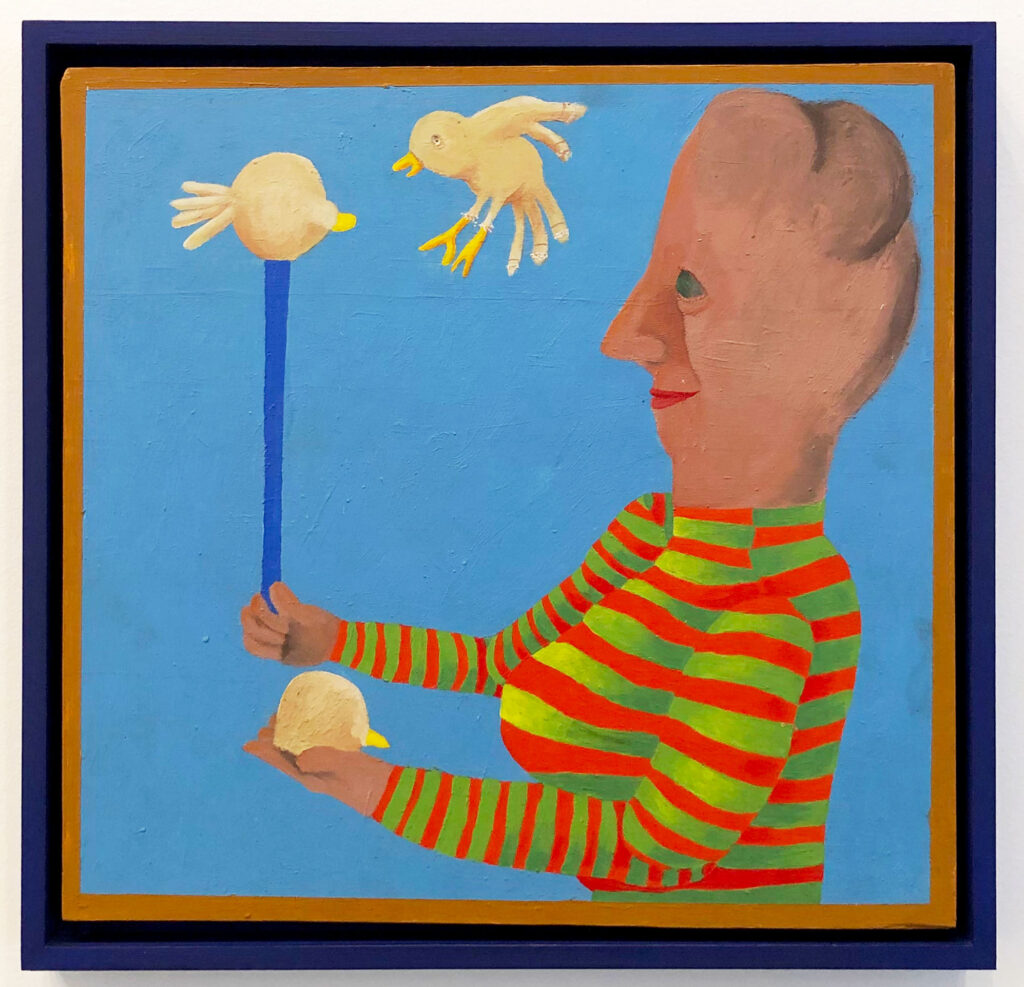
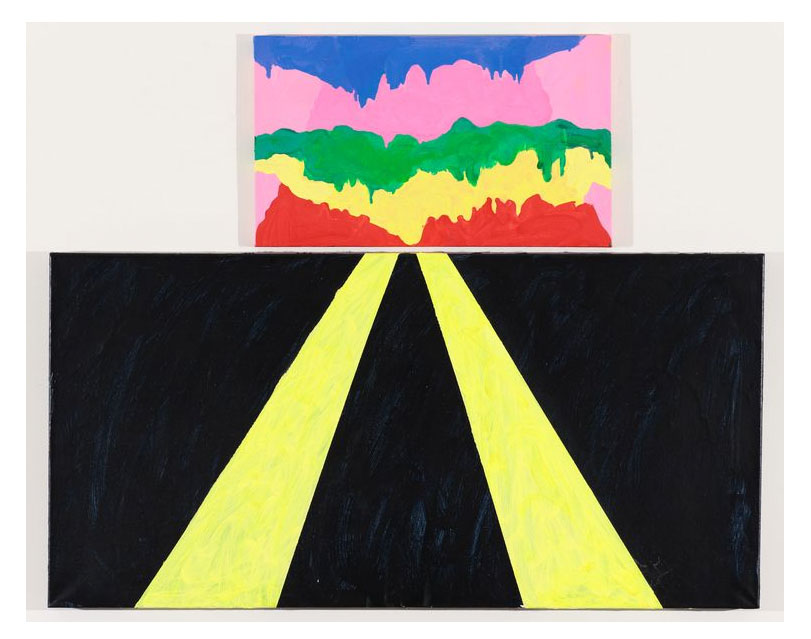
Leonard A. Harmon, “Untitled”, c.1980s, Oil on masonite

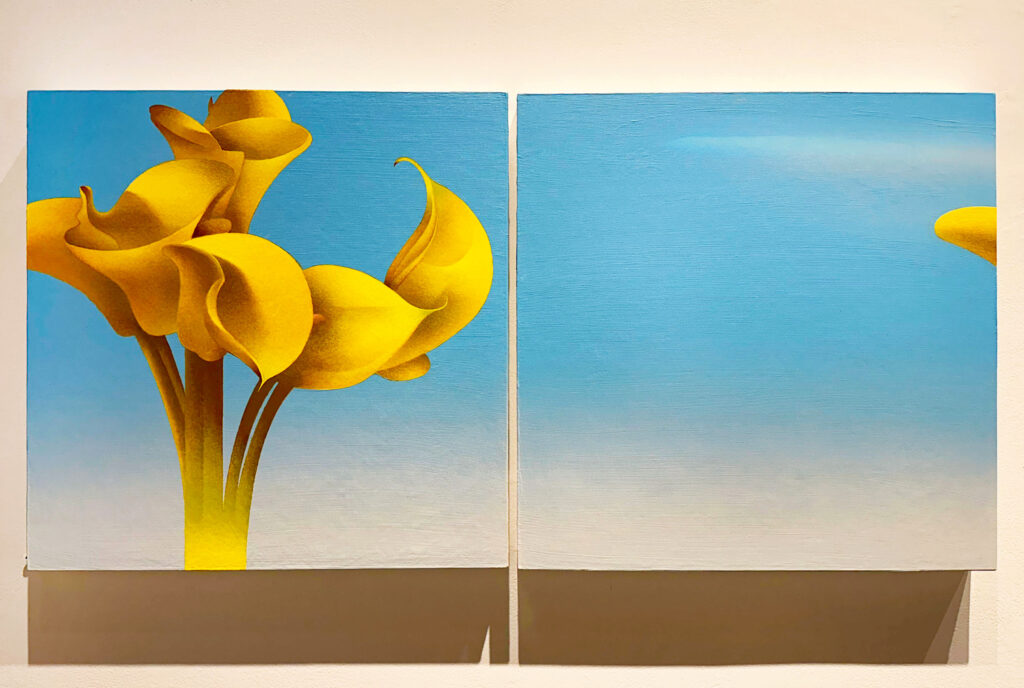
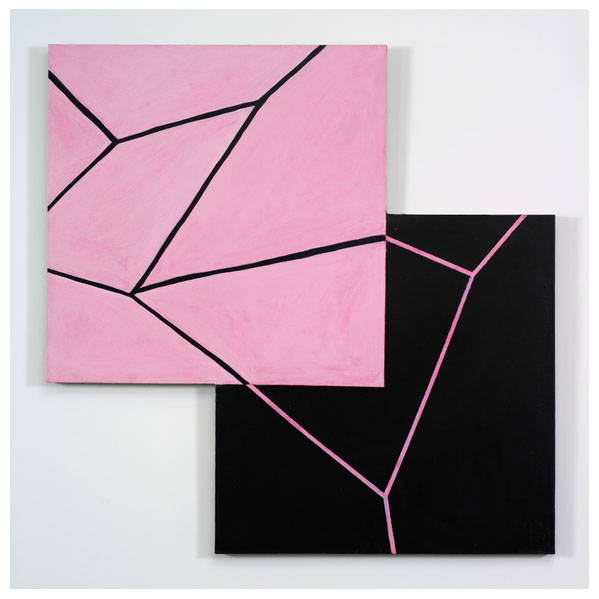
Leonard D. Harmon, “Last Copper Moon”, 2025, Acrylic, spray paint, oxidized copper shavings, paper on wood panel

Leonard D. Harmon, “Last Copper Moon”, 2025 (detail)

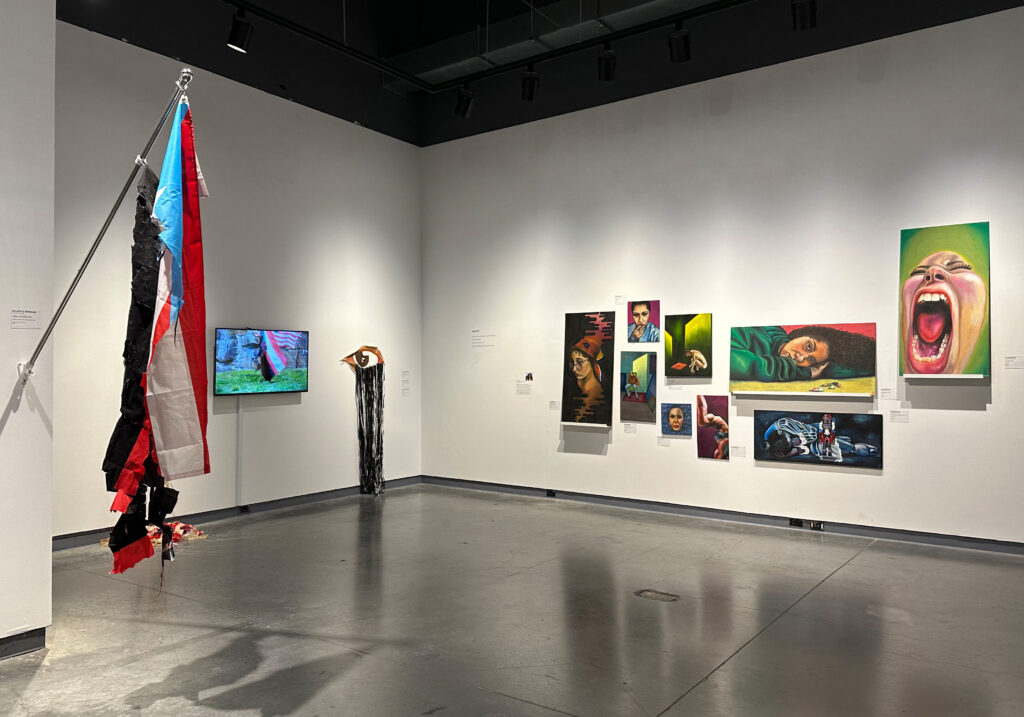
Delaware Art Museum‘s Living Indigenous showcases and celebrates Indigenous communities and artists in multiple locations in the museum. The exhibition is part of the museum’s programming for the 250th anniversary of the United States.

Developed in partnership with the Nanticoke Indian Museum, one room dedicated to works created by Indigenous artists includes paintings by Leonard A. Harmon and his nephew, Leonard D. Harmon.

From the museum and artist about Last Copper Moon (pictured above):

Leonard D. Harmon notes the rich artistic legacy that precedes him. He explains, “I draw inspiration from my ancestors to infuse a modern twist into traditional arts.” This painting references the architectural forms his uncle, Leonard A. Harmon, was creating in the 1980s. A copper moon, or total lunar eclipse, is a sacred Indigenous occurrence, and the images Harmon includes refer to associated rituals.

The exhibition continues upstairs with two different series of portraits of members of Delaware’s Indigenous communities– Will Wilson‘s Critical Indigenous Photographic Exchange (CIPX) and Andre’ L. Wright, Jr.’s Indigenous Faces of Wilmington. In 2022 the museum invited Wilson to continue his CIPX project in Delaware and facilitated a photoshoot of citizens of the Lenape Indian Tribe of Delaware (The Original People) and the Nanticoke Indian Tribe (The Tidewater People). That same year the museum also commissioned Andre’ L. Wright, Jr. to create a project showcasing diverse Wilmingtonians, two of which are pictured below.

Two portraits by Andre’ L. Wright, Jr. from his series “Indigenous Faces of Wilmington”

Living Indigenous is on view until 8/23/26 and the museum is free to visit every Thursday from 4-8pm.

Jul 272026
 

Caproni Brothers, “The Boxer at Rest”, 19th century Painted plaster cast from the original bronze which was produced between the late fourth and second centuries BCE

Lisa Brice “Untitled”, 2025 Pigment and natural water-soluble binders on linen

Jeffrey Gibson, (l to r) “Power, Power, Power”, 2017, “People Like Us”, 2014, and “You Can Feel It All Over”, 2015, Repurposed punching bags, glass beads, artificial sinew

Rashid Johnson, “Self-Portrait Laying on Jack Johnson‘s Grave”, 2006, Durst Lambda print mounted on panel

Approaching the front steps of the Philadelphia Museum of Art, you will find people of all ages and backgrounds taking photos with the statue of Rocky out front, often imitating his famous pose. Through a variety of works from antiquity to the present day, Rising Up looks at the history of this statue, the meanings attached to monuments, and the allure of boxers and boxing culture.

From the museum about the exhibition:

Blending the worlds of art, sports, and popular culture, Rising Up takes on the life of monuments by exploring the meanings and mythologies of the Rocky statue. The exhibition looks to the statue of the most famous Philadelphian who never lived as a way to better understand our complex and vital relationships to our public monuments.

The statue first appeared on-screen in the Oscar-winning Rocky film series. The third installment, Rocky III (1982), featured the dedication of a monument that celebrated the boxer as both an underdog and a hero. The movie-made statue was placed outside the actual museum during filming, a dynamic blurring of art and life that continues to this day. Since that introduction, and through the statue’s departure and prolonged absence from the museum grounds to its prodigal return to the steps, the statue has sparked debate over its aesthetic value and its role in the city. Today, the power of the Rocky statue as a monument stems from its ability to summon public participation.

From antiquity to modernity, Hollywood to contemporary art, Rising Up spotlights both popular narratives and undertold stories surrounding the Rocky statue. Each gallery offers a response to the exhibition’s central question — why do millions of people visit the Rocky statue at the steps of the Philadelphia Museum of Art each year? — and further explores the relationship between art, boxing, and civic identity. It offers a renewed context to consider the statue through works and artifacts that reflect on the deep legacies of boxing monuments across time.

Rising Up marks the first time that the Rocky statue has been displayed inside the museum, explored alongside Philadelphia’s landmark boxing culture and multigenerational artists’ interpretations of sport and society. At its core, the exhibition looks at how monuments are made — by artists and by us — through the lens of the Rocky statue and the ways people engage, debate, and gather around this site of memory.

This exhibition closes on 8/2/26.

Jul 242026
 

As you approach the Calder Gardens building, you will first notice the gardens and, if you visit in spring, the flowers. Once inside you’ll find a selection of Alexander Calder‘s works, including a few of his paintings. The space is organized in a way that never feels crowded, encouraging visitors to look at the work from different angles or watch how some pieces move with the slightest change in the air around them.

For the month of July, Philadelphia residents can visit Calder Gardens and the Barnes (which is located across the street) for free.

About Calder Gardens from their website:

Calder Gardens is a new art institution dedicated to Alexander Calder (1898–1976), one of the most acclaimed and influential artists of the 20th century. Building on the artist’s enduring legacy, it is conceived as a place where an evolving interplay between art, architecture, nature, and programming encourages contemplation and self-discovery.

Set within a landscape featuring more than 250 varieties of plants in gardens conceived by Piet Oudolf, Calder Gardens’ 18,000-square-foot building, designed by Herzog & de Meuron, houses a rotating installation of artworks by Calder. Spanning the artist’s 50-year career and diverse bodies of work, the objects on view respond to architectural moments rather than art historical narratives. This selection of artworks slowly changes over time, echoing the natural rhythms of the seasons. Some will remain for years, while others are only on view for a few months, creating an ever-changing environment that encourages close looking and repeat visits.

In dialogue with Calder’s own experimental practice, programming at Calder Gardens presents performances, sonic experiences, screenings, lectures, and other events that connect the artist’s legacy of innovation to contemporary art. Emphasizing mindfulness and environmental awareness, Calder Gardens is a space that foregrounds the interconnectedness of all elements of life. Straying from fact-based learning, Calder Gardens offers daily walks that encourage personal introspection as visitors move through the building.

Calder Gardens is located on the Benjamin Franklin Parkway in the heart of Philadelphia, a city with deep connections to the Calder family across several generations. It extends this lineage to the present day and joins Philadelphia’s rich artistic and cultural communities.

Jul 222026
 

American artist Edward Hopper was born today, July 22nd, in 1882. He created numerous portraits of people in New York City, including the one pictured above, Summertime, painted in 1943.  It is currently on view at the Delaware Art Museum.

Jul 092026
 

New Deal Posters

Willie Cole, “Rolanda”, November 5, 1978, Pastel on brown paper bag. This work was created while Cole was a CETA employee in Delaware

Photographs from the 1975 CETA-funded project “CITYSIGHTS/CITYSOUNDS” in Wilmington

Dorothea Lange, “Migrant Mother, Nipomo, CA”, 1936

Clockwise from top left: William Davidson White, “Children in the Tree”,1934; Michael J. Gallagher, “A Man’s Job”, c.1933-1934; Philip N. Yates, “Broken Nets”, 1934; Walter Willoughby, “Winter Landscape”, c. 1933-1934

Helen Farr Sloan, “W.P.A. Theater”c.1935, Oil on board. It depicts a Federal Theater production during the Depression in NYC’s Washington Square Park. These productions were often free or heavily discounted.

At a time when government arts funding and jobs programs are needed more than ever, Citizen Artist at Delaware Art Museum reminds visitors of the positive and long lasting impact of two past initiatives- The New Deal in the 1930s and 1940s, and the Comprehensive Employment and Training Act of 1973 (CETA). Featuring artwork created during these both of these time periods, the exhibition also highlights the important contributions made by artists in their communities.

From the museum about the exhibition:

Citizen Artist highlights diverse artists working for America during 1930s and 1940s Depression-era programs and federally funded initiatives of the 1970s. The New Deal and the Comprehensive Employment and Training Act were catalysts in Delaware and across the nation as economic relief programs amplified the arts, creating new possibilities for creative employment. This exhibition centers artists as historians, storytellers, and visionaries during the Semiquincentennial.

Through the Comprehensive Employment and Training Act of 1973 (CETA), the Department of Labor supported a nation’s worth of art programs on a scale not seen since the conclusion of the New Deal in 1943. Those New Deal artists that outlived the Federal Art Project never forgot the significance of their work for the public, and they took that knowledge to the classrooms and administrative offices where they carried out the rest of their careers. CETA was designed as a jobs program, not an arts program, but Title VI of the legislation funded opportunities for the cyclically unemployed —artists—in public service roles. When CETA arrived in the 1970s, artists and their allies across the nation quickly understood its potential in the context of the legacy of the New Deal.

Citizen Artist is a story about reciprocal support between artists and communities. The exhibition celebrates artists who found lasting success through their participation in fine art programs like the Public Works of Art Project and CETA-funded contemporary art spaces. We also honor the public service work undertaken by tens of thousands of New Deal and CETA-funded artists, especially the painters, puppeteers, and photographers who produced educational resources and performances for children across the nation. Citizen Artist looks back at the intertwined histories of CETA and the New Deal to elevate how artists can and do support the public. By working in graphics offices, writers’ programs, and darkrooms, New Deal and CETA artists created and transformed the physical and cultural infrastructure of the United States.

Included within Citizen Artist is Citizen Photographer, an exhibition of images created by Delaware photographers for the U.S.’s 250th anniversary.

From the museum about Citizen Photographer:

What does it mean to be a Delawarean at the nation’s 250th anniversary? The Delaware Art Museum, collaborating with Wilmington’s Teen Warehouse, the Smyrna Opera House, and the Lewes Public Library, invited residents across the state to engage in civic reflection and contribute to shaping public perceptions of identity through photography. Citizen Photographer is inspired by the federally funded initiatives of the past, such as the Farm Security Administration and the Comprehensive Employment and Training Act. These were times when documenting the nation and the many people who called it home was an earnest endeavor, the means to understand and appreciate our individuality, humanity, and common needs.

At the United States 250th anniversary in 2026, this project offers multiple ways for Delawareans to engage as learners, artists, and citizens contributing to the state’s shared story. Photographers Morris Brown II, B. Proud, and Andre’ Wright, Jr. led workshops across the state and selected the 24 photographs on view. For Wright, Jr., Citizen Photographer is “about perspective, voices, and the stories people choose to tell about where they come from.” Proud reflects how local photographers “captured the many facets of Delaware, from its cities to its farmlands, from its people to its landscapes, revealing why the state truly lives up to one of its nicknames, ‘Small Wonder.'” Morris invites us to “take the time to treasure each photograph and to experience each Delaware love story on exhibit.”

This exhibition closes 7/19/26.


Jul 062026
 

Mexican artist Frida Kahlo was born today, July 6th, in 1907. She painted many self-portraits, including the one pictured above, Me and My Parrots (Yo y mis pericos), from 1941. The painting was on view as part of the 2020 exhibition Vida Americana: Mexican Muralists Remake American Art, 1925–1945 at the Whitney Museum in New York.

Her work can currently be seen in the exhibitions Frida: The Making of an Icon at the Tate Modern in London and Frida and Diego: The Last Dream at the Museum of Modern Art in NYC.


Jul 032026
 

Artist Meg Saligman created this mural, Our Flag Unfurled, in 2001, for Mural Arts Philadelphia.

From the Mural Arts website:

In the wake of the 9/11 attacks, artist Meg Saligman volunteered to paint this now iconic mural, Our Flag Unfurled on the massive south facing wall of Philadelphia Warehousing and Cold Storage building. The design was intended to appear slightly sad, as if unfurling down the side of the building.

Painted just north of center city, between I-95 and the Benjamin Franklin Bridge, the size and location of the mural make it a gateway to the city for thousands of daily commuters.

Originally intended as a temporary display of resilience, the 6,000 square foot image of the flag has remained one of Mural Arts’ most visible and iconic works since the fall of 2001. Although Sherwin Williams donated their highest quality paint for the original project, 15 years is a long time for any work of public art. In 2016, the mural received a refresh in time for the Wawa Welcome America July 4th ceremonies, and the Democratic National Convention later that month.

Jul 022026
 

The Talented Mr. Trotter: You Can Be Anything, located on the wall of The Clay Studio building, was created by Philadelphia artist Roberto Lugo in 2022.  It is a portrait of Philadelphia musician Tariq Trotter, aka Black Thought, of The Roots.

From Mural Arts Philadelphia about the mural:

The Talented Mr. Trotter: You Can Be Anything by artist Roberto Lugo is located in the Olde Kensington neighborhood of Philadelphia, Pennsylvania. Lugo has taken inspiration from musical artist Tariq Trotter of The Roots, particularly his story of growing up in Philly as a renaissance man. The mural design explores Trotter’s personal and artistic influences, while materially representing his myriad elements of inspiration and support through combining textile and ceramic patterning from across the world. Trotter’s central portrait is elevated in being formally honored on a highly decorative vase, flanked by his grandmother, who raised him, on the left and Afrika Bombaataa on the right. Traditional floral patterns are spread across the background but are filled with primarily non-Western and street culture patterns. Visual references range from African and South American textile prints, to the graffiti-esque fonts of sneaker culture.

A Kensington-born potter, social activist, spoken word poet, and educator, Roberto Lugo sees his pottery as a process of transforming the ground we walk on into something we eat from. His studio practice communicates with diverse audiences that, in some cases, are not so invested in using art to understand the world. Over the past two years, Lugo has led ceramic workshops at Tyler School of Art and several virtual design challenges with youth in Mural Arts’ Education program. These workshops have tapped into everyday patterns and ceramic traditions from all over the world. Lugo has created a large mural inspired by Roots leading member and proud Philadelphian, Tariq Trotter. Trotter’s multi-talented and visionary approach to his creative practice and humble dedication to his home city are core aspects of Lugo’s mural homage.

A longtime advocate for The Clay Studio and its community programs, Lugo’s mural is installed on The Clay Studio’s building in Olde Kensington at 1425 N American Street that opened in spring 2022.

Jul 022026
 

“Alberto Ayala”, acrylic on wood; Portrait of Roberto Lugo’s grandfather; and “Potpourri Boat”, Ceramic sculpture

Art history, American history, and personal history mix in Roberto Lugo‘s exhibition, American Crib: What’s Happening?, currently on view at The Clay Studio. Wandering around the installation you’ll find portraits of Nikki Giovanni and Lugo’s grandfather, Billie Holiday and The Roots on ceramic sculptures, and plenty of places to sit and take it all in – including a graffitied train car.

From The Clay Studio’s website:

Roberto Lugo welcomes visitors into an imagined living space celebrating his Philadelphia roots and cultural heritage. This deeply personal reflection on America’s socio-political landscape celebrates the power of art to communicate. Lugo mixes historical pottery traditions with pop culture, humor, and critical clarity to address complex issues, including cultural identity, mental health, social justice, and the resilience of underrepresented communities.

This exhibition is a part of Radical Americana. A larger multi-location project that brings together art and culture institutions around Philadelphia. Learn more about Radical Americana here.

More than just a retrospective of Lugo’s career so far, “American Crib: What’s Happening?” will be a deeply personal and poignant reflection on America’s socio-economic and political landscape.

And the Lugo’s statement about his work:

My work is intended to be a biographical narrative that tells the many stories of my life. The objects I create speak of personal subjects – my experiences with obesity, racism, and class division. I use the associations with ceramic material and forms of pottery, such as elite fine china and porcelain, to discuss these issues with humor and irony. My strongest concepts are influenced from the juxtaposition of cultural elements in the form of mass media and current events. Using historical ideology within pottery as a vehicle to introduce a modern theme is of great importance because it allows me to add more dimensions to my artwork.

In the video below, also from The Clay Studio’s website, Lugo discusses the work, some of his inspirations, and the installation.

This exhibition closes 7/9/26.

Jun 262026
 

Tomorrow (6/27/26) is the last day to see Alexandria Nazar‘s paintings for Ducks on the Pond at AUTOMAT Collective.

From the gallery and curator Whitson Ramsey about the exhibition:

There’s a world where it seems an obvious choice to curate a baseball show in 2026, this country’s semiquincentennial, a cute milestone for this kitchen sink of a nation. After all, baseball is America’s Pastime. However, the sport predates America, and America itself is tremendously predated by the land it occupies. Even as a baseball fan myself, the idea of curating a show about baseball did not interest me. But this show isn’t about baseball. This is a show about painting, about bodies, about intimacy. Alexandria Nazar pays close attention to the subtle moments among players, coaches, their environments, and their mannerisms. Her paintings are about the material quality of paint on the surface as much as they are about the subjects they form.

This show highlights Nazar’s sophisticated yet playful handling of paint on a spectrum of canvas sizes. From the smallest work, a nearly monochromatic 7 x 5-inch painting, to the largest: a monumental, five-panel installation covering 17 feet on the gallery’s main wall, these paintings pack a punch and require a long, slow gaze.

On the other hand, a summer show whose content is explicitly relatable allows for a wider audience to enjoy these paintings. I firmly believe art should be accessible to the masses and not gatekept by private collectors and overpriced institutions. A surface-level “baseball show” allows new eyes to explore the subtle beauty of art-making and material exploration. Nazar has a knack for grabbing the viewer’s attention from a mile away. At the same time, she slowly draws you in, noticing the lustful impasto and clever brushwork, intense layers of underpaintings finding their way back to the surface, and a maze of abstracted clusters of intertwined bodies.

Ducks on the Pond is a celebration of paint through a gendered expression of male physique, American sports culture, brotherly love, and camaraderie.