Jul 282026
 

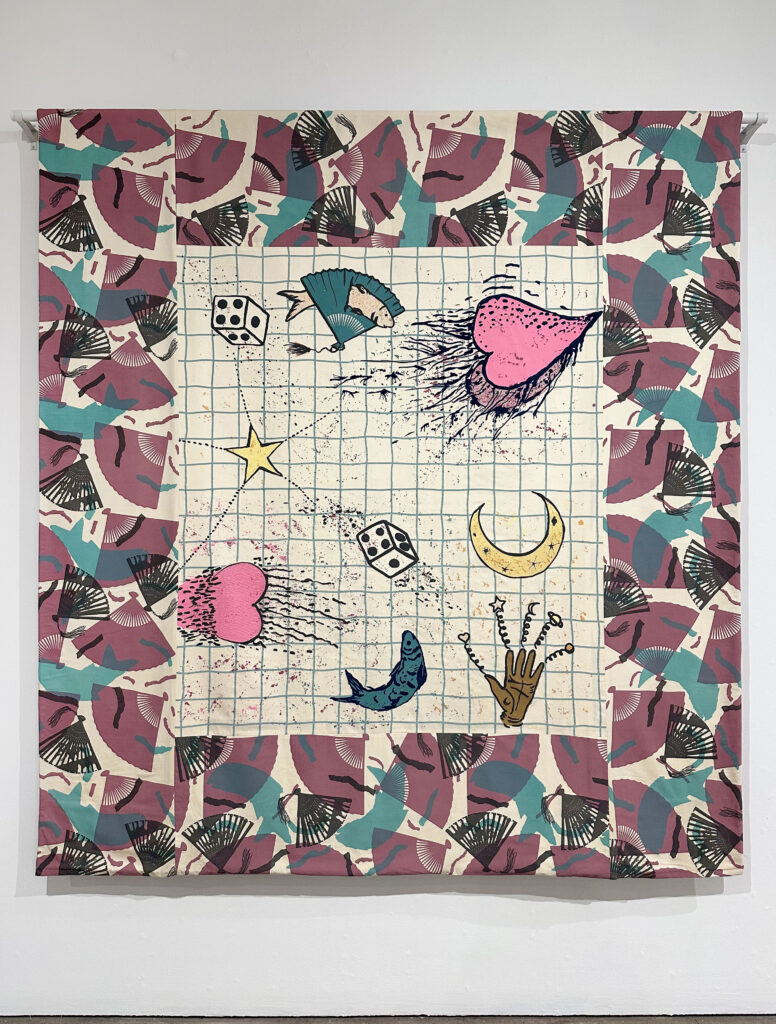
Betye Saar, “Takin’ A Chance on Luv”, 1984, pigment on cotton sateen, created in collaboration with The Fabric Workshop and Museum

Los Angeles artist Betye Saar passed away on Sunday, July 26th, at 99 years old, just a few days before her 100th birthday. Saar is best known for her assemblage pieces that confronted racism and sexism, often incorporating  spiritual and mystical elements into the work as well.

Takin’ A Chance on Luv, pictured above, was part of the group exhibition Some American Dreams at The Fabric Workshop and Museum in Philadelphia, which closed in June.

The short documentary below, created by Christine Turner for LACMA‘s Art+Film Initiative, features the artist at 93 discussing her work.

Jul 272026
 

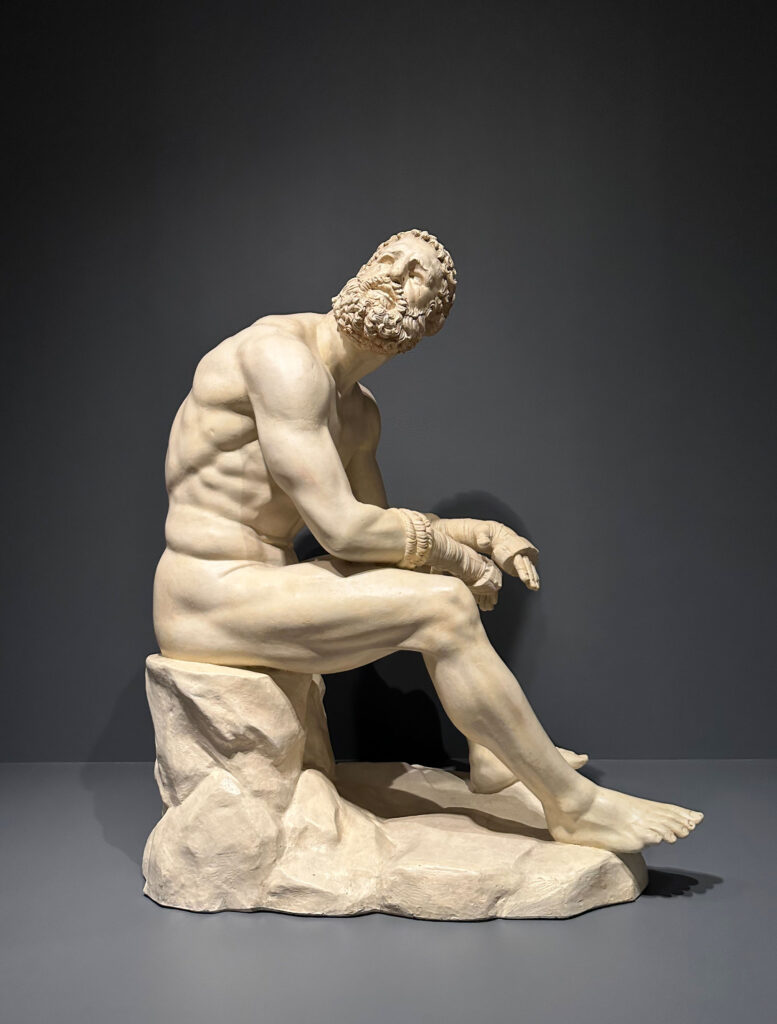
Caproni Brothers, “The Boxer at Rest”, 19th century Painted plaster cast from the original bronze which was produced between the late fourth and second centuries BCE

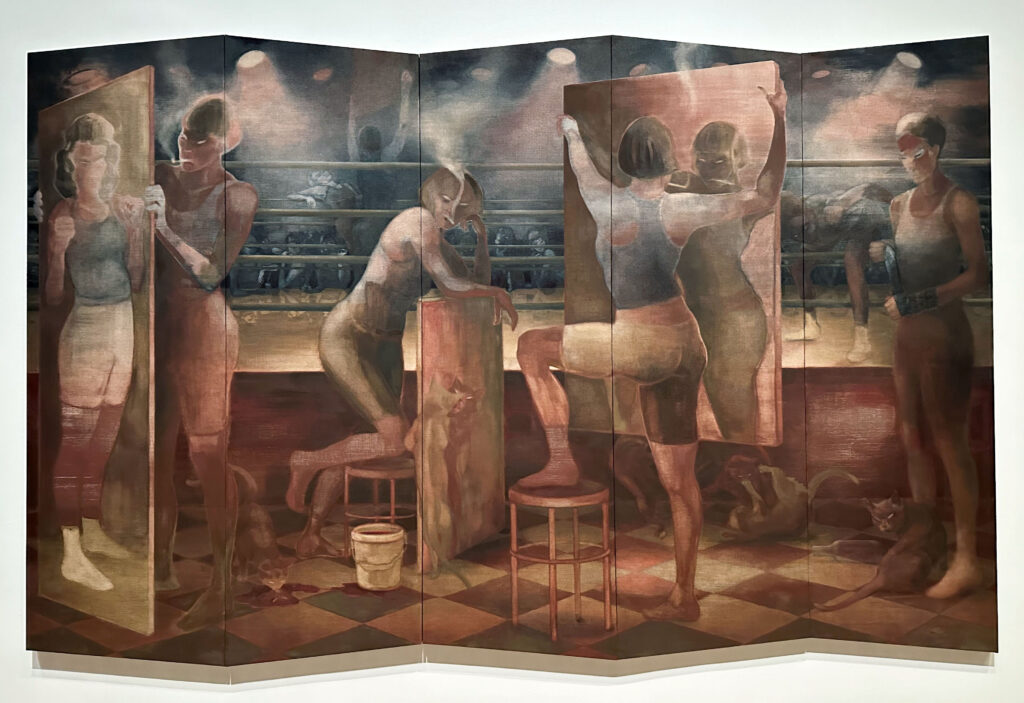
Lisa Brice “Untitled”, 2025 Pigment and natural water-soluble binders on linen

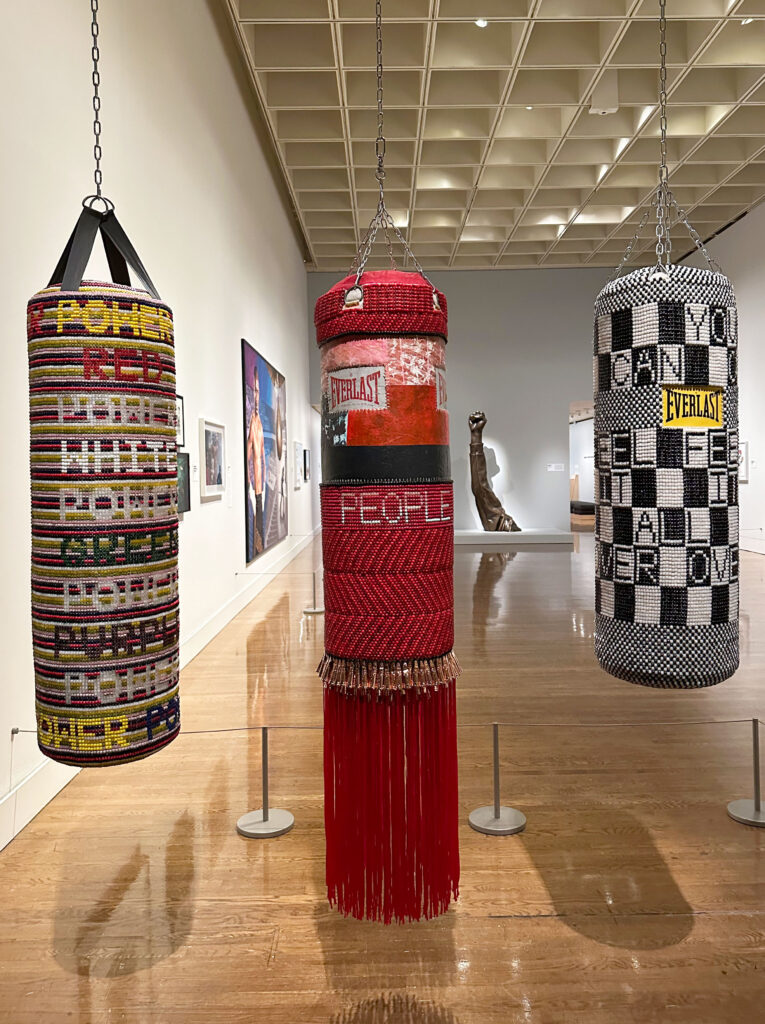
Jeffrey Gibson, (l to r) “Power, Power, Power”, 2017, “People Like Us”, 2014, and “You Can Feel It All Over”, 2015, Repurposed punching bags, glass beads, artificial sinew

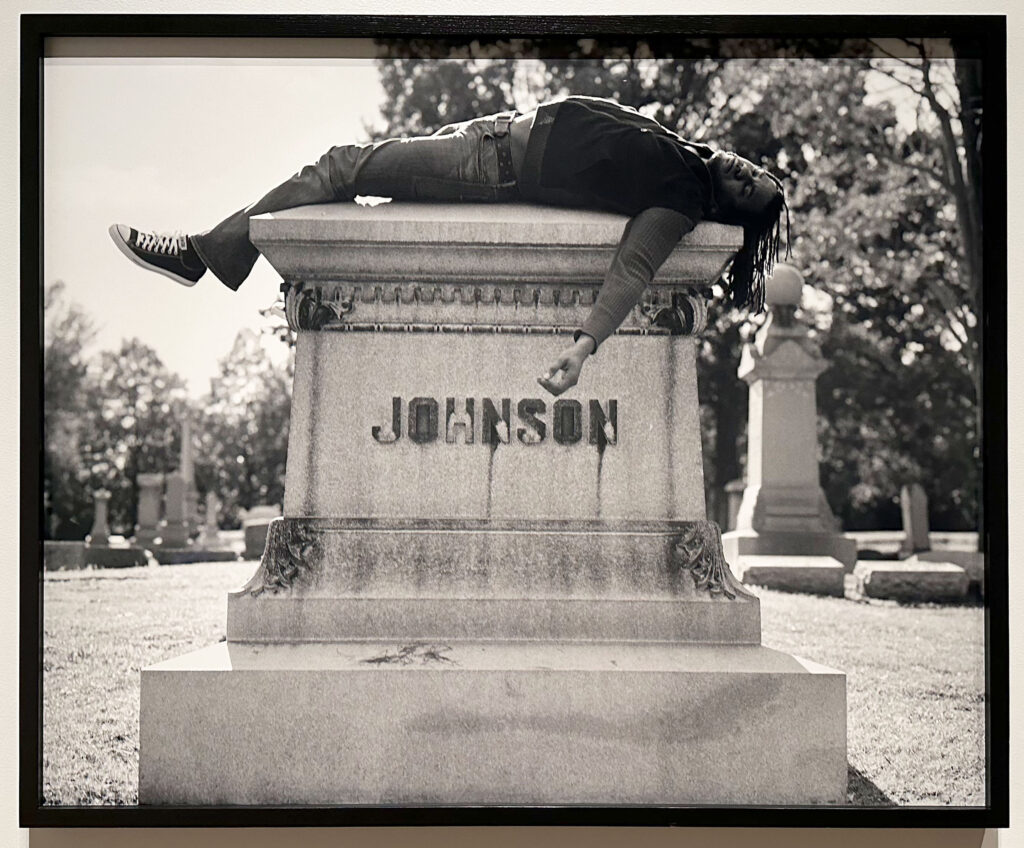
Rashid Johnson, “Self-Portrait Laying on Jack Johnson‘s Grave”, 2006, Durst Lambda print mounted on panel

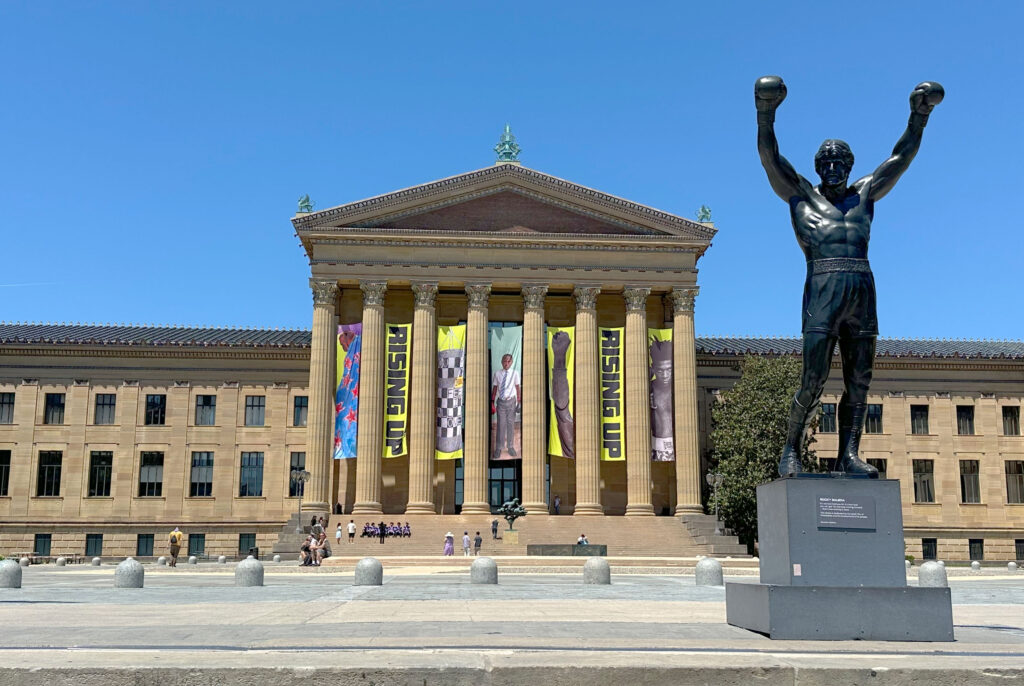
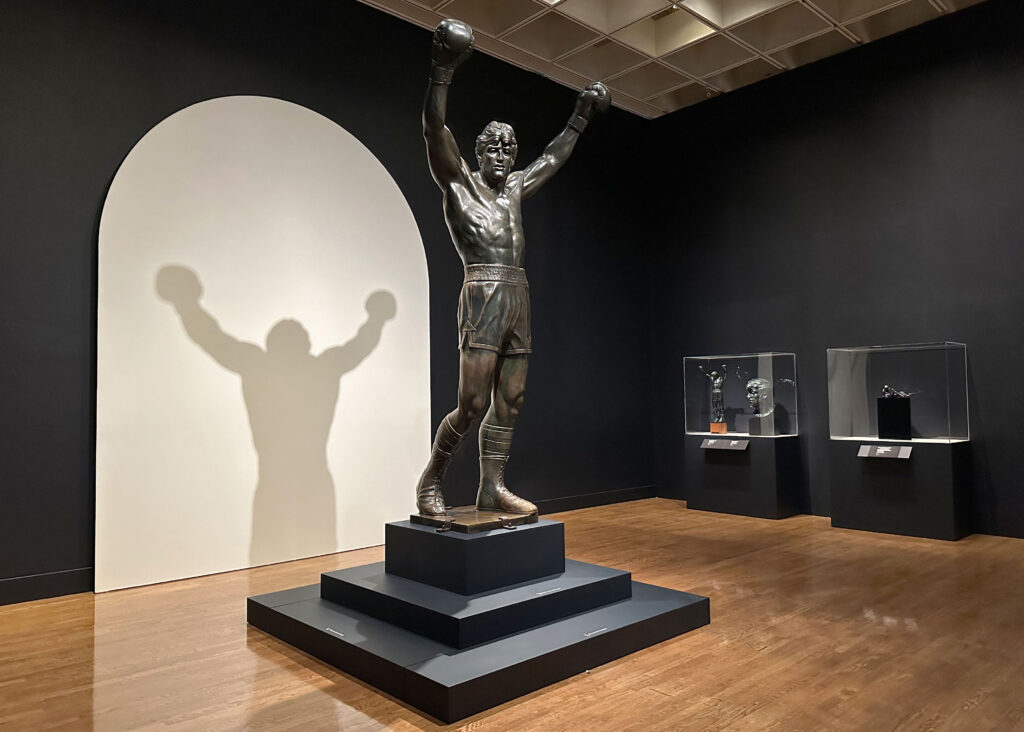
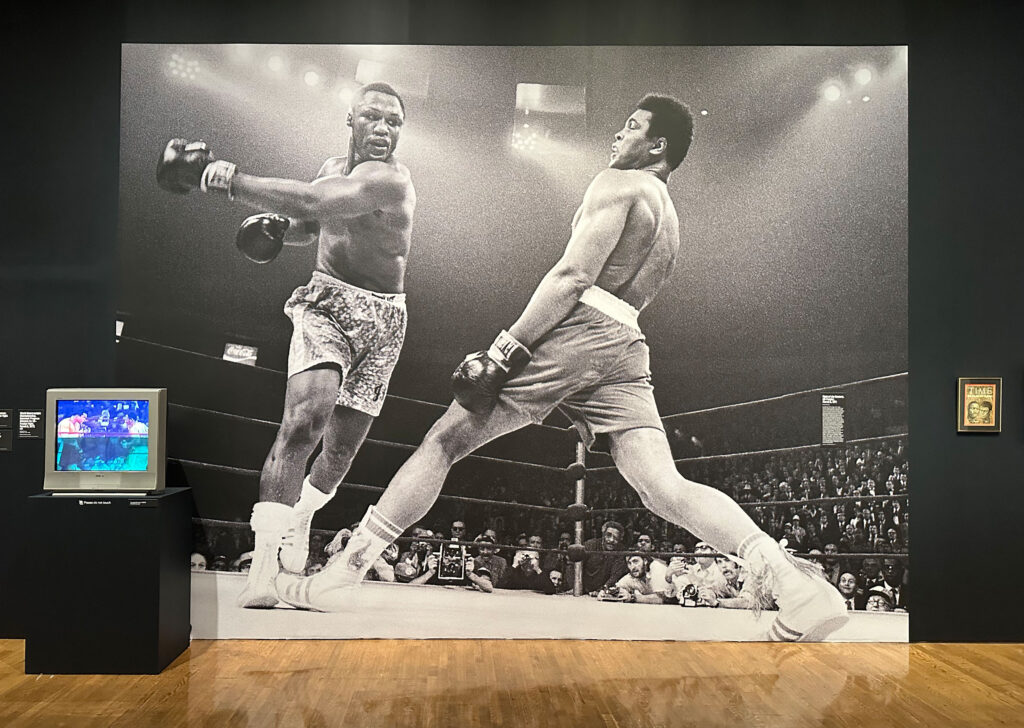
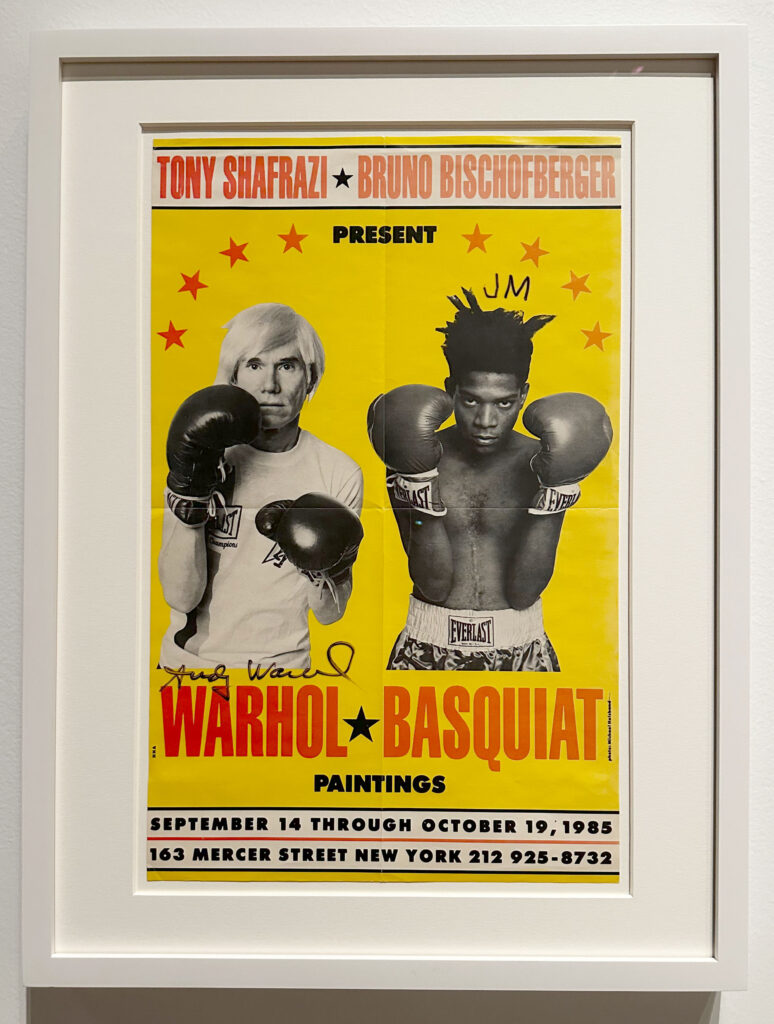
Approaching the front steps of the Philadelphia Museum of Art, you will find people of all ages and backgrounds taking photos with the statue of Rocky out front, often imitating his famous pose. Through a variety of works from antiquity to the present day, Rising Up: Rocky and the Making of Monuments looks at the history of this statue, the meanings attached to monuments, and the allure of boxers and boxing culture.

From the museum about the exhibition:

Blending the worlds of art, sports, and popular culture, Rising Up takes on the life of monuments by exploring the meanings and mythologies of the Rocky statue. The exhibition looks to the statue of the most famous Philadelphian who never lived as a way to better understand our complex and vital relationships to our public monuments.

The statue first appeared on-screen in the Oscar-winning Rocky film series. The third installment, Rocky III (1982), featured the dedication of a monument that celebrated the boxer as both an underdog and a hero. The movie-made statue was placed outside the actual museum during filming, a dynamic blurring of art and life that continues to this day. Since that introduction, and through the statue’s departure and prolonged absence from the museum grounds to its prodigal return to the steps, the statue has sparked debate over its aesthetic value and its role in the city. Today, the power of the Rocky statue as a monument stems from its ability to summon public participation.

From antiquity to modernity, Hollywood to contemporary art, Rising Up spotlights both popular narratives and undertold stories surrounding the Rocky statue. Each gallery offers a response to the exhibition’s central question — why do millions of people visit the Rocky statue at the steps of the Philadelphia Museum of Art each year? — and further explores the relationship between art, boxing, and civic identity. It offers a renewed context to consider the statue through works and artifacts that reflect on the deep legacies of boxing monuments across time.

Rising Up marks the first time that the Rocky statue has been displayed inside the museum, explored alongside Philadelphia’s landmark boxing culture and multigenerational artists’ interpretations of sport and society. At its core, the exhibition looks at how monuments are made — by artists and by us — through the lens of the Rocky statue and the ways people engage, debate, and gather around this site of memory.

This exhibition closes on 8/2/26.

Jul 232026
 

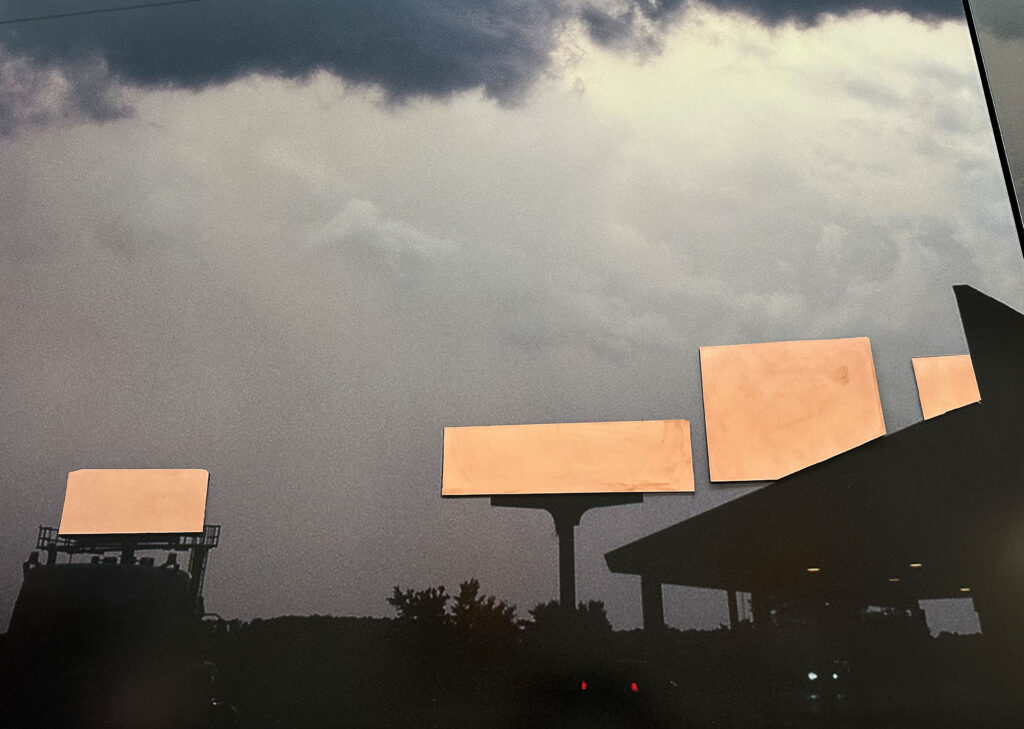
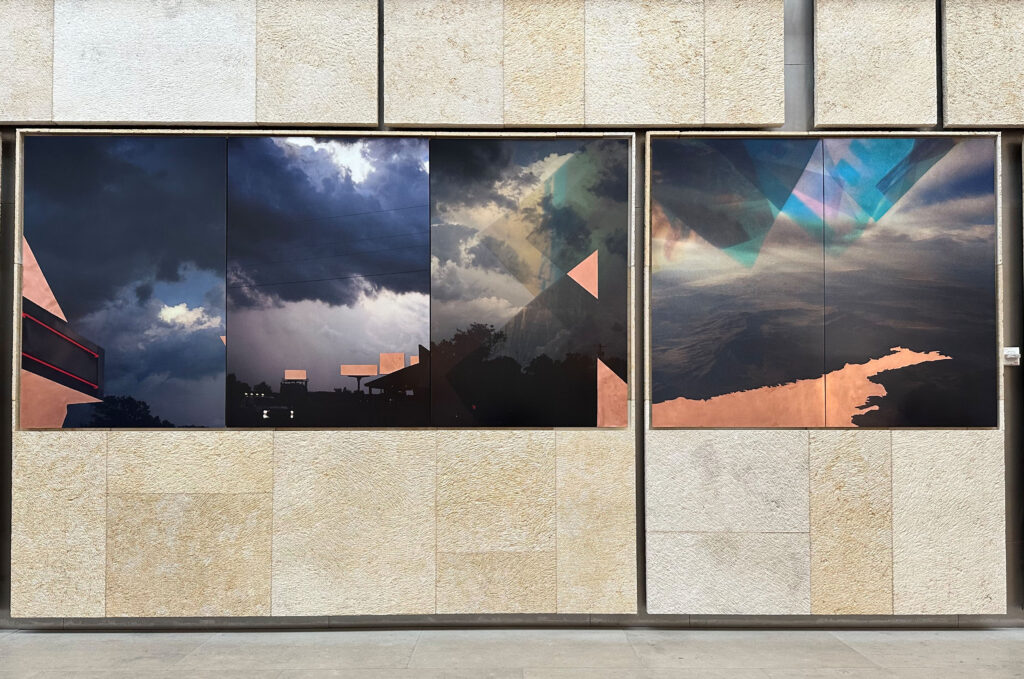
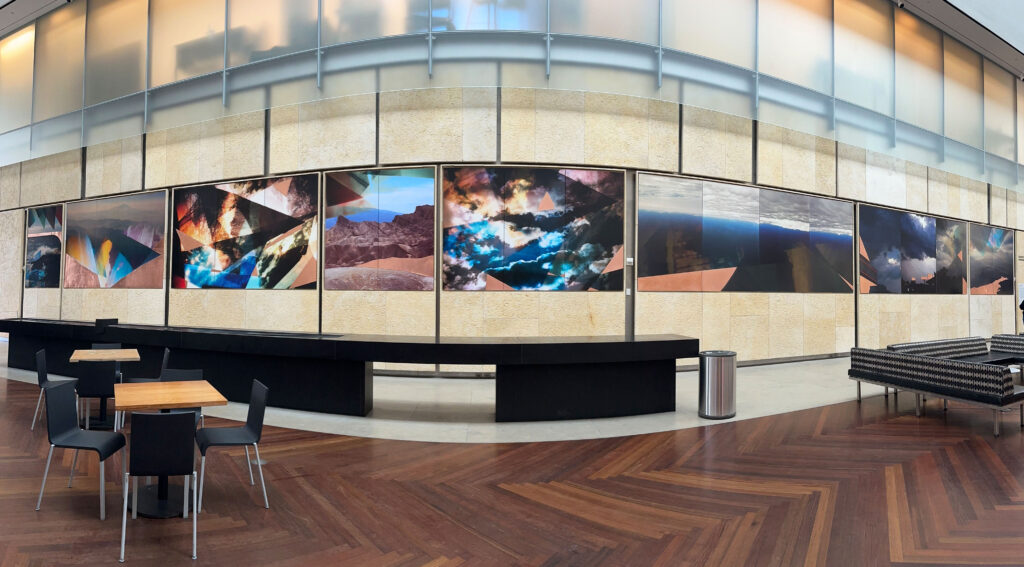
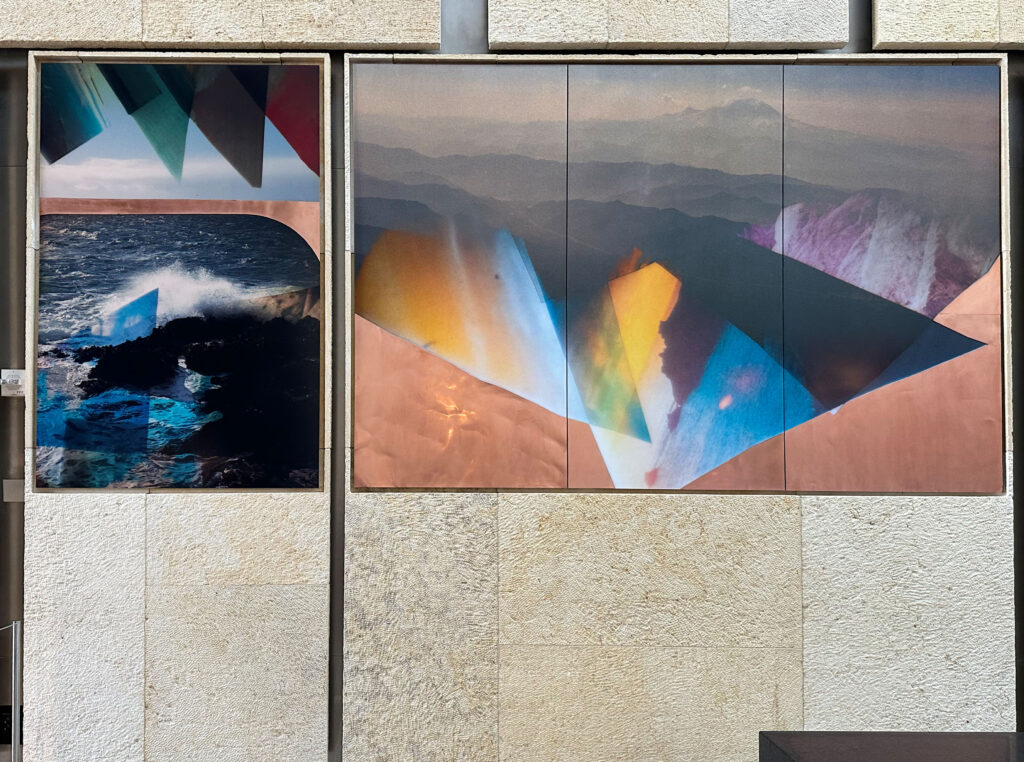
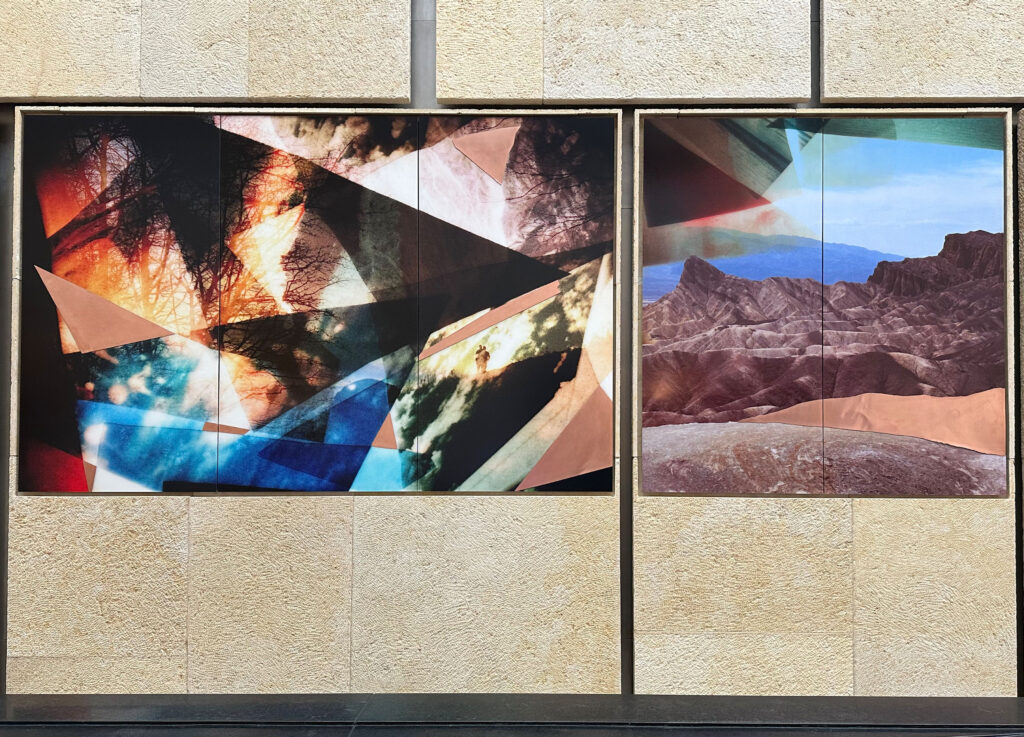
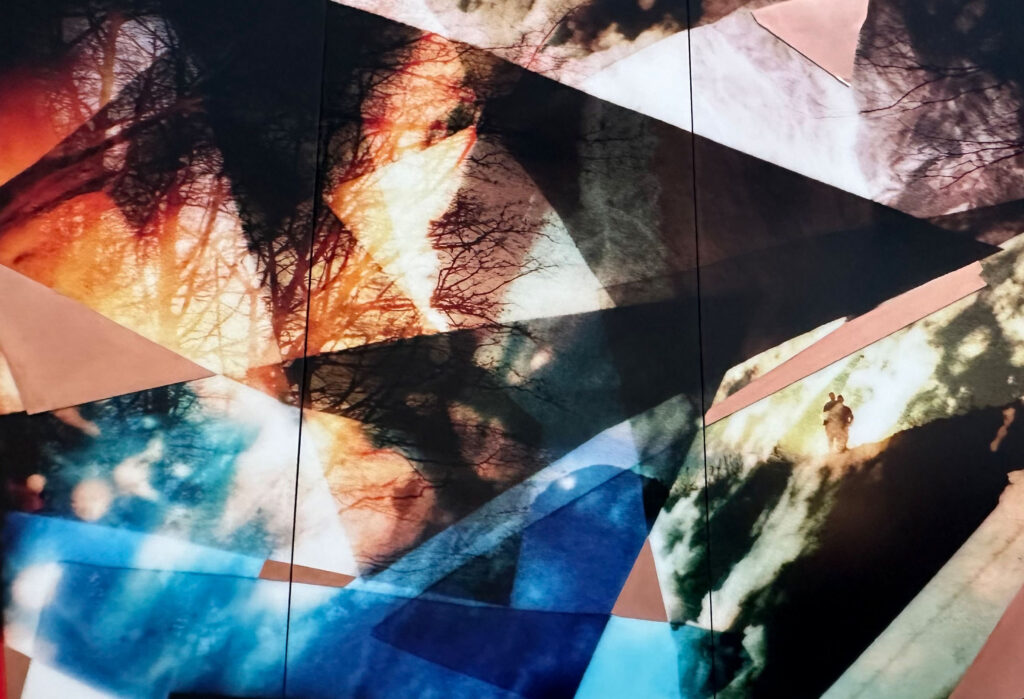
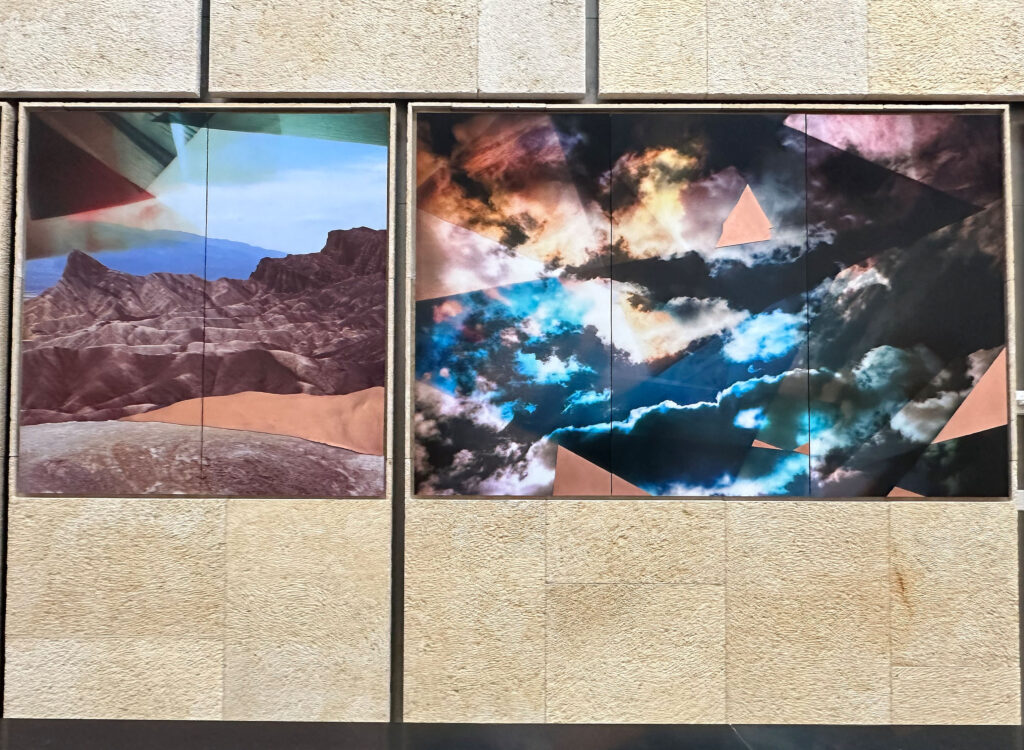
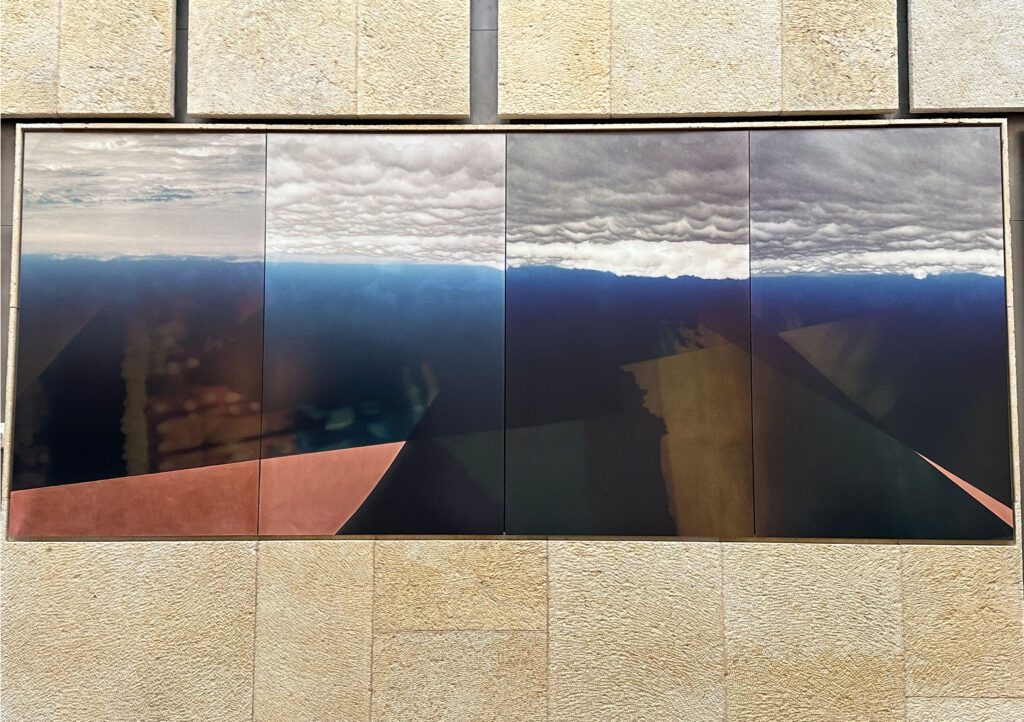
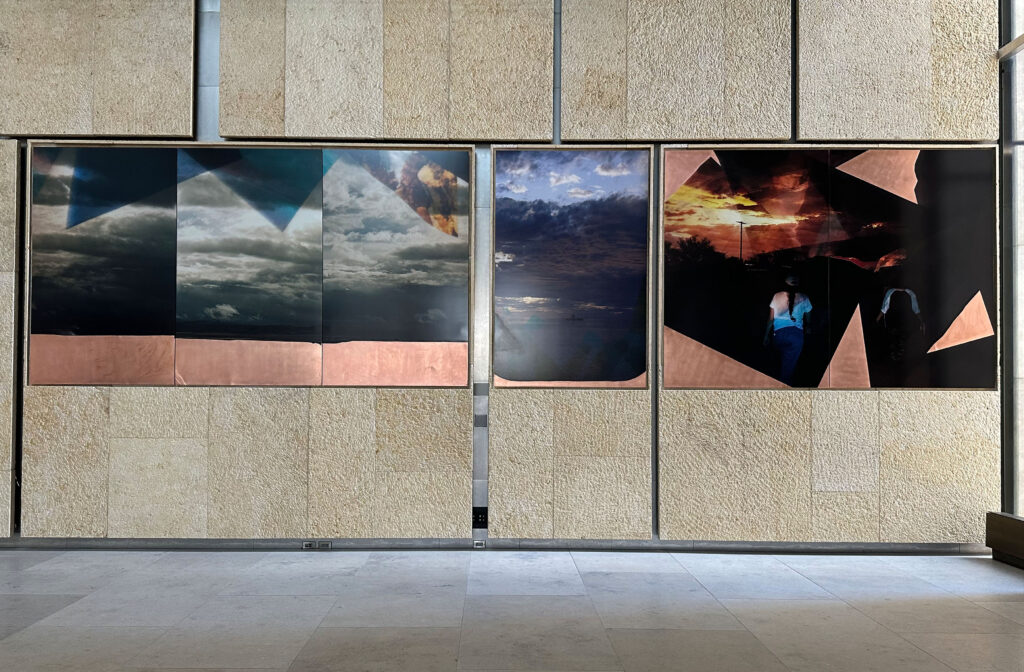
Along several walls at the Barnes, Native American (Ho-Chunk Nation/Pechanga Band of Luiseño Indians) artist Sky Hopinka‘s installation, Red Metal Dust, layers photographs and transparencies of a variety of landscapes with cut copper shapes to form dreamlike vistas.

About the work from the museum (in the artist’s words):

Red Metal Dust is a body of work that considers landscape as a place shaped as much by what remains as by what has been removed. Each panel layers photographic prints with transparencies of concurrent landscapes, allowing images to pass through and across one another rather than resolve into a single view.

Geometric silhouettes, cut into polished copper and placed over the image, follow the contours of the transparencies beneath them. These copper forms both interrupt and clarify the landscape, using the logic of the silhouette to define presence through reduction. The copper reflects light and the viewer’s image, bringing the body and present moment into the work.

The title draws from the Ho-Chunk way of describing copper, naming the material not as monument but as remainder-something carried, scattered, and endured. Here, copper becomes less a surface than a witness, resilient and reflective, shaped through contact rather than display. Across these works, landscape is approached as a layered field of return, where images accumulate, echo, and settle into one another over time.

For more information on the work, this interview with Hopinka from ARTNews is also worth checking out.

Below is another section located on a different wall.

Red Metal Dust is on view until January of 2027. The Barnes is also free for Philadelphia residents for the month of July.

Jul 172026
 

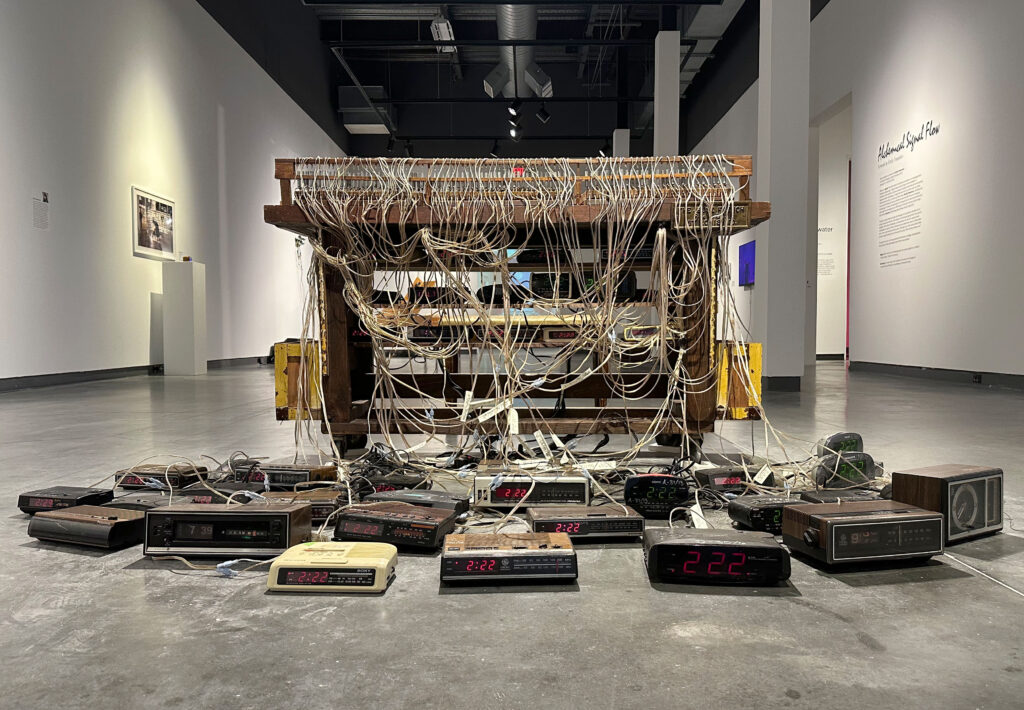
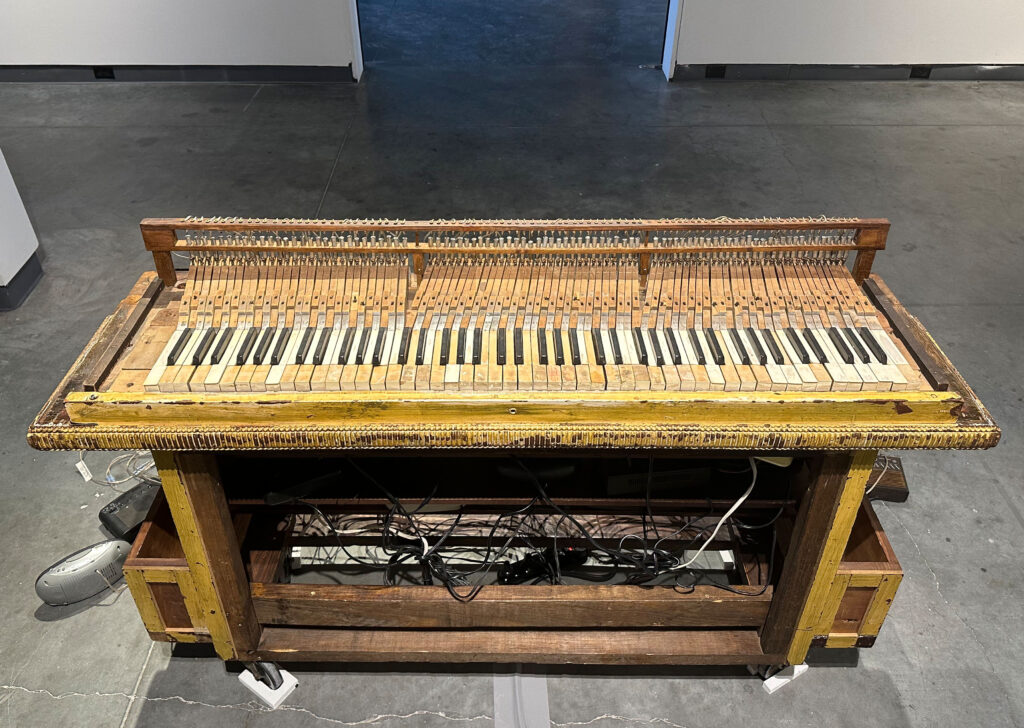
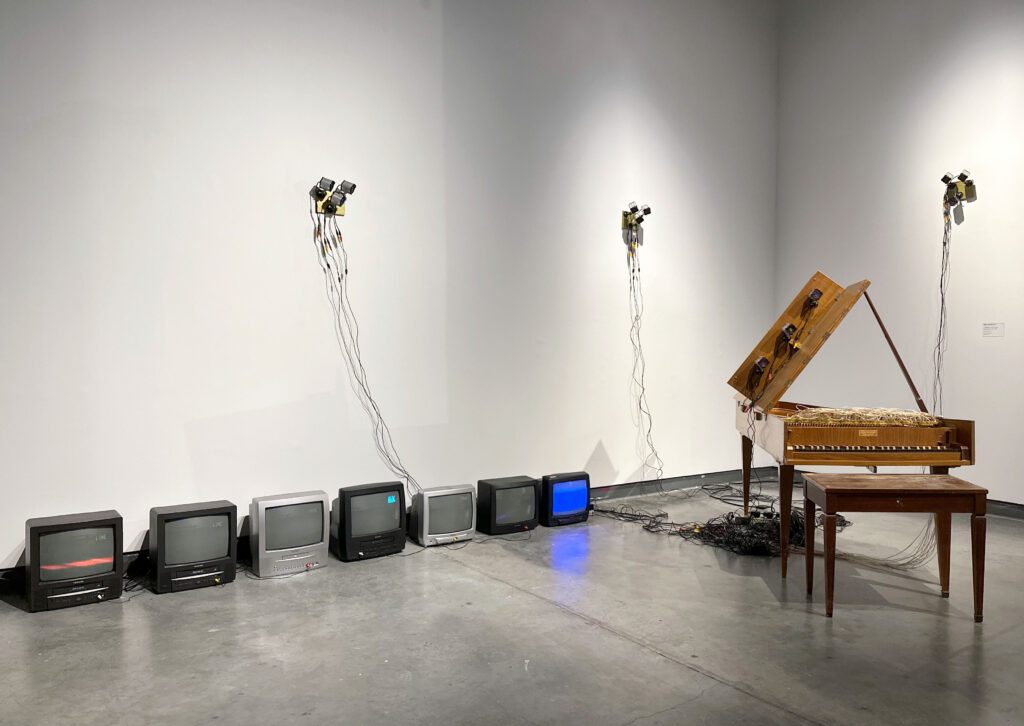
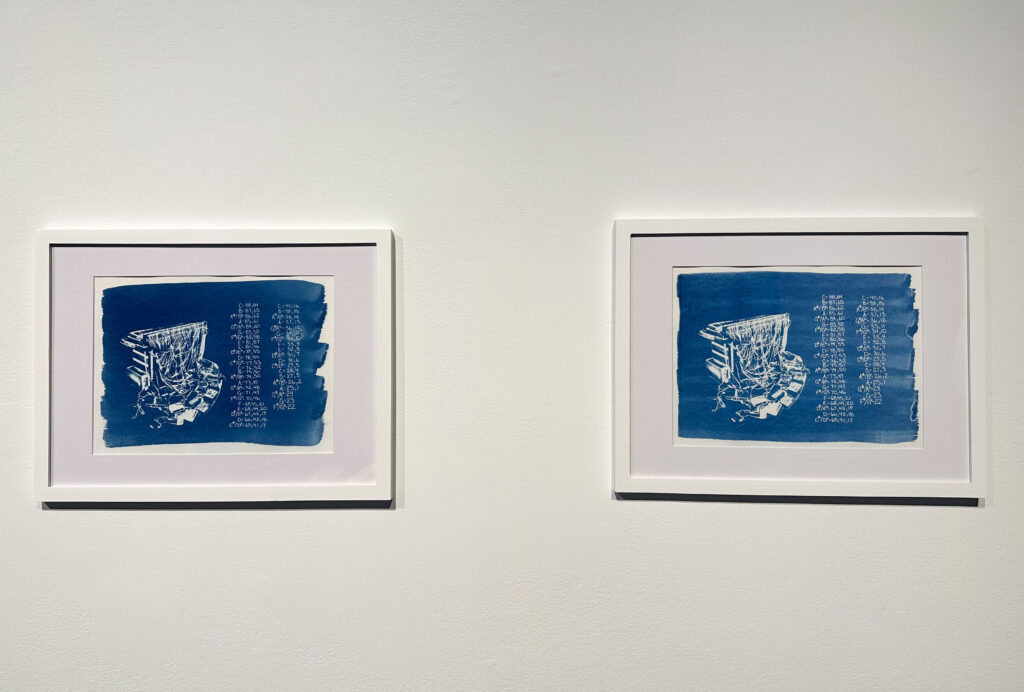
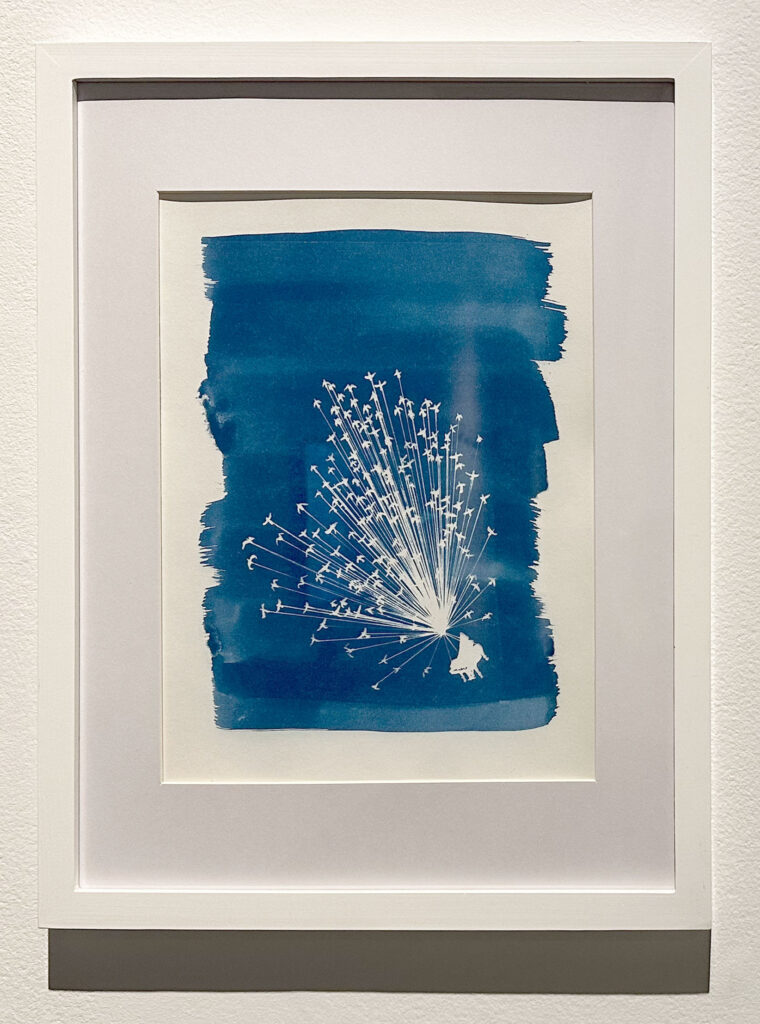
Old televisions and clock radios are given a second life in the interactive sculptures in Emily Francisco‘s exhibition, Alchemical Signal Flow at The Delaware Contemporary. The exhibition also includes videos and documentation of some of Francisco’s other projects, and a few cyanotype prints.

From the museum:

What is a signal? We often think of cell phone reception, or a message sent through a digital app. A signal means many things in this exhibition, it references the transfer of physical data and digital data (ones and zeroes) that happens within technology. A signal can also be social, like how you dress, what brands you buy, or what you throw away. Emily Francisco combines old and new technology to help us rethink how we live with new and changing technology. To many, the mechanics of a harpsichord (a keyboard instrument) and organ are as magical as an MP3 player. Francisco embraces that magic and makes alchemy of blending old and new, low and high tech.

Francisco uses cheap everyday technology and discarded, obsolete (or no longer produced) devices. By doing so, she disrupts signal flows from user to speaker. This action challenges our expectation of call-and-respond and challenges our sense of time. Someone once owed every piece of discarded tech. One could have even been yours. She asks us to think about what these personal objects mean to us at the end of the day. What do they mean to us?

Through her work, she brings together the memory, nostalgia, and aspiration these objects hold, attempting to give them new purpose.

This exhibition closes 8/2/26.

Jul 152026
 

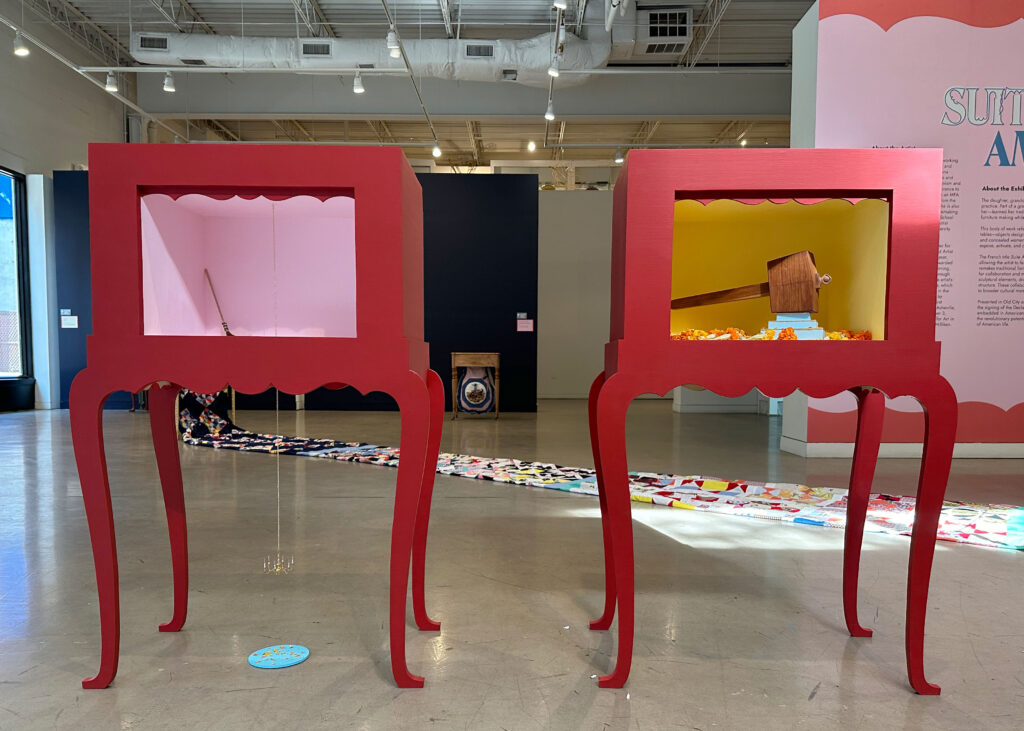
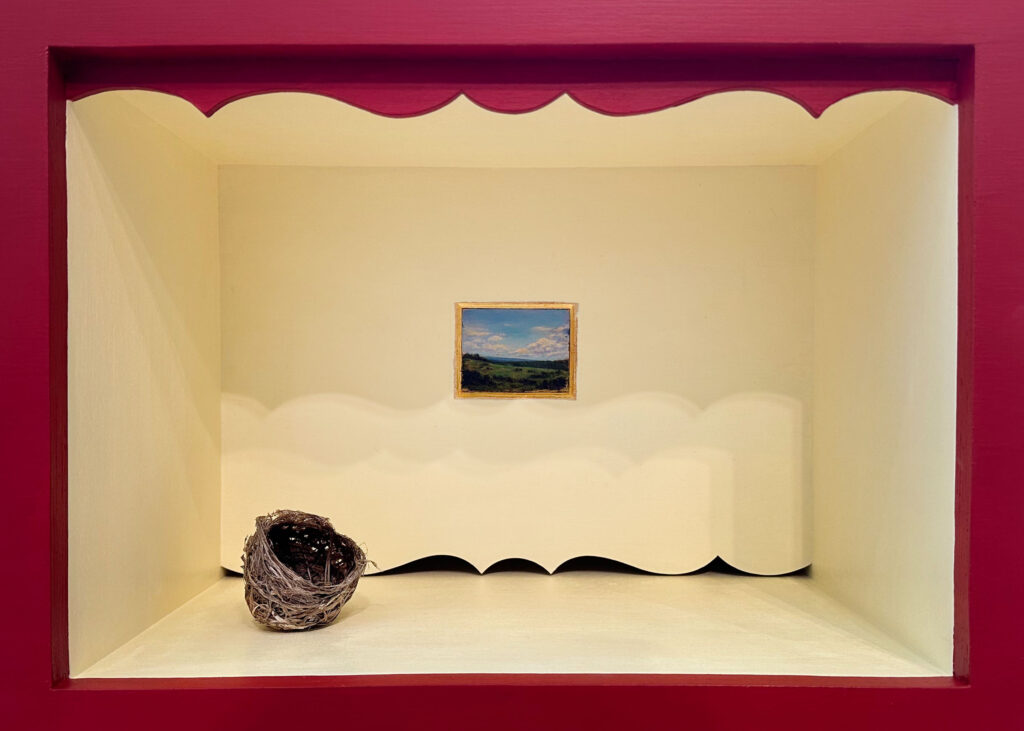
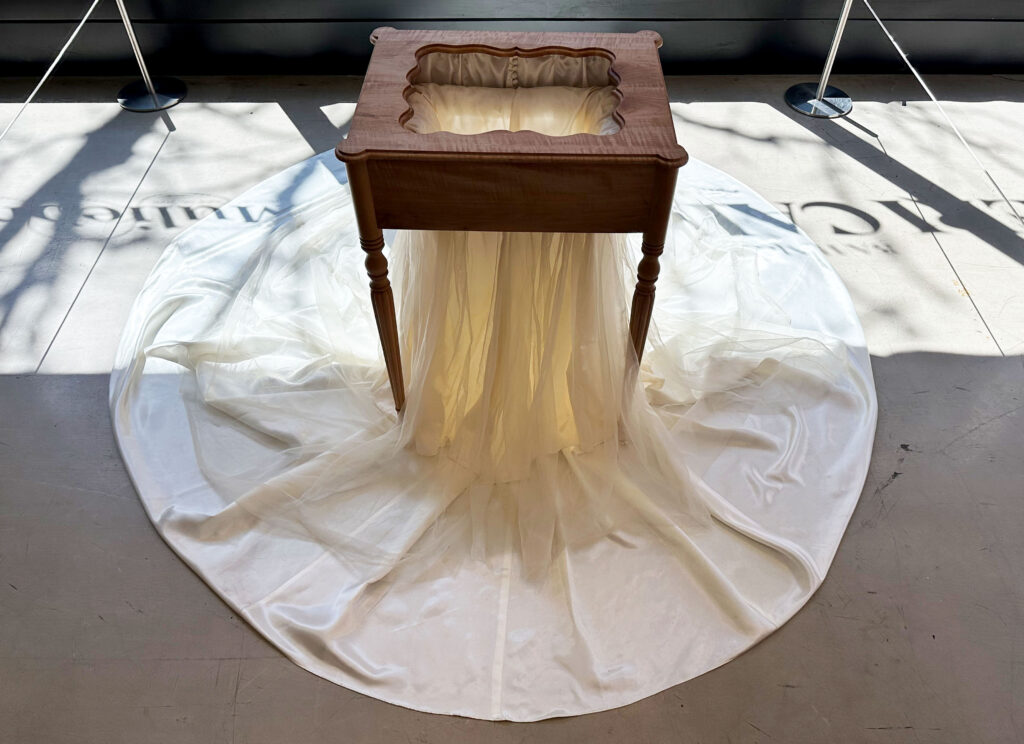
At the Museum for Art in Wood in Philadelphia, BA Harrington‘s Suite Américaine and Viola Bordon‘s Muliebrity, both present works influenced by history and created from a feminist perspective. Harrington adds inventive additions to her expertly crafted furniture pieces, while Bordon’s intricate textile triptych (pictured below) examines the feminine associations in icons of freedom and liberty.

From the museum about Suite Américaine:

The daughter, granddaughter, and sister of carpenters, artist BA Harrington carries craft lineage into contemporary practice. Part of a growing, intersectional cohort of women-identifying woodworkers, Harrington learned her trade, like many before her, by reproducing furniture forms of the past. Suite Américaine holds a reverence for the history of American furniture making, but is inflected with a contemporary feminist imagination.

This body of work references late-seventeenth through early-nineteenth century dower chests, writing desks, and sewing tables, which were designed specifically for women but historically made by men. However, where these objects once stored and concealed the labor and craft skill of women, Harrington opens them. The objects expose, activate, and celebrate their rich interiors, with linens and quilts spilling out of their wooden casings. The use of French in the exhibition’s title, Suite Américaine, is both a nod to the eighteenth-century term for a furniture set and a phrasing that allows the artist to feminize the word “American.” Similarly, the work on display acts as a feminist intervention on historic furniture, using video activations and collaborations with fellow artists to deepen the discussions around these works.

In this exhibition, Harrington not only remakes the original forms with her own hands, asserting her technical skill, but also highlights the revolutionary potential of furniture to self-actualize the creative endeavors of women.

Suite Américaine is a part of Radical Americana, a series of exhibitions organized by a consortium of Philadelphia’s extensive collection of arts and cultural institutions that celebrate how today’s artists are continuing the city’s unique and rich legacy as a center for creativity and civic engagement. To learn more about the other participating artists and organizations, please click HERE.

To watch the Gallery Talk with BA Harrington and Viola Bordon, click HERE.

Viola Bordon, “Muliebrity”
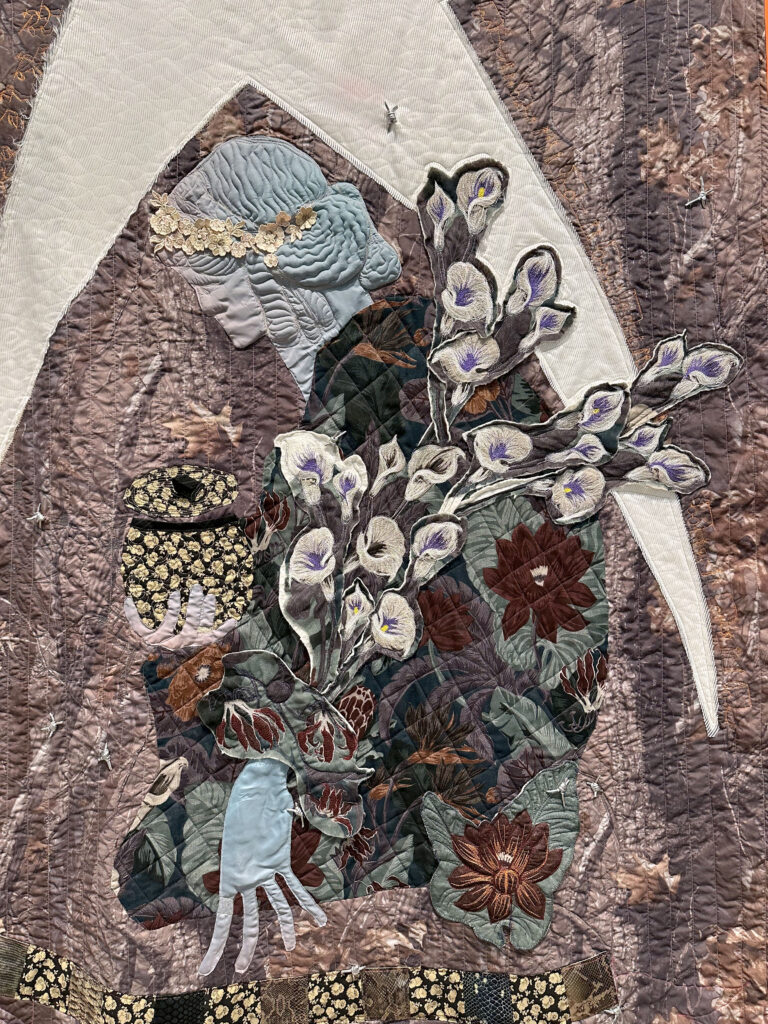
About Viola Bordon’s Muliebrity:

Since the American Revolution, the Roman goddess Libertas has served as a personification of the nation’s ideals, including ever shifting definitions of freedom and enfranchisement. Exemplifying the contested meanings of Libertas, the 1886 dedication of the Statue of Liberty coincided with national discord over the boundaries of freedom, sparked by the end of Reconstruction in the South, legislative debates over immigration, and the growing movement for women’s suffrage.

Drawing from archival research at the American Historical Society, textile artist Viola Bordon examined the invention and evolving meanings of “Lady Liberty” as a fragmented icon of American identity. The resulting triptych, Muliebrity, takes its title from a term Bordon uses to articulate a distinctly feminine form of power-one aligned with endurance, fertility, and embodied knowledge, and inspired in part by poet Sujata Bhatt’s Muliebrity, which describes a woman whose daily labor is suffused with quiet, almost mystical authority.

Sewing found fabric swatches into her quilt through the process of appliqué, Bordon presents a kneeling Lady Liberty surrounded by wilderness. With its visual affinity to late Medieval and early Renaissance depictions of Mary Magdalene, the artist’s patchworked portrayal invites us to consider how this figure of womanhood is repeatedly mobilized to serve the symbolic needs of patriarchal institutions.
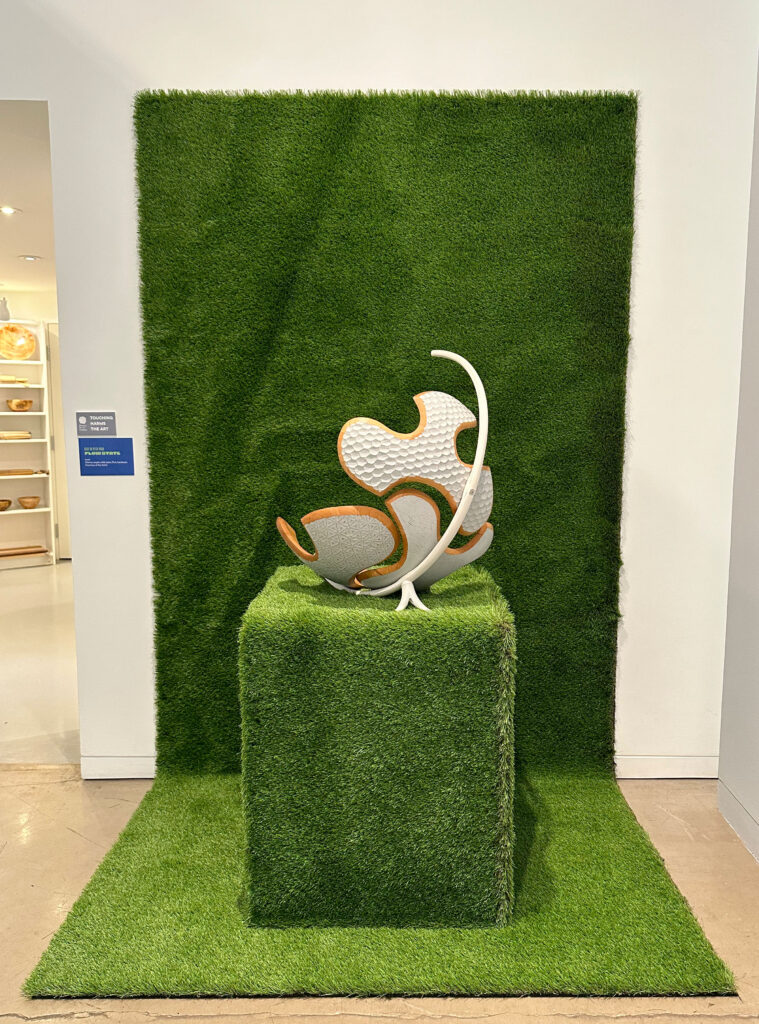
 

To celebrate the World Cup, the museum is also showing Keun Ho Peter Park‘s soccer ball sculpture for Flow State. It was made using two woods, cherry and maple, which are native to the Philadelphia region where several of the games are being played.

From the museum:

Soccer — known globally as futbol — has long inspired artistic expression. Its accessibility has made it one of the world’s most beloved sports, played by hundreds of millions across cultures, generations, and levels of competition. The FIFA World Cup, held every four years, is a global spectacle that draws billions of fans who rally behind their favorite players and nations. Yet at the center of this phenomenon is a single object: the ball itself.

In World Cup 2026: Flow State, Philadelphia-based artist Keun Ho Peter Park presents a sculptural portrait of the soccer ball. Inspired by the evolving forms of official World Cup match balls, Park explores how each design reflects the identity and aspirations of its host nation while conforming to FIFA’s exacting standards. A woodworker, furniture maker, and sculptor, Park celebrates this iconic object through a sculptural work that brings together his artistic languages of alternative coopering and pattern carving.

Flow State also traces the cultural histories embedded within World Cup tradition. As a youth in Seoul, Park witnessed the 2002 FIFA World Cup, co-hosted by South Korea and Japan, when the tournament — and its official Fevernova ball — served as a powerful symbol of diplomacy and cooperation. The 2026 World Cup similarly commemorates a moment of international partnership. Referencing the official match ball, Trionda, whose tripartite design represents the three host nations of Canada, Mexico, and the United States, Park reflects on soccer’s capacity to create connections across borders while sustaining local identities. The two woods selected for the work — cherry and maple — are native to the region surrounding Philadelphia, itself a host city for the 2026 World Cup.

All three of these exhibitions close on 7/26/26.

Jul 092026
 

New Deal Posters

Willie Cole, “Rolanda”, November 5, 1978, Pastel on brown paper bag. This work was created while Cole was a CETA employee in Delaware

Photographs from the 1975 CETA-funded project “CITYSIGHTS/CITYSOUNDS” in Wilmington

Dorothea Lange, “Migrant Mother, Nipomo, CA”, 1936

Clockwise from top left: William Davidson White, “Children in the Tree”,1934; Michael J. Gallagher, “A Man’s Job”, c.1933-1934; Philip N. Yates, “Broken Nets”, 1934; Walter Willoughby, “Winter Landscape”, c. 1933-1934

Helen Farr Sloan, “W.P.A. Theater”c.1935, Oil on board. It depicts a Federal Theater production during the Depression in NYC’s Washington Square Park. These productions were often free or heavily discounted.

At a time when government arts funding and jobs programs are needed more than ever, Citizen Artist at Delaware Art Museum reminds visitors of the positive and long lasting impact of two past initiatives- The New Deal in the 1930s and 1940s, and the Comprehensive Employment and Training Act of 1973 (CETA). Featuring artwork created during these both of these time periods, the exhibition also highlights the important contributions made by artists in their communities.

From the museum about the exhibition:

Citizen Artist highlights diverse artists working for America during 1930s and 1940s Depression-era programs and federally funded initiatives of the 1970s. The New Deal and the Comprehensive Employment and Training Act were catalysts in Delaware and across the nation as economic relief programs amplified the arts, creating new possibilities for creative employment. This exhibition centers artists as historians, storytellers, and visionaries during the Semiquincentennial.

Through the Comprehensive Employment and Training Act of 1973 (CETA), the Department of Labor supported a nation’s worth of art programs on a scale not seen since the conclusion of the New Deal in 1943. Those New Deal artists that outlived the Federal Art Project never forgot the significance of their work for the public, and they took that knowledge to the classrooms and administrative offices where they carried out the rest of their careers. CETA was designed as a jobs program, not an arts program, but Title VI of the legislation funded opportunities for the cyclically unemployed —artists—in public service roles. When CETA arrived in the 1970s, artists and their allies across the nation quickly understood its potential in the context of the legacy of the New Deal.

Citizen Artist is a story about reciprocal support between artists and communities. The exhibition celebrates artists who found lasting success through their participation in fine art programs like the Public Works of Art Project and CETA-funded contemporary art spaces. We also honor the public service work undertaken by tens of thousands of New Deal and CETA-funded artists, especially the painters, puppeteers, and photographers who produced educational resources and performances for children across the nation. Citizen Artist looks back at the intertwined histories of CETA and the New Deal to elevate how artists can and do support the public. By working in graphics offices, writers’ programs, and darkrooms, New Deal and CETA artists created and transformed the physical and cultural infrastructure of the United States.

Included within Citizen Artist is Citizen Photographer, an exhibition of images created by Delaware photographers for the U.S.’s 250th anniversary.

From the museum about Citizen Photographer:

What does it mean to be a Delawarean at the nation’s 250th anniversary? The Delaware Art Museum, collaborating with Wilmington’s Teen Warehouse, the Smyrna Opera House, and the Lewes Public Library, invited residents across the state to engage in civic reflection and contribute to shaping public perceptions of identity through photography. Citizen Photographer is inspired by the federally funded initiatives of the past, such as the Farm Security Administration and the Comprehensive Employment and Training Act. These were times when documenting the nation and the many people who called it home was an earnest endeavor, the means to understand and appreciate our individuality, humanity, and common needs.

At the United States 250th anniversary in 2026, this project offers multiple ways for Delawareans to engage as learners, artists, and citizens contributing to the state’s shared story. Photographers Morris Brown II, B. Proud, and Andre’ Wright, Jr. led workshops across the state and selected the 24 photographs on view. For Wright, Jr., Citizen Photographer is “about perspective, voices, and the stories people choose to tell about where they come from.” Proud reflects how local photographers “captured the many facets of Delaware, from its cities to its farmlands, from its people to its landscapes, revealing why the state truly lives up to one of its nicknames, ‘Small Wonder.'” Morris invites us to “take the time to treasure each photograph and to experience each Delaware love story on exhibit.”

This exhibition closes 7/19/26.


Jul 022026
 

“Alberto Ayala”, acrylic on wood; Portrait of Roberto Lugo’s grandfather; and “Potpourri Boat”, Ceramic sculpture

Art history, American history, and personal history mix in Roberto Lugo‘s exhibition, American Crib: What’s Happening?, currently on view at The Clay Studio. Wandering around the installation you’ll find portraits of Nikki Giovanni and Lugo’s grandfather, Billie Holiday and The Roots on ceramic sculptures, and plenty of places to sit and take it all in – including a graffitied train car.

From The Clay Studio’s website:

Roberto Lugo welcomes visitors into an imagined living space celebrating his Philadelphia roots and cultural heritage. This deeply personal reflection on America’s socio-political landscape celebrates the power of art to communicate. Lugo mixes historical pottery traditions with pop culture, humor, and critical clarity to address complex issues, including cultural identity, mental health, social justice, and the resilience of underrepresented communities.

This exhibition is a part of Radical Americana. A larger multi-location project that brings together art and culture institutions around Philadelphia. Learn more about Radical Americana here.

More than just a retrospective of Lugo’s career so far, “American Crib: What’s Happening?” will be a deeply personal and poignant reflection on America’s socio-economic and political landscape.

And the Lugo’s statement about his work:

My work is intended to be a biographical narrative that tells the many stories of my life. The objects I create speak of personal subjects – my experiences with obesity, racism, and class division. I use the associations with ceramic material and forms of pottery, such as elite fine china and porcelain, to discuss these issues with humor and irony. My strongest concepts are influenced from the juxtaposition of cultural elements in the form of mass media and current events. Using historical ideology within pottery as a vehicle to introduce a modern theme is of great importance because it allows me to add more dimensions to my artwork.

In the video below, also from The Clay Studio’s website, Lugo discusses the work, some of his inspirations, and the installation.

This exhibition closes 7/9/26.

Jun 252026
 

Shaun Kardinal “I II”, Woven paper ephemera and artist’s tape

Sculptures by Hyland Mather from the “Modus Volito” series

Framed images of work by Hyland Mather and Shaun Kardinal (sculptures by Hyland Mather on the left)

Sculptures by Hyland Mather

Discarded objects are transformed into new creations in works by Hyland Mather and Shaun Kardinal, currently on view in the two person exhibition, Form / Field, at Paradigm Gallery.

From the gallery:

This exhibition presents work from two distinct practices that converge through a shared sensitivity to line, structure, and process. Mather and Kardinal each explore how form emerges through accumulation, repetition, and material response, approaches that move between precision and drift, construction and discovery.

For his third major presentation with Paradigm Gallery, Mather presents works from several ongoing series, including Linea Pictura paintings, suspended “gravity works” (Onus Suspenda), and sculptural and assemblage-based works such as Modus Volito and Novus Inventa. Spanning painting, sculpture, and installation, the work explores line, structure, and found materials through processes of gathering, repetition, and thoughtful intervention. Across these works, line operates as both drawing and structure, with string extending into space, holding weight, or tracing paths across painted surfaces, allowing form to emerge through tension, balance, and material response.

In his debut Paradigm collection, Kardinal presents his woven paper quilts created from cut and punctured ephemera, along with a series of embroidered book pages and painted postcards, creating new forms from the smallest gestures. Kardinal’s work builds from repeating parts, embroidered marks, and modular systems that gather into larger compositions. These works often embrace landscape at a distance, horizons, city grids, or atmospheric depth, while remaining grounded in pattern and accumulation. Form, in this context, is built incrementally from repeated elements. In both practices, thread-like fiber elements and linear systems act as connective tissue, binding parts into larger wholes, or tracing form across space and surface. The “field” operates here as both a physical and conceptual space: a landscape, a surface of construction, and an invisible network of forces. Across both practices, it is within this field that form takes shape, held in a state of partnership between control and chance, repetition and variation, presence and possibility.

This exhibition closes 6/28/26.

Jun 252026
 

Curry J. Hackett, “The Gilded Block (Porch)”

mk. “you are so much to me pt. 1.” 2022

A golden inflatable porch by artist Curry J. Hackett welcomes visitors from outside the entrance to Spaces of Encounter, the current exhibition at Temple Contemporary, Temple University’s art gallery. Inside the gallery, Rokh Research & Design Studio founder and PhD student Danicia Monét Malone’s public arts research combines with NYU MA candidate Alyse Tucker‘s art curation to present an interesting selection of artwork, installations, and infographics that explore public art and shared spaces.

From the press release:

… Spaces of Encounter explores public space across North and Latin America and the Caribbean through the lens of public art. The exhibition brings together research and artistic material from Albuquerque; Cartagena; and Indianapolis, examining how people interact with public artworks across different urban contexts. Visitors are invited to reflect on who is welcomed into shared spaces—and who is made to feel excluded.

At the center of the exhibition is a guiding question: What does public space ask the body to believe about safety, care and belonging?

“For Black residents navigating environments marked by surveillance, neglect or misrecognition, aesthetic conditions operate as cumulative exposures that influence how safety, care and civic participation are felt in the body,” says Malone.

Through documentation, archival material and sculptural elements, Spaces of Encounter considers how public art mediates lived experience and contributes to collective memory. One featured work includes preserved fragments of a dismantled Black Lives Matter street mural in Indianapolis, foregrounding the fragility and afterlife of public artworks. Even when removed or destroyed, such works persist through memory, documentation and community impact.

“We’re interested in the afterlife of public art—what remains when the physical object is gone,” says Tucker.

The exhibition is particularly resonant in Philadelphia, a city shaped by one of the nation’s most expansive public art and mural programs. As development continues to transform neighborhoods, Spaces of Encounter offers an opportunity to reflect on how public artworks are preserved, displaced or erased—and what those changes mean for communities.

“Our gallery commissioned Spaces of Encounter to demonstrate Tyler’s commitment to being a beacon for art, architecture and community imagination in North Philadelphia and beyond,” says Temple Contemporary’s Director of Exhibitions and Public Programming Matthew Jordan-Miller Kenyatta, PhD. “By blurring inside and outside, the interior versus exterior, it smartly knits together the intimate, culturally specific meanings with public moments of spectacle that anyone can enjoy.”

This exhibition closes 6/27/26.

Jun 172026
 

John Baldessari, “One and Three Persons (with Two Contexts-One Chaotic)”, 1994-2012, 14-color screenprint

California artist John Baldessari was born today, June 17, in 1931.  The print above was part of The Cleveland Museum of Art‘s 2024 exhibition, New Narratives: Contemporary Works on Paper.

From the museum about this work:

John Baldessari often incorporated appropriated (or “found”) imagery into his artwork, such as the photographs of architecture and rubble appearing in this print. He juxtaposed these elements with outlined figures in a typically obtuse manner to suggest a narrative or simply a feeling with strange or even ominous undertones. The artist’s interest in the formal qualities of art, such as dimensionality, highlighted by his use of the irregularly shaped sheet of paper, white cut-outs, and silhouettes, adds to the sense of suggestion and uncertainty in the print.