Aug 172026
 

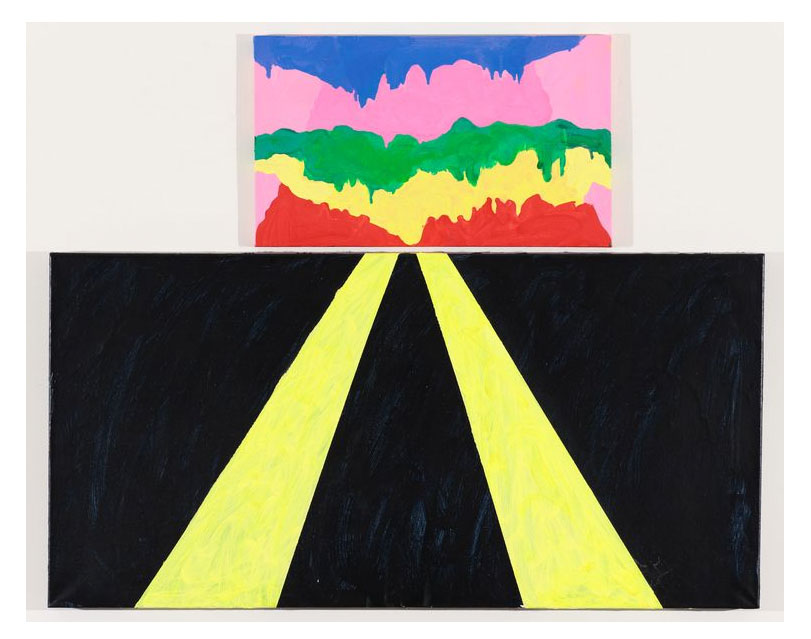
“Surprise”, 2012, Oil on canvas. (Photo by Thomas Müller) Image courtesy of the artist and Hauser & Wirth

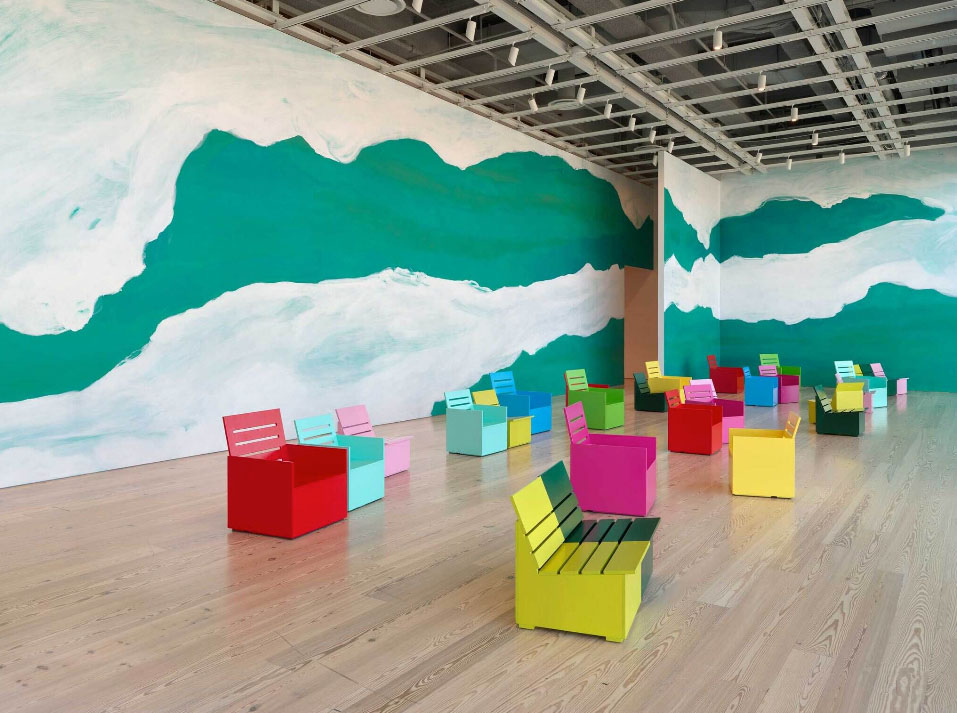
Installation view of “Mary Heilmann: Long Line” 2025 at Whitney Museum of American Art, New York, On wall: “Long Line, 2025”; “Monochrome Chairs”, 2015; “April Chairs”, 2025. Photograph by Ron Amstutz

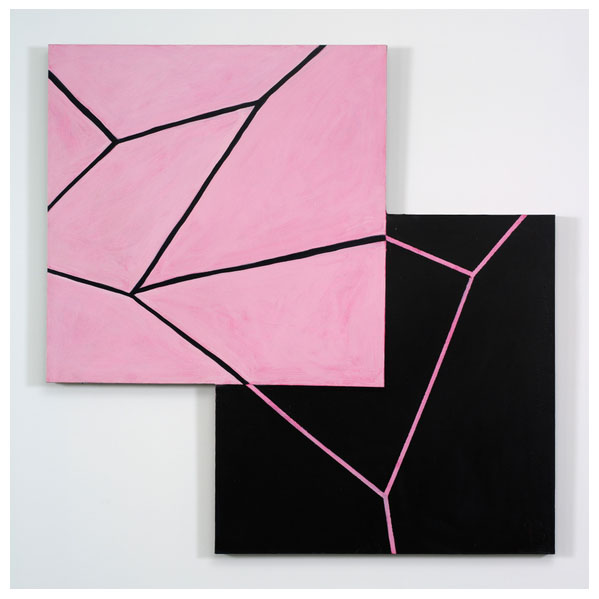
“Mode O’Day”, 1991, Oil on canvas, Image courtesy of 303 Gallery

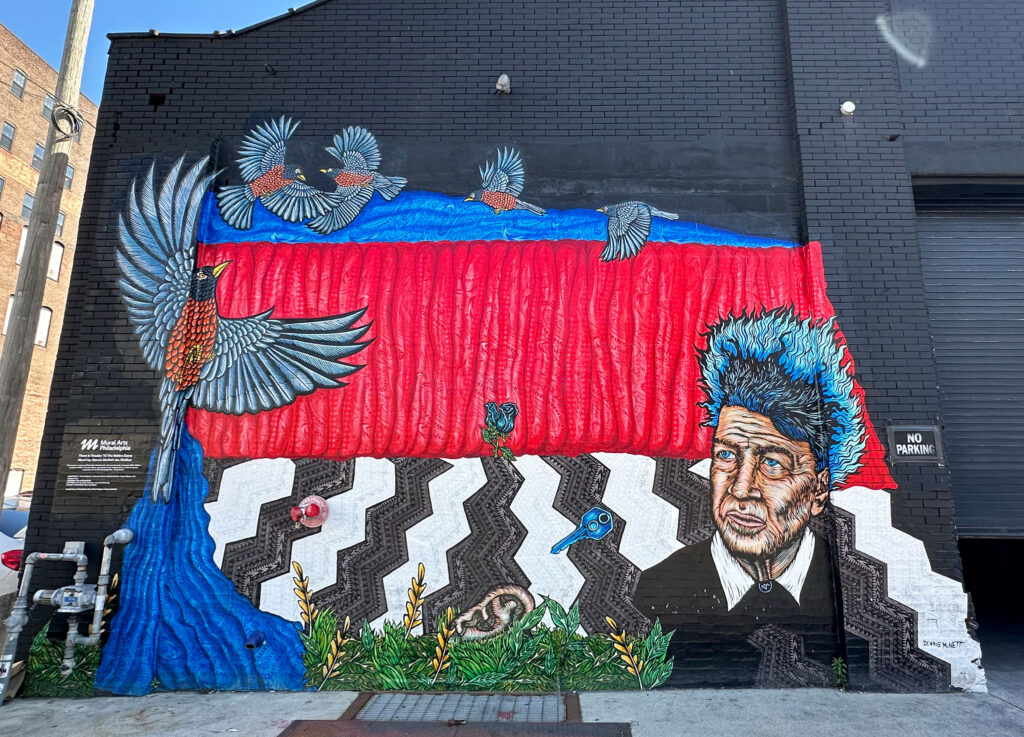
Artist Mary Heilmann passed away on Friday, at 86. Heilmann started her career working in sculpture, but in the early 1970s shifted to making the paintings she would become known for. The influence of sculpture never left entirely though. She returned to making ceramic pieces, which sometimes accompanied her paintings, and began designing her signature chairs, in the early 2000s.

For more about the artist, Art21 has a few videos on their site, including the one below in which she discusses her work, inspirations, and the importance of the titles she uses.

For a deeper dive into Heilmaann’s life and career, including her childhood and education in California, check out Matt Creed’s excellent 2023 documentary Waves, Roads, & Hallucinations.

Aug 132026
 

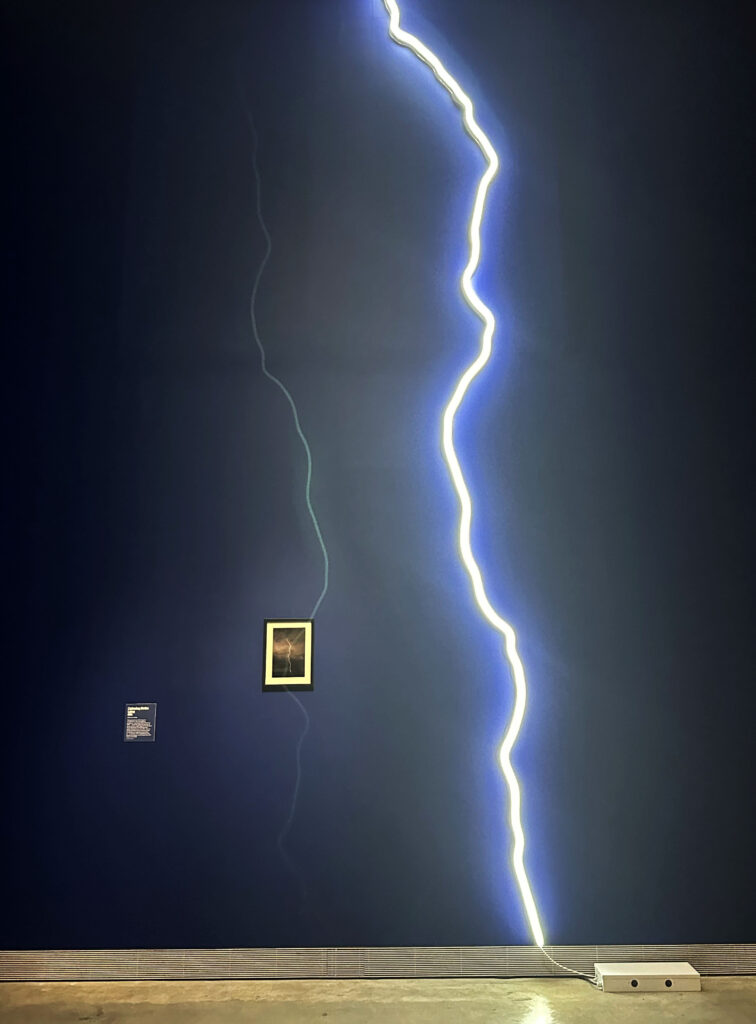
“Lightning Strike Lamp”, 2025
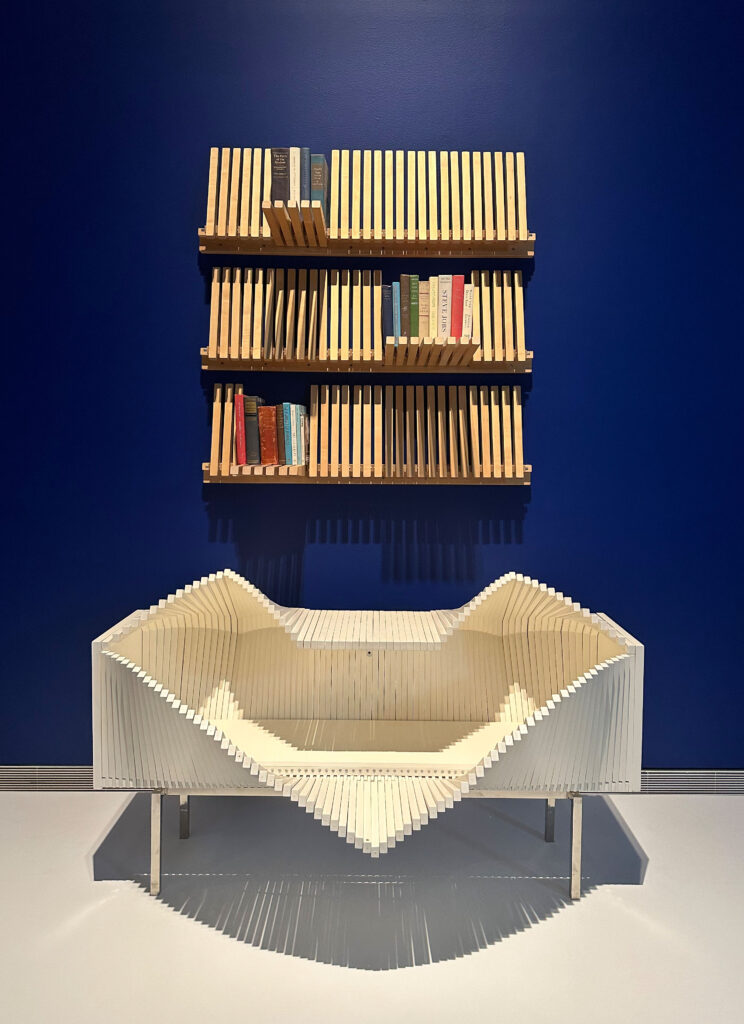
Top: “Piano Shelf”, 2014, Lacquered mahogony, steel ; Bottom: “Wave Cabinet”, Lacquered Baltic birch, steel, glass
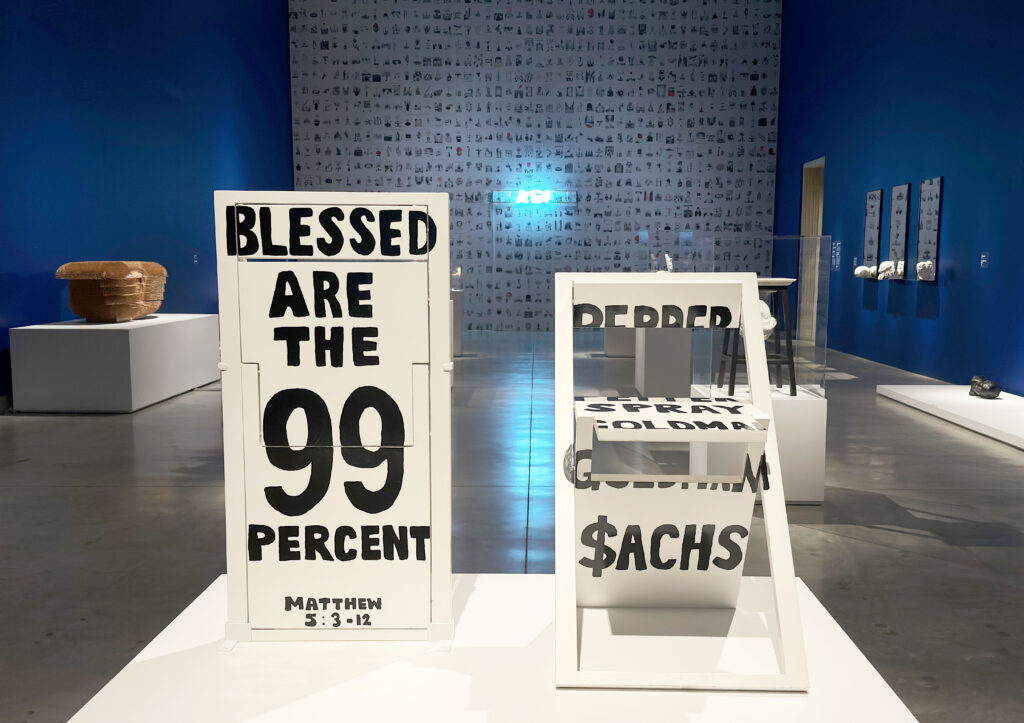
“Occupy Chair”, 2012
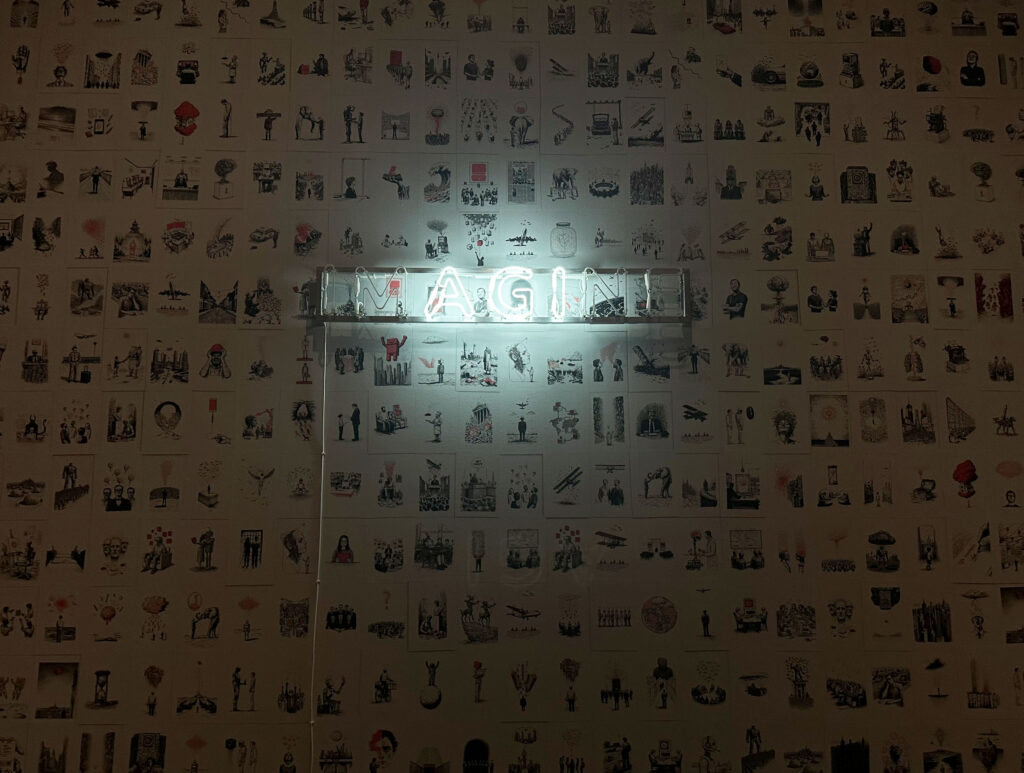
“IMAGINE Neon”, 2025, Neon tubing
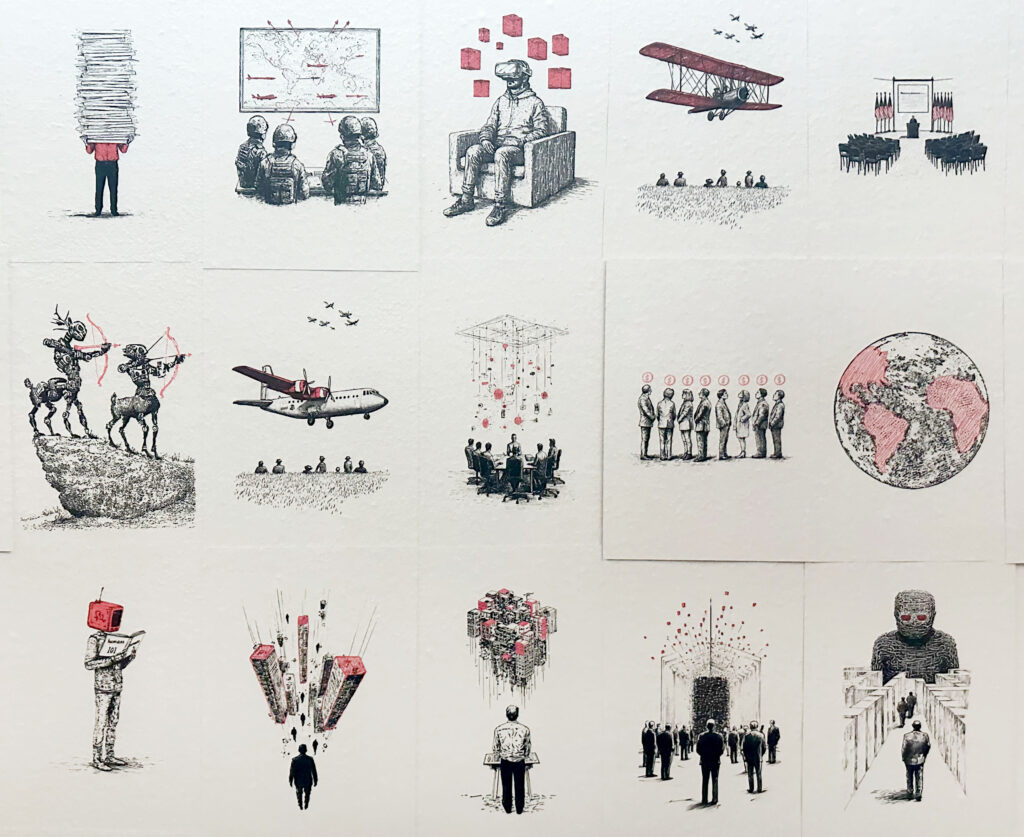
Detail from wall of AI generated drawings behind “IMAGINE Neon”

Mixing art, design, and politics, Sebastian Errazuriz‘s exhibition Double Take at the Philadelphia Museum of Art is a lot of fun. On one side of the room a neon bolt of lightning repeatedly flashes against the wall, while on another neon letters alternate between “IMAGINE” and “AGI” (Artificial General Intelligence) illuminating AI-generated drawings based on his original sketches. There’s also uniquely designed furniture, lamps made using taxidermy chickens, chairs referencing the Occupy Movement, objects incorporating Greco-Roman statue head reproductions, and more, all encouraging visitors to think about nature, technology, and the world around them.

From the museum:

Sebastian Errazuriz (Chilean, born 1977) twists our typical expectations and experiences of using furniture, lighting, and everyday objects. Embracing humor and appropriation, his limited edition and one-of-a-kind pieces often have a subtext that goes beyond form or function, offering personal narrative, a political message, or cultural commentary. This mid-career survey presents over twenty years of a multi-hyphenate practice that gives design a conceptual, Surrealist slant.

Works featured in the exhibition span art, craft, design, and technology. His “kinetic” furniture, constructed from the early 2010s, is characterized by moveable parts – doors, drawers, and shelves that are repositionable, creating new configurations. Other works take nature as a source of inspiration or make new and surprising use of found objects, including vintage watches and taxidermy fowl. Also on display are furniture, mirrors, and other objects that the designer creates by scanning original Greco-Roman antiquities that are then digitally-manipulated and recast in poured marble. A newly commissioned fluorescent light explores Errazuriz’s fascination with, and apprehension about, the potential impact of Artificial General Intelligence on artists, designers, and culture more broadly.

The diverse works on view convey imagination and wit, while also bewildering those who encounter them. The pieces are meant to be lived with, but, at the same time, are provocations with an air of mystery around their function and meaning. Attesting to Errazuriz’s expansive definition of design, the works in this exhibition suggest alternate ways of seeing, thinking, and living.

The show is on view until 8/16/26.


Aug 112026
 

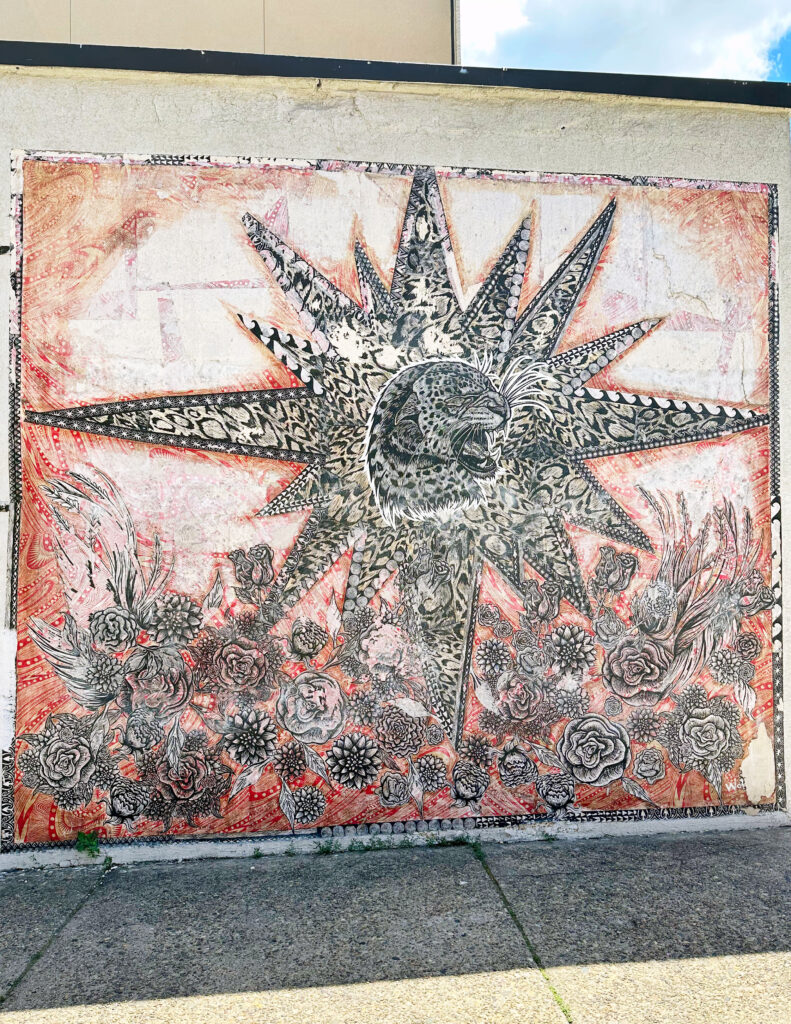
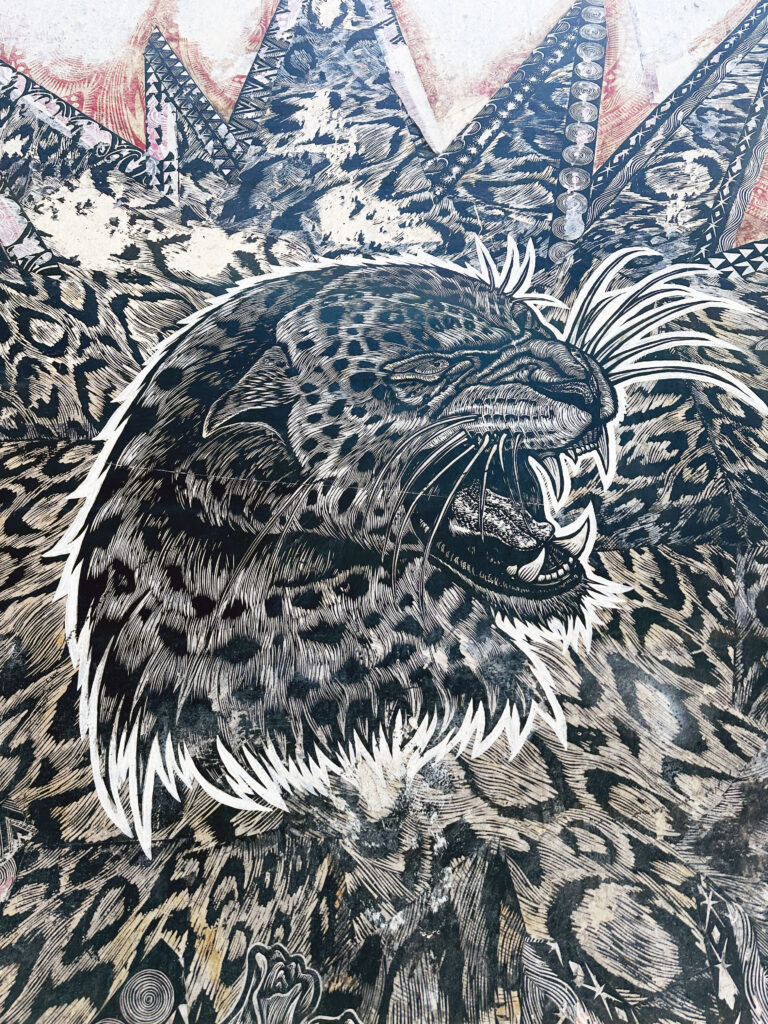
There Is Trouble ‘Til The Robins Come was created by artist Dennis McNett (aka Wolfbat) for Mural Arts Philadelphia in 2025. It incorporates layers of printed woodcut patterns along with painted elements.

The mural is a tribute to David Lynch, who passed away in January of that year.  Lynch lived in Philadelphia’s Callowhill neighborhood, where the mural is located, when he attended Pennsylvania Academy of Fine Arts (PAFA) in the late 1960s.

From McNett’s artist statement on the Mural Arts website:

“The loss of David Lynch leaves a huge void to those he effected with his work and wisdom. As a young artist, I saw Eraserhead, Blue Velvet and Twin Peaks in 1991 when I was 18 and it changed my perspective on what art could be. It made it ok to be weird and feel out of place. It was one of my first introductions to art outside of an art history book and contributed to my development of becoming an artist. I still revisit his work almost yearly. When I was talking about doing a small mural with [Mural Arts Philadelphia], David Lynch had just passed and I was rewatching his films and a documentary. I really wanted to do a mural dedicated to him.

Philadelphia was his biggest influence. 1965-70. The character played by Jack Nance, Eraserhead, had a very memorable head of hair that stood straight up like he had been electrocuted. I put this head of hair on David Lynch’s portrait. Eraserhead was David Lynch’s first film released in 1977.

In Blue Velvet (1986 film) the character played by Lauren Dern, Sandy, describes a dream of robins. In her dream the world is dark and all there was [was] darkness because there was no love. Suddenly thousands of robins flew in and created this blinding light and the light was love. At the end of the movie when all the turmoil is resolved, there is a robin on the windowsill. The robins in the mural are from Sandy’s dream. There is also a drape of blue velvet in the bottom part of the mural. The ear is also from Blue Velvet and is the ear the Jeffrey finds.

The iconic zigzag patterned floor and deep red curtains are from Lynch’s 1990-91 Twin Peaks and later in 1992 Fire Walk With Me. They are the setting of the Black Lodge. The symbolic blue key is from the 2001 movie Mulholland Drive and is tied to Camilla’s reality. The edges or the mural are not cut straight but intentionally extend past the edges like Lynch’s unbound imagination and subconscious mind.”

McNett has a few other murals around town, including the one below, created in 2014, located on the side of what once was Philly Home Brew.

Aug 062026
 

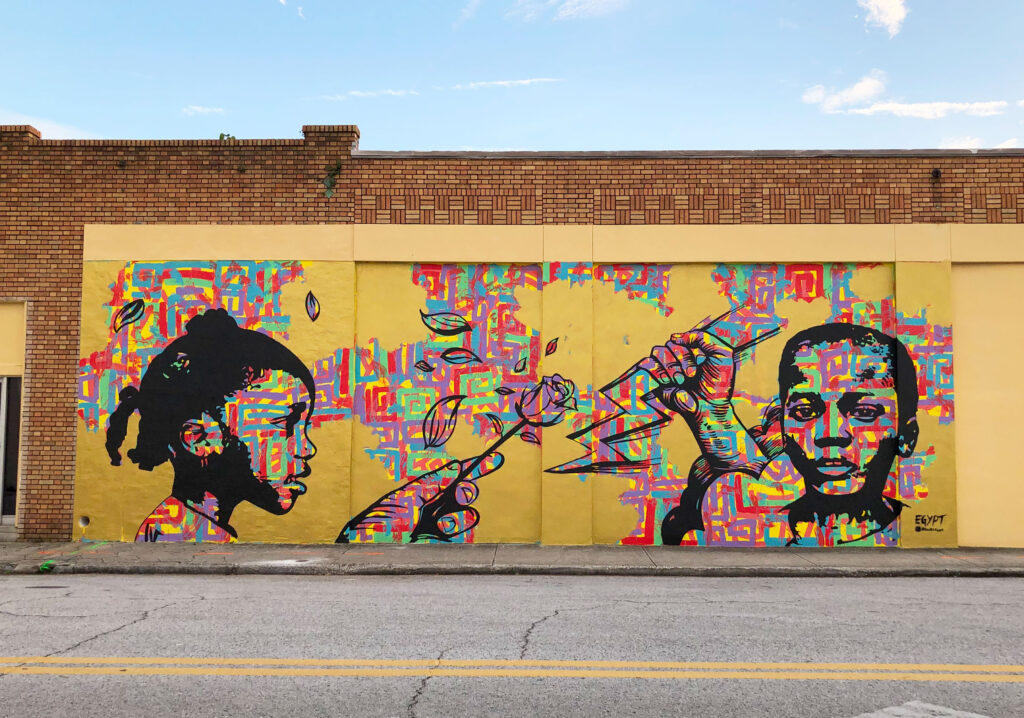
Artist and muralist Egypt Hagen created With Thunder in Our Hearts for the 2022 edition of St. Pete’s  SHINE Mural Festival.  Her most recent projects can be found on Instagram.

From her website about the mural:

With Thunder in Our Hearts celebrates the courage to create, dream, and flourish. Through symbolic gestures of offering and exchange, the mural reflects on how compassion, creativity, and shared experiences can spark transformation within ourselves and our communities.

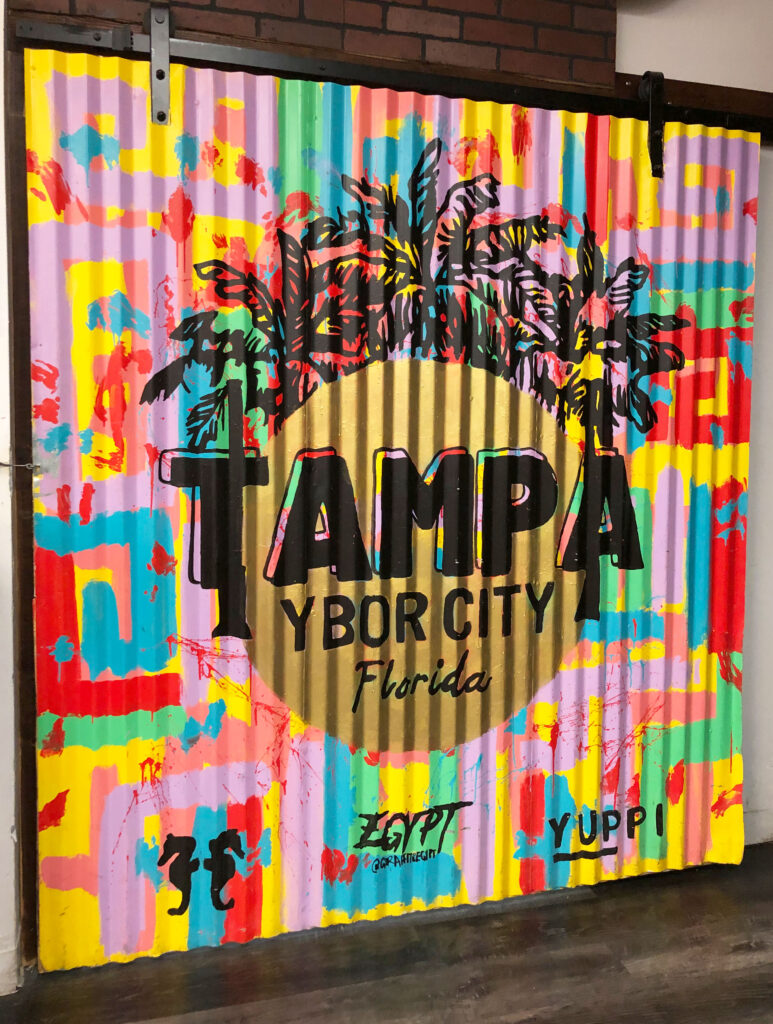
Her work can also be found brightening the walls of Ybor Urban Mart, located in the Ybor City neighborhood in Tampa.

Aug 062026
 

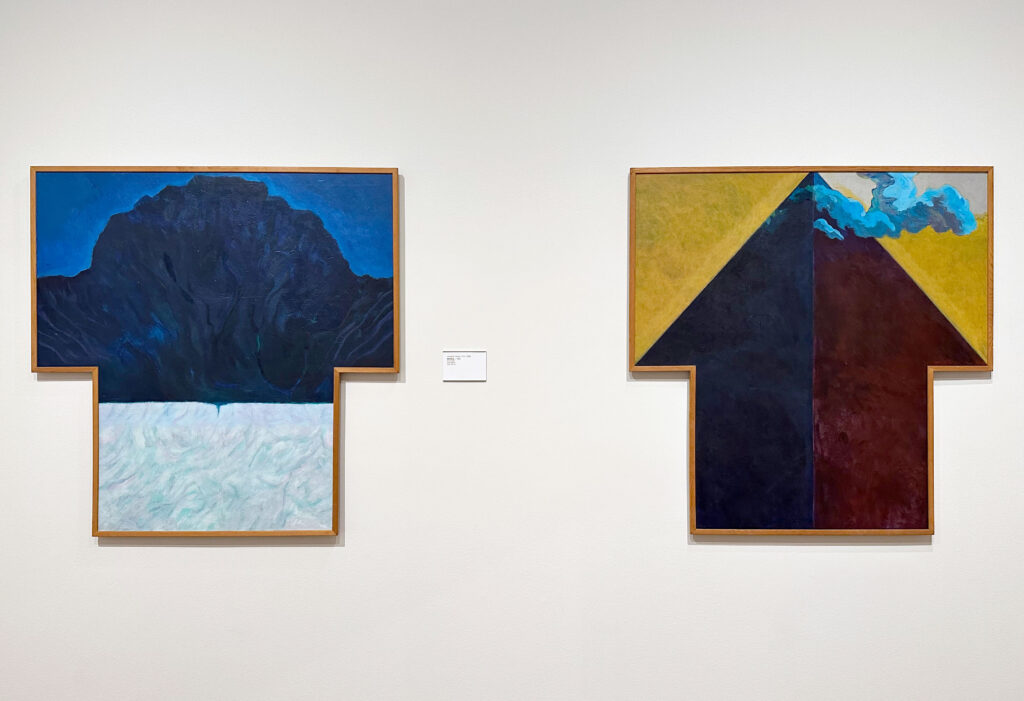
Leonard A. Harmon, “Untitled”, c.1980s, Oil on masonite

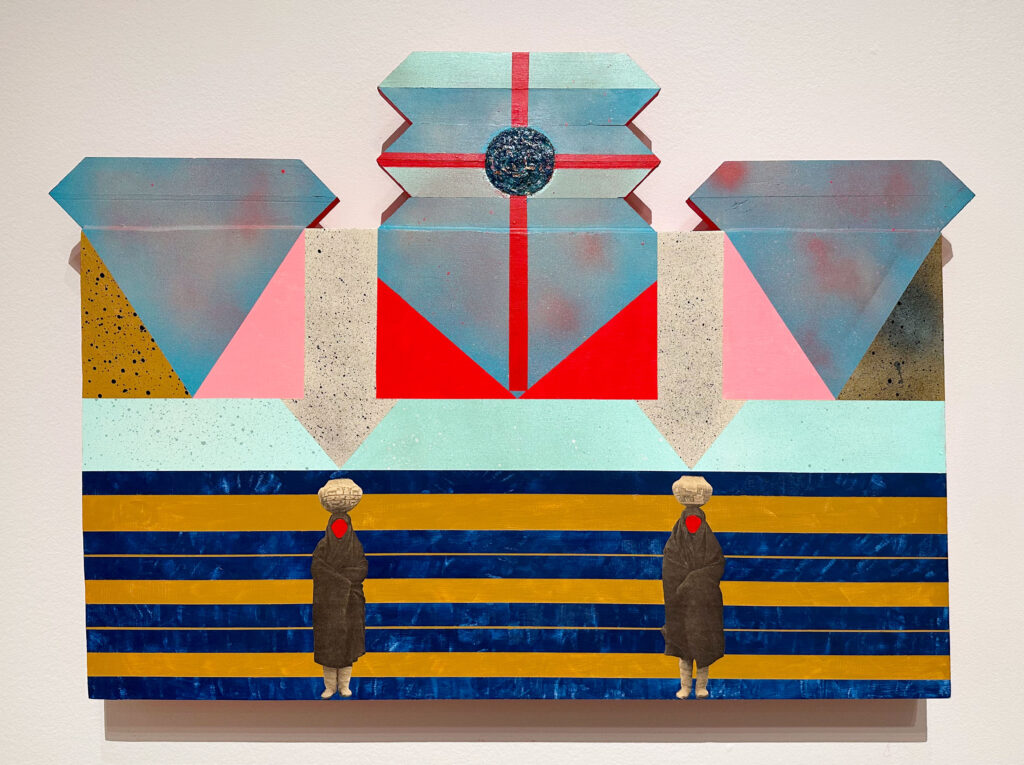
Leonard D. Harmon, “Last Copper Moon”, 2025, Acrylic, spray paint, oxidized copper shavings, paper on wood panel

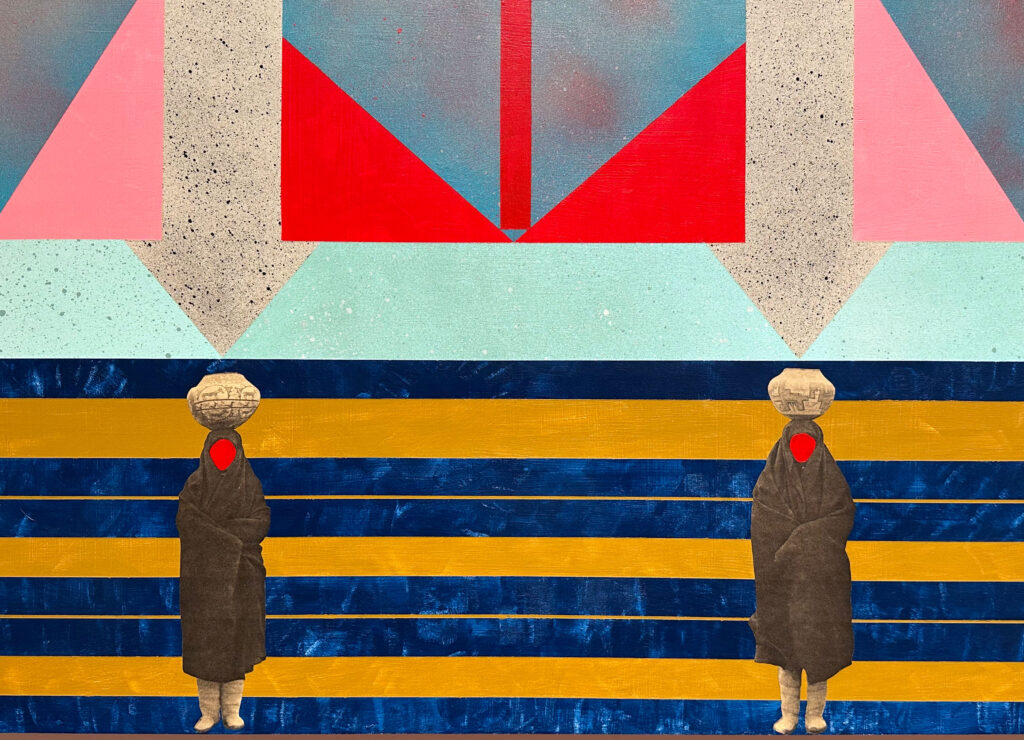
Leonard D. Harmon, “Last Copper Moon”, 2025 (detail)

Delaware Art Museum‘s Living Indigenous showcases and celebrates Indigenous communities and artists in multiple locations in the museum. The exhibition is part of the museum’s programming for the 250th anniversary of the United States.

Developed in partnership with the Nanticoke Indian Museum, one room dedicated to works created by Indigenous artists includes paintings by Leonard A. Harmon and his nephew, Leonard D. Harmon.

From the museum and artist about Last Copper Moon (pictured above):

Leonard D. Harmon notes the rich artistic legacy that precedes him. He explains, “I draw inspiration from my ancestors to infuse a modern twist into traditional arts.” This painting references the architectural forms his uncle, Leonard A. Harmon, was creating in the 1980s. A copper moon, or total lunar eclipse, is a sacred Indigenous occurrence, and the images Harmon includes refer to associated rituals.

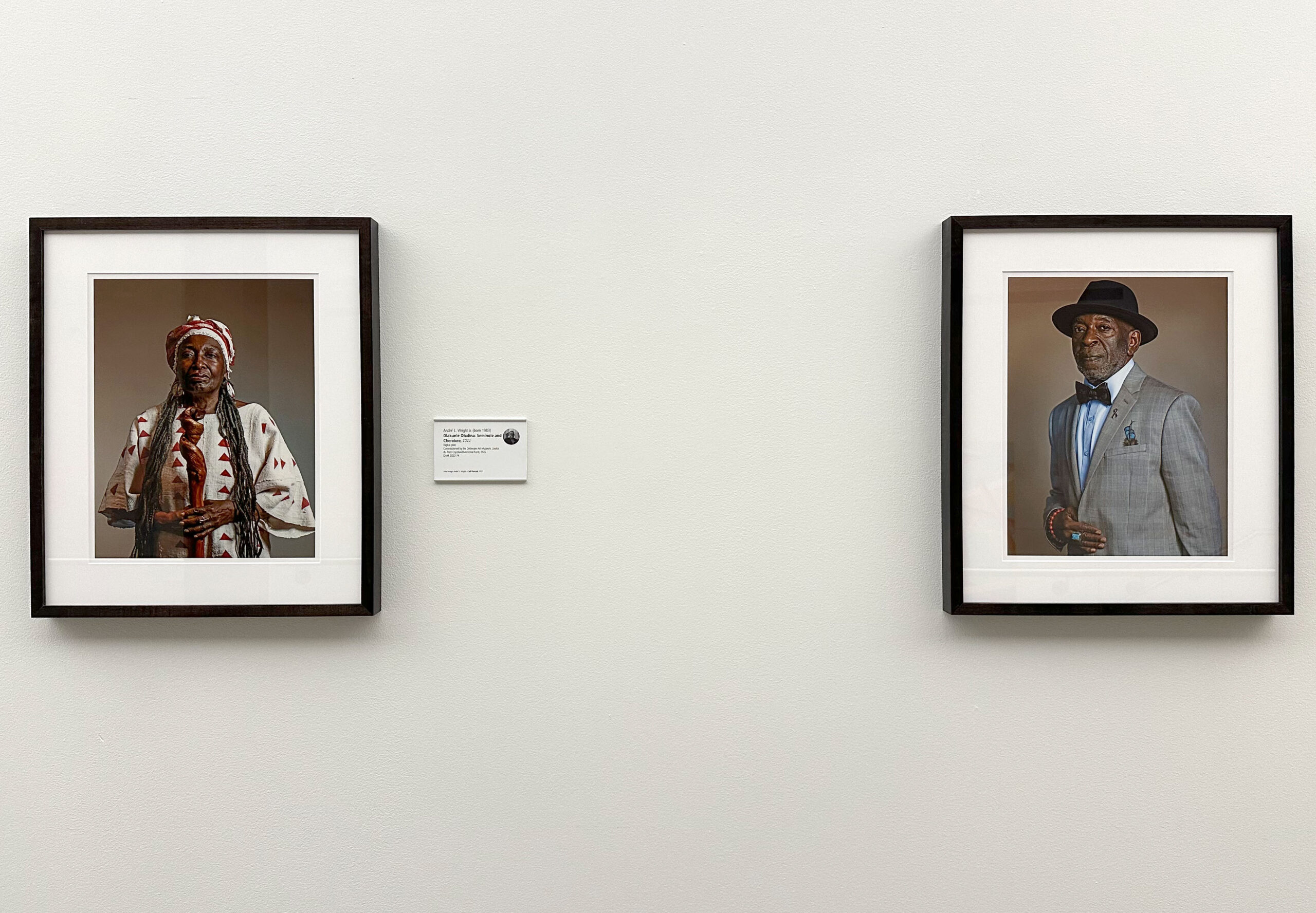
The exhibition continues upstairs with two different series of portraits of members of Delaware’s Indigenous communities– Will Wilson‘s Critical Indigenous Photographic Exchange (CIPX) and Andre’ L. Wright, Jr.’s Indigenous Faces of Wilmington. In 2022 the museum invited Wilson to continue his CIPX project in Delaware and facilitated a photoshoot of citizens of the Lenape Indian Tribe of Delaware (The Original People) and the Nanticoke Indian Tribe (The Tidewater People). That same year the museum also commissioned Andre’ L. Wright, Jr. to create a project showcasing diverse Wilmingtonians, two of which are pictured below.

Two portraits by Andre’ L. Wright, Jr. from his series “Indigenous Faces of Wilmington”

Living Indigenous is on view until 8/23/26 and the museum is free to visit every Thursday from 4-8pm.

Aug 042026
 

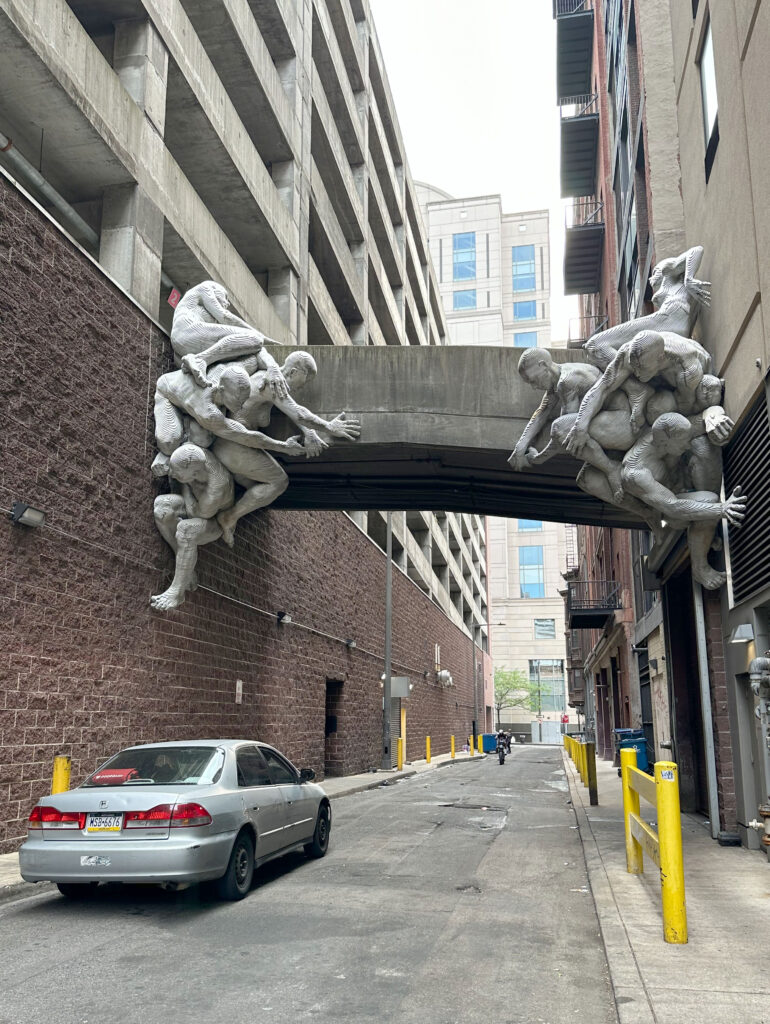
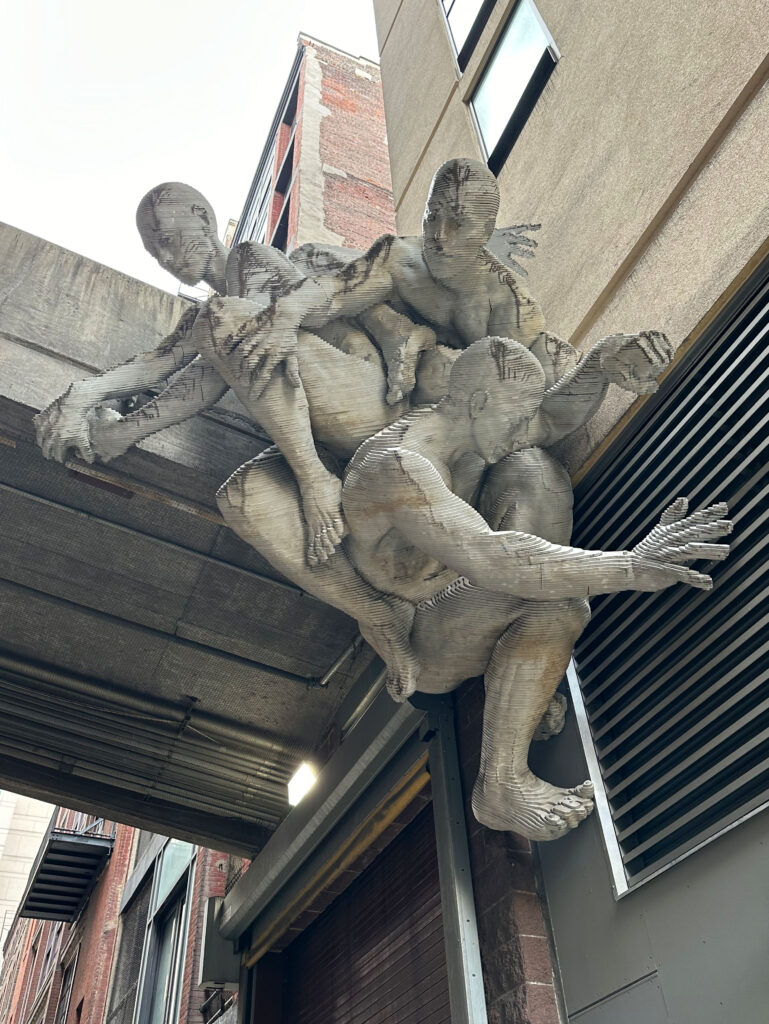
In Miguel Horn‘s 2021 artwork ContraFuerte, his figures, made from aluminum plates, appear to be holding up a bridge between two buildings. Located on Cuthbert Street, an alley off of 18th Street in downtown Philadelphia, it was created as part of the city’s Percent for Art program.

For additional information on the work, check out this article from WHYY.


Jul 292026
 

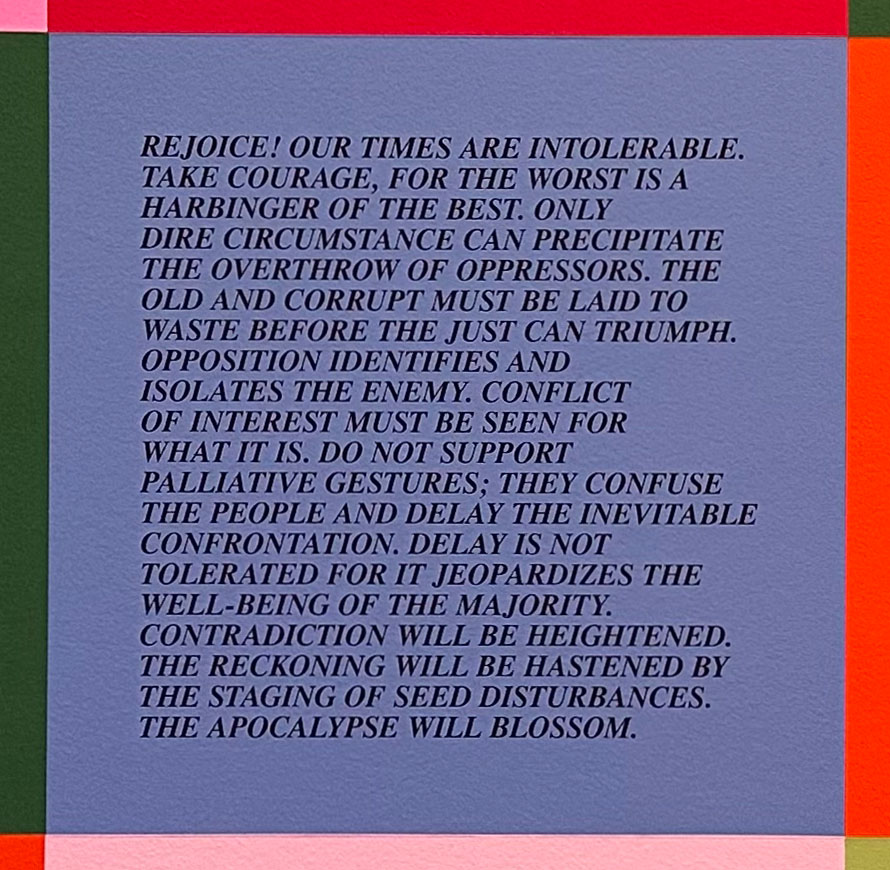
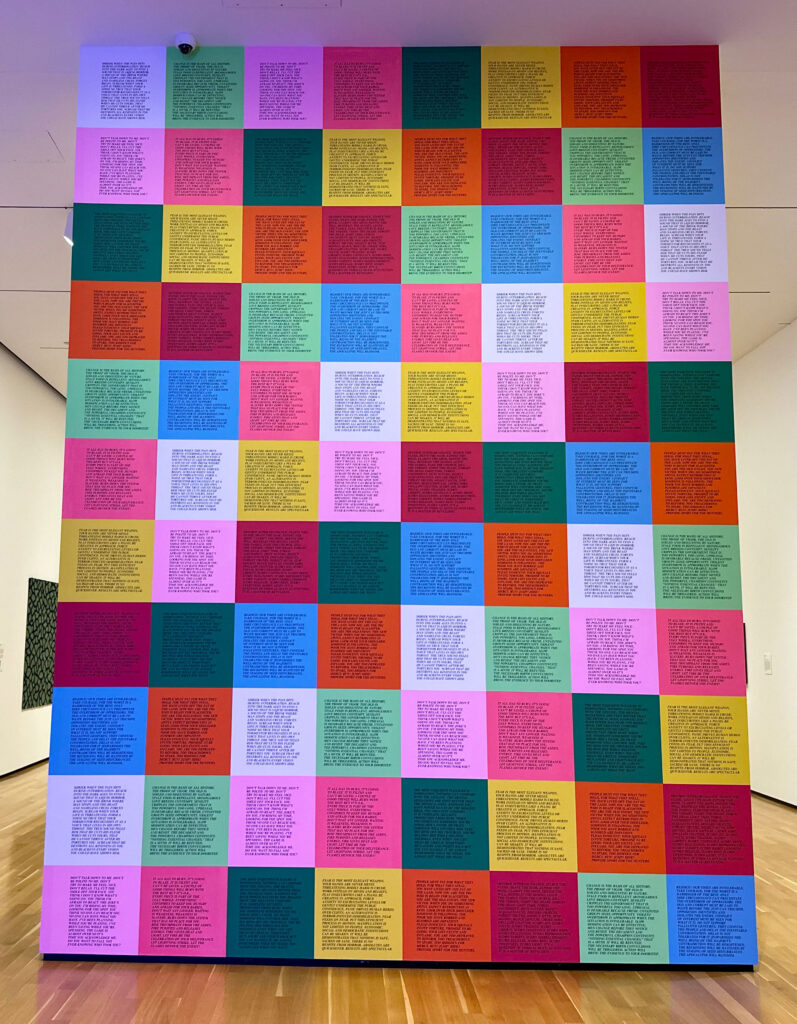
Jenny Holzer was born today, July 29th, in 1950. Pictured in this post are some of her famous Truisms, when they were on view at Akron Art Museum.

Her latest exhibition, Wrong Answers, is currently at the Serralves Museum in Portugal, closing November 1st.


Jul 282026
 

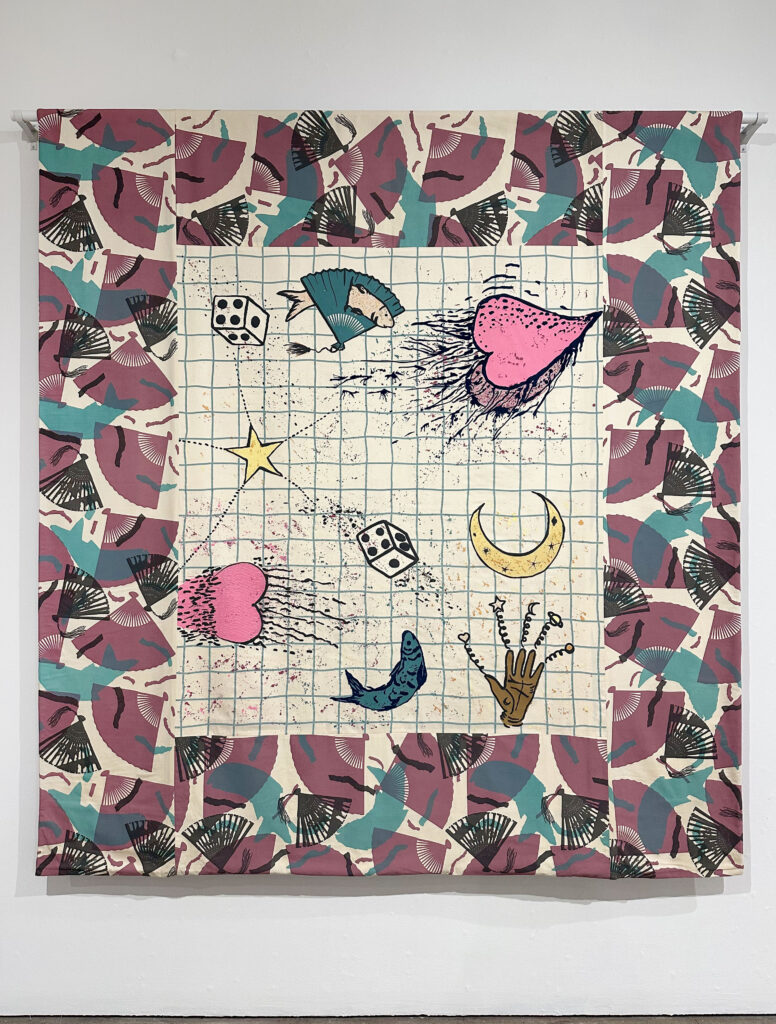
Betye Saar, “Takin’ A Chance on Luv”, 1984, pigment on cotton sateen, created in collaboration with The Fabric Workshop and Museum

Los Angeles artist Betye Saar passed away on Sunday, July 26th, at 99 years old, just a few days before her 100th birthday. Saar is best known for her assemblage pieces that confronted racism and sexism, often incorporating  spiritual and mystical elements into the work as well.

Takin’ A Chance on Luv, pictured above, was part of the group exhibition Some American Dreams at The Fabric Workshop and Museum in Philadelphia, which closed in June.

The short documentary below, created by Christine Turner for LACMA‘s Art+Film Initiative, features the artist at 93 discussing her work.

Jul 272026
 

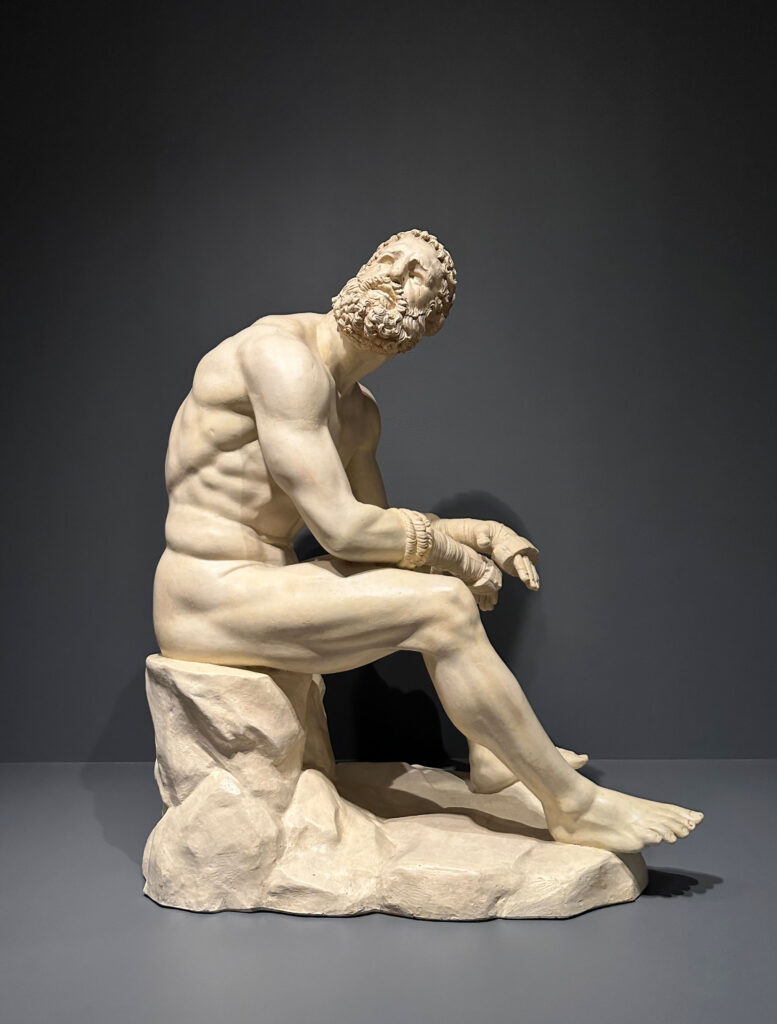
Caproni Brothers, “The Boxer at Rest”, 19th century Painted plaster cast from the original bronze which was produced between the late fourth and second centuries BCE

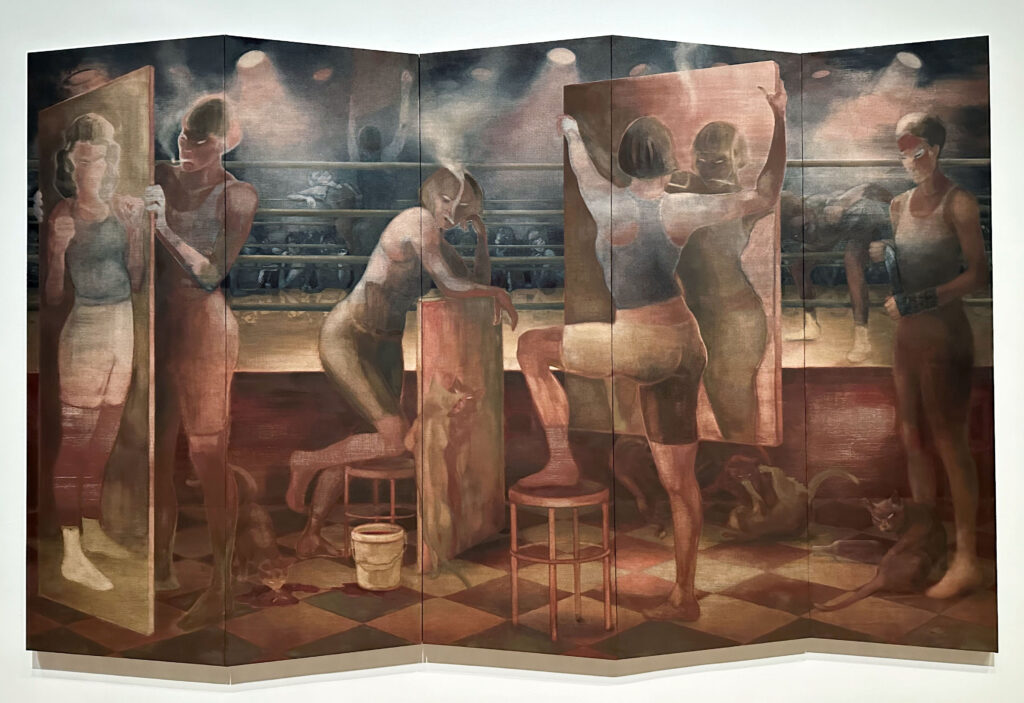
Lisa Brice “Untitled”, 2025 Pigment and natural water-soluble binders on linen

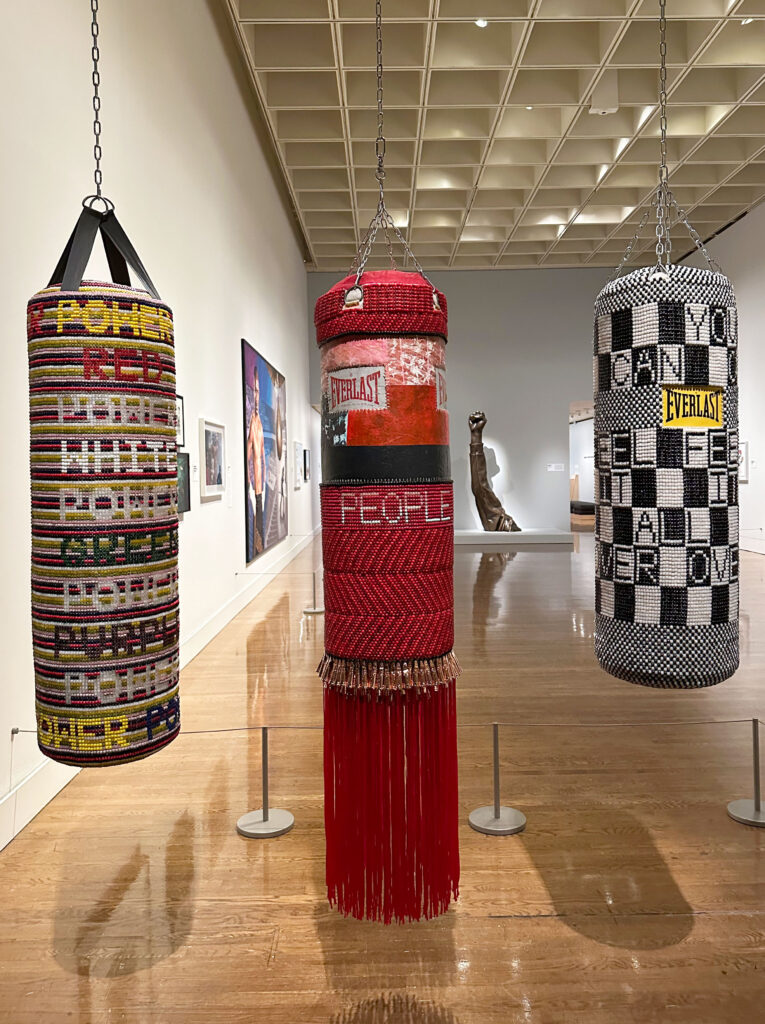
Jeffrey Gibson, (l to r) “Power, Power, Power”, 2017, “People Like Us”, 2014, and “You Can Feel It All Over”, 2015, Repurposed punching bags, glass beads, artificial sinew

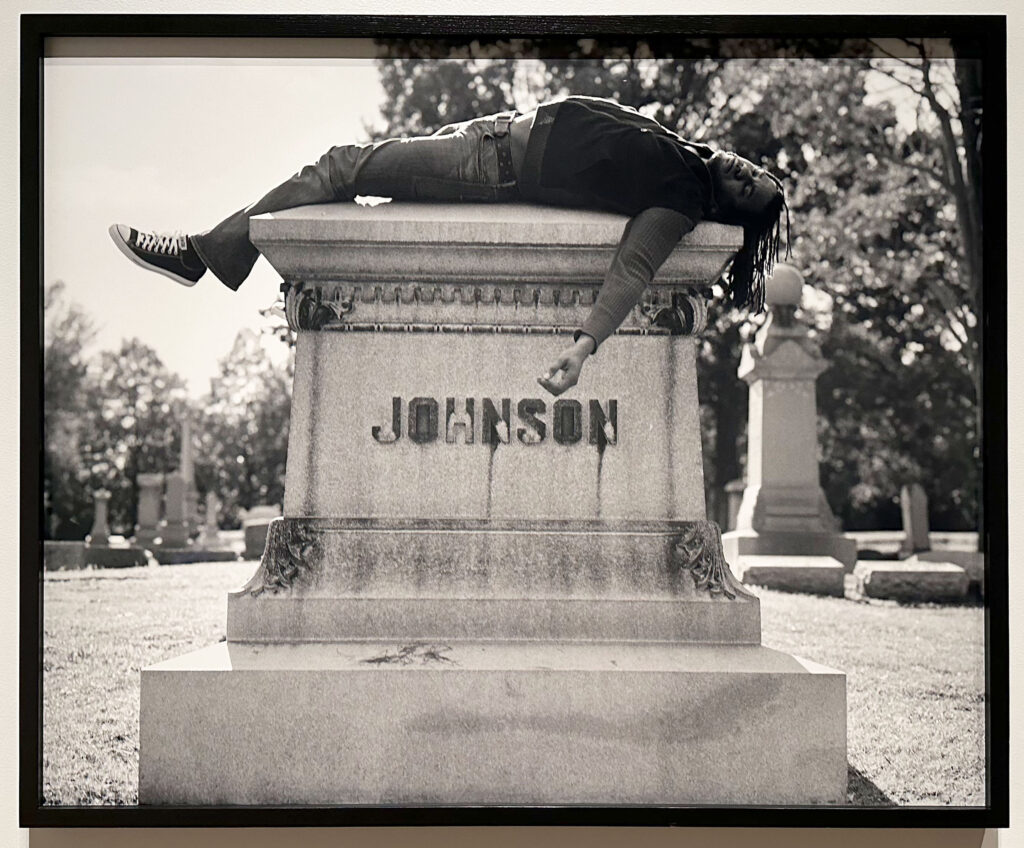
Rashid Johnson, “Self-Portrait Laying on Jack Johnson‘s Grave”, 2006, Durst Lambda print mounted on panel

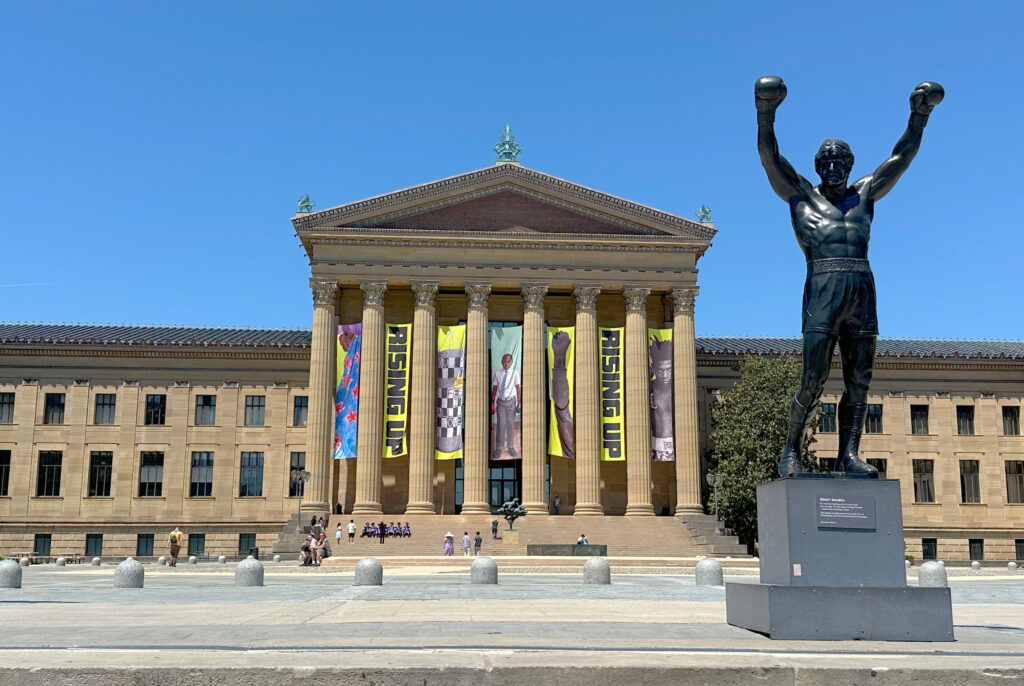
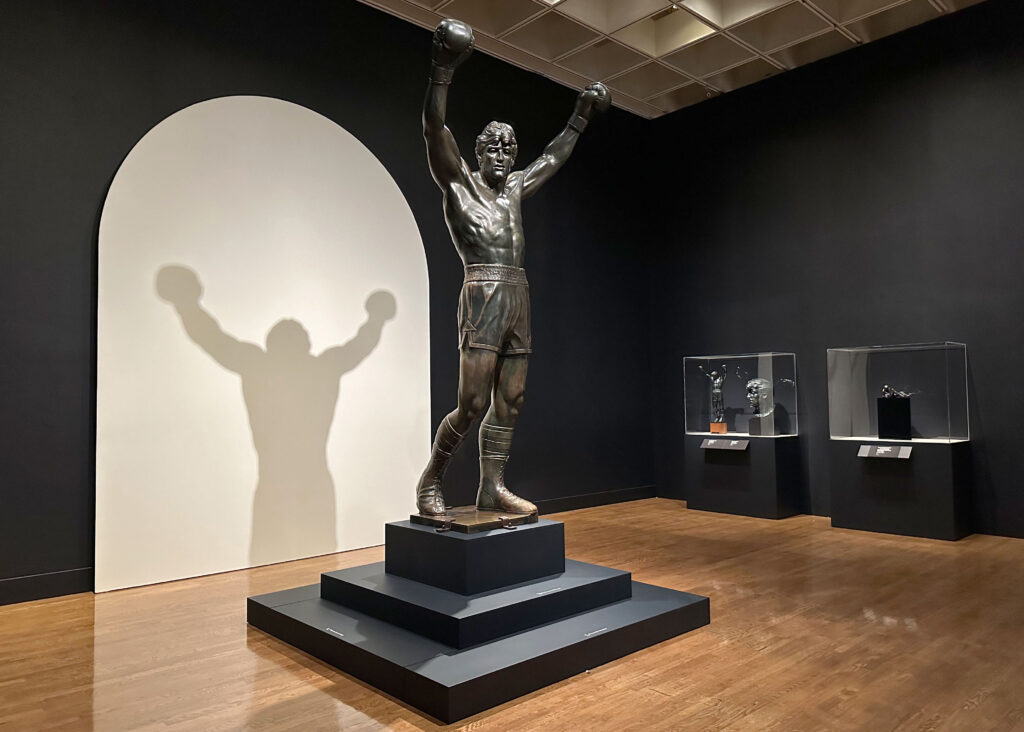
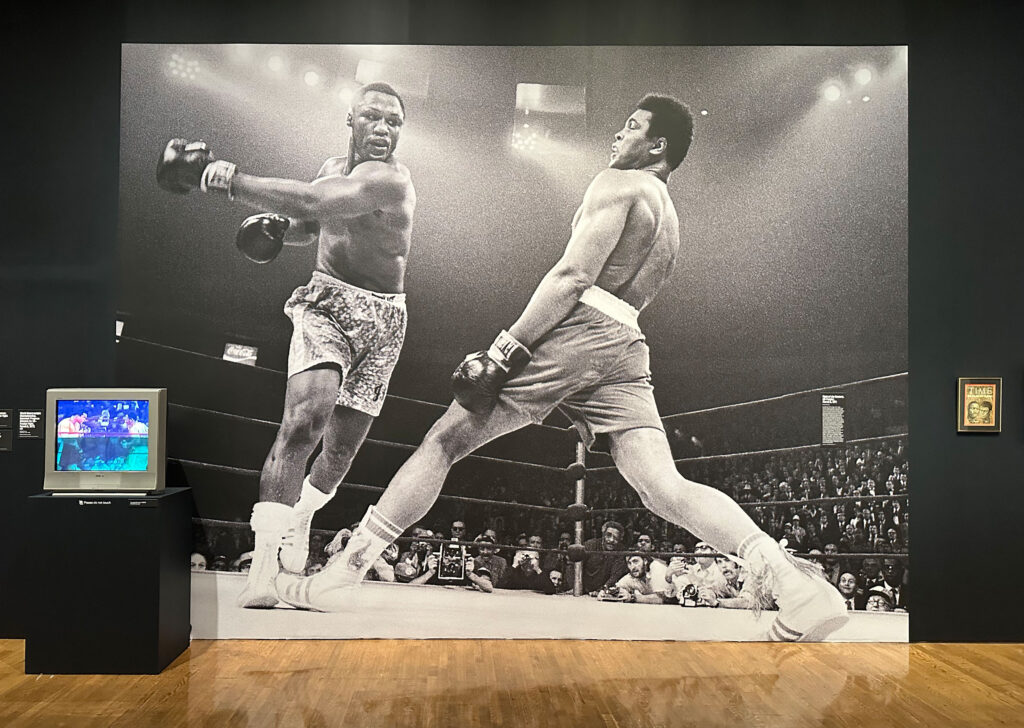
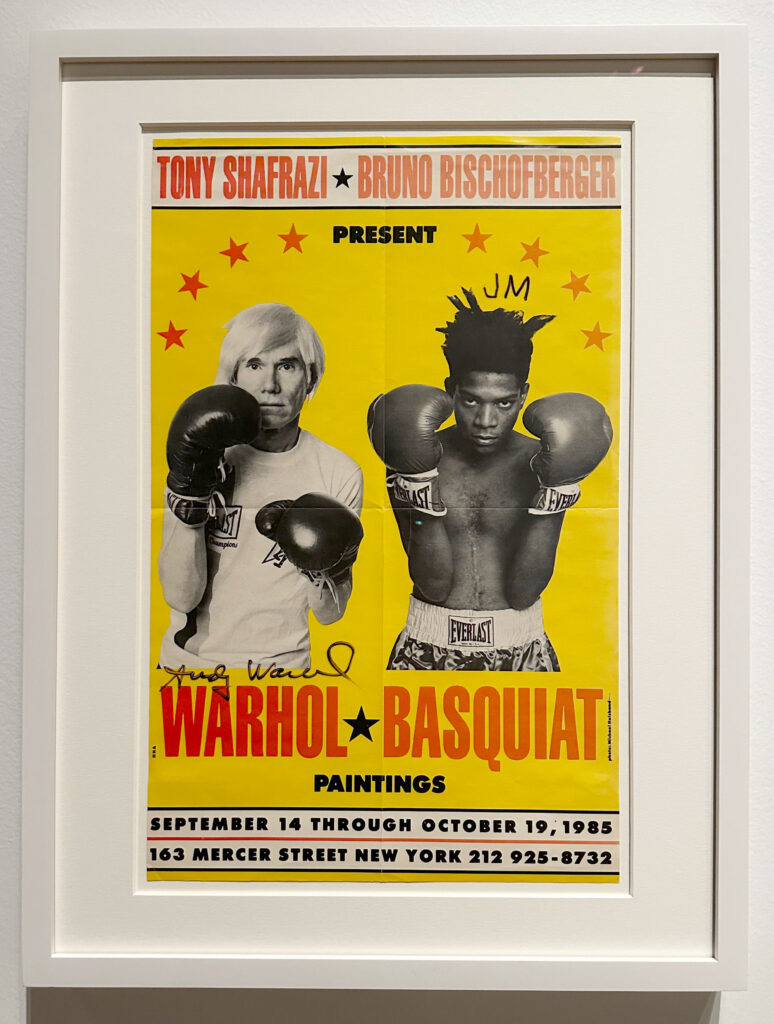
Approaching the front steps of the Philadelphia Museum of Art, you will find people of all ages and backgrounds taking photos with the statue of Rocky out front, often imitating his famous pose. Through a variety of works from antiquity to the present day, Rising Up: Rocky and the Making of Monuments looks at the history of this statue, the meanings attached to monuments, and the allure of boxers and boxing culture.

From the museum about the exhibition:

Blending the worlds of art, sports, and popular culture, Rising Up takes on the life of monuments by exploring the meanings and mythologies of the Rocky statue. The exhibition looks to the statue of the most famous Philadelphian who never lived as a way to better understand our complex and vital relationships to our public monuments.

The statue first appeared on-screen in the Oscar-winning Rocky film series. The third installment, Rocky III (1982), featured the dedication of a monument that celebrated the boxer as both an underdog and a hero. The movie-made statue was placed outside the actual museum during filming, a dynamic blurring of art and life that continues to this day. Since that introduction, and through the statue’s departure and prolonged absence from the museum grounds to its prodigal return to the steps, the statue has sparked debate over its aesthetic value and its role in the city. Today, the power of the Rocky statue as a monument stems from its ability to summon public participation.

From antiquity to modernity, Hollywood to contemporary art, Rising Up spotlights both popular narratives and undertold stories surrounding the Rocky statue. Each gallery offers a response to the exhibition’s central question — why do millions of people visit the Rocky statue at the steps of the Philadelphia Museum of Art each year? — and further explores the relationship between art, boxing, and civic identity. It offers a renewed context to consider the statue through works and artifacts that reflect on the deep legacies of boxing monuments across time.

Rising Up marks the first time that the Rocky statue has been displayed inside the museum, explored alongside Philadelphia’s landmark boxing culture and multigenerational artists’ interpretations of sport and society. At its core, the exhibition looks at how monuments are made — by artists and by us — through the lens of the Rocky statue and the ways people engage, debate, and gather around this site of memory.

This exhibition closes on 8/2/26.
Jul 242026
 

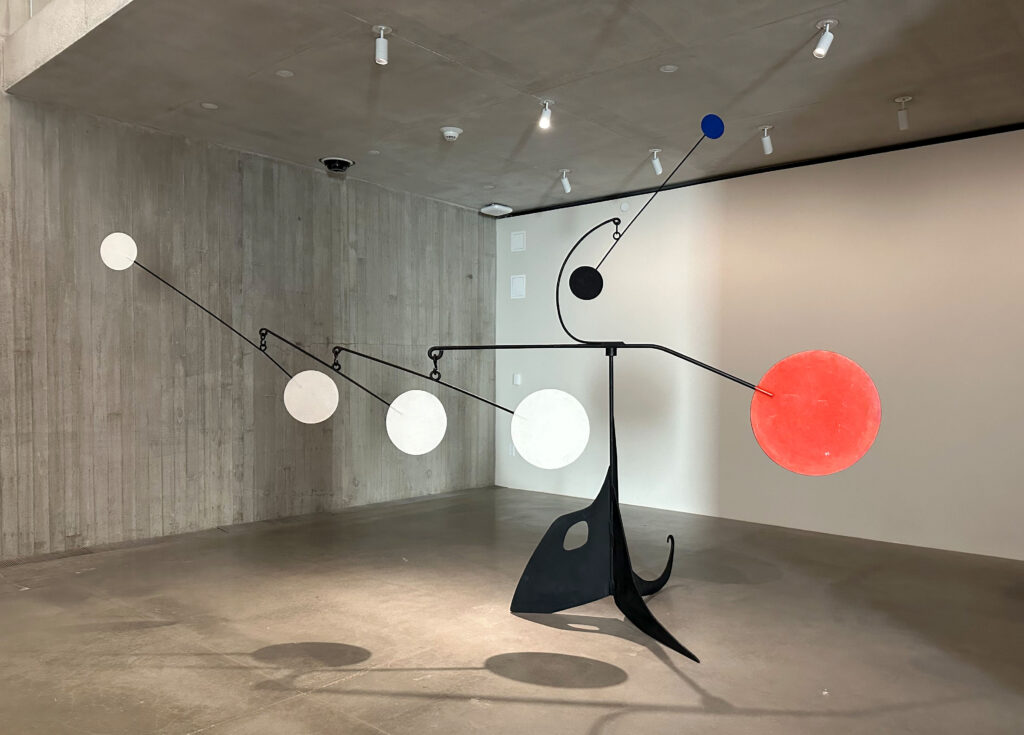
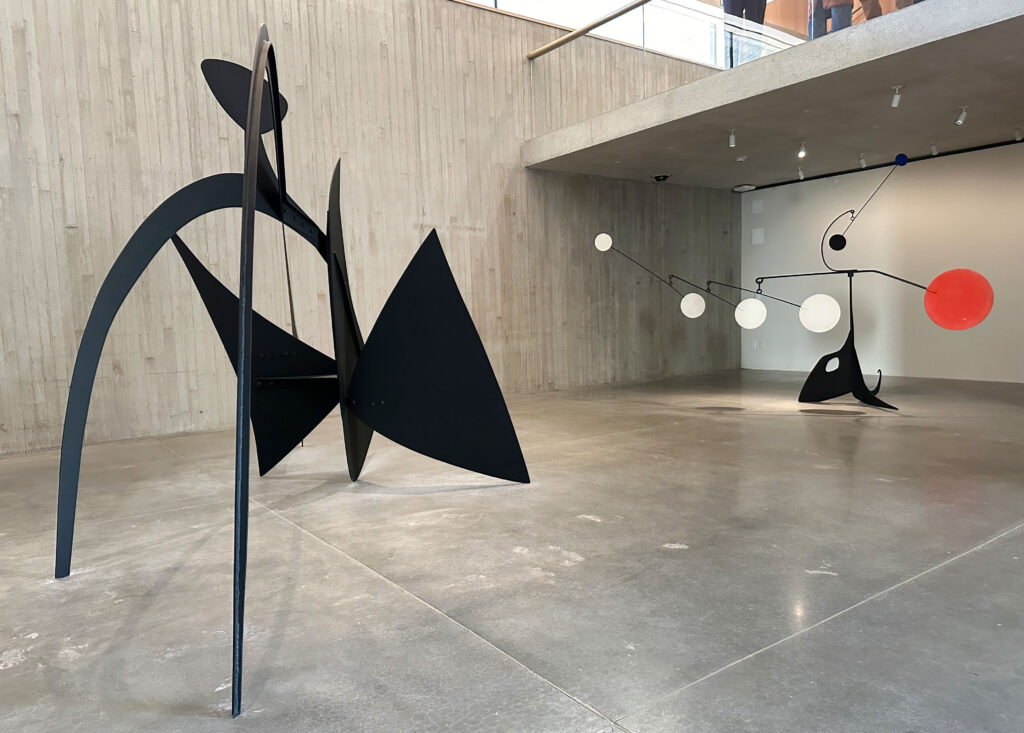
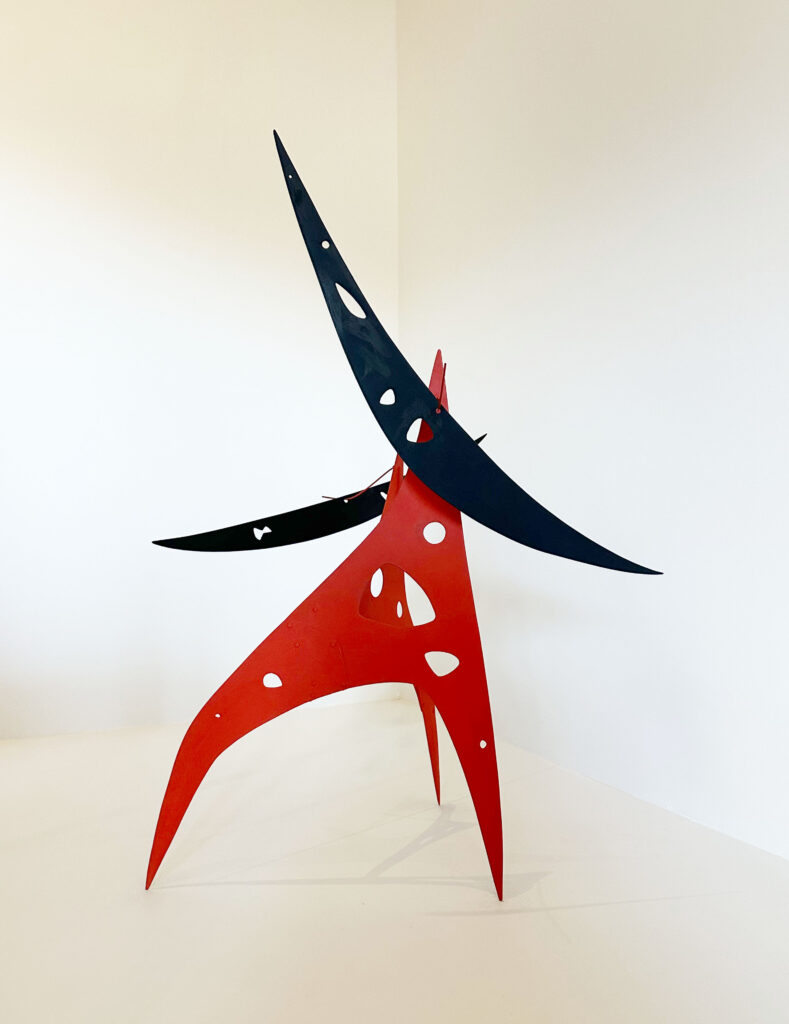
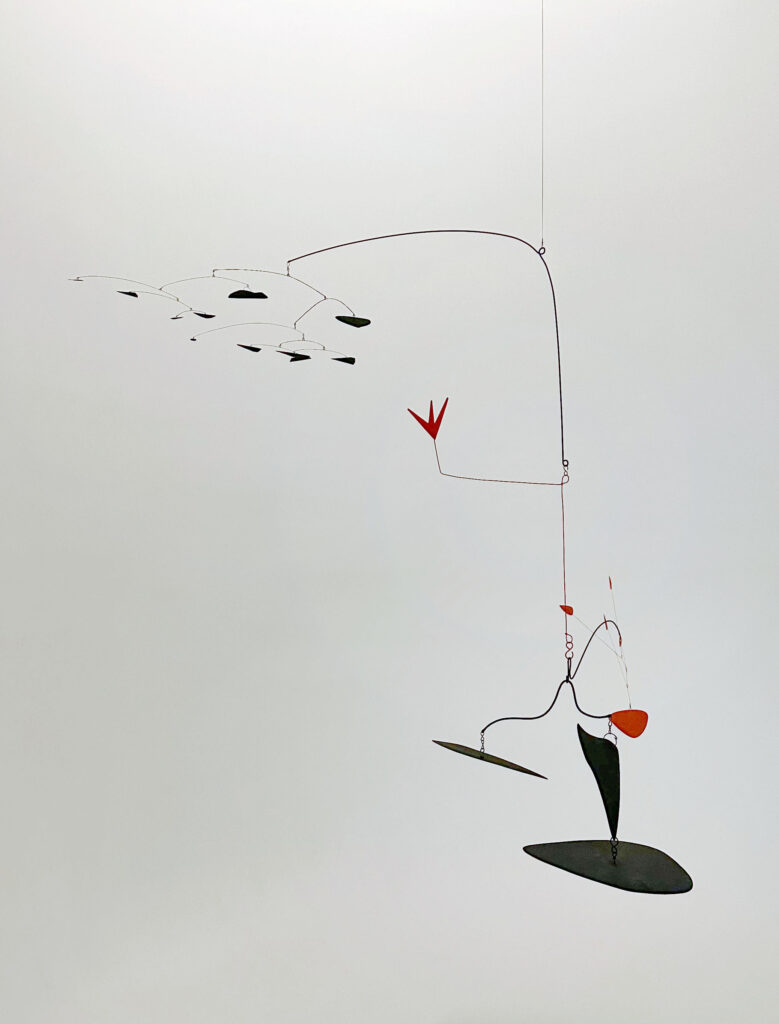
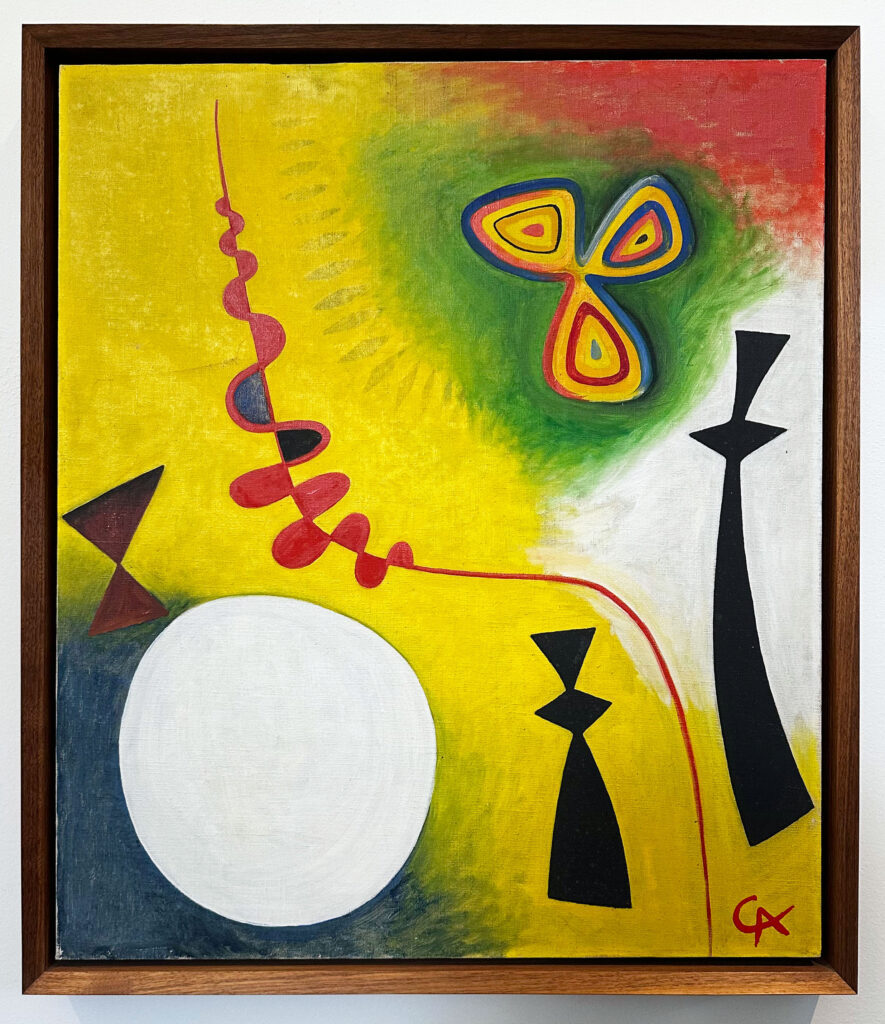
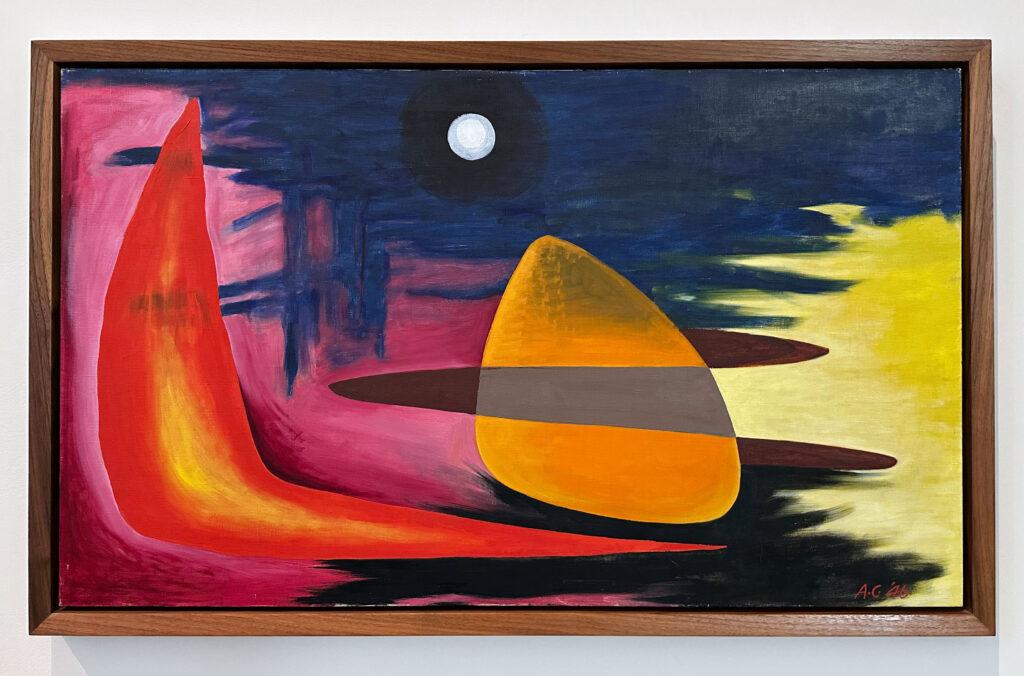
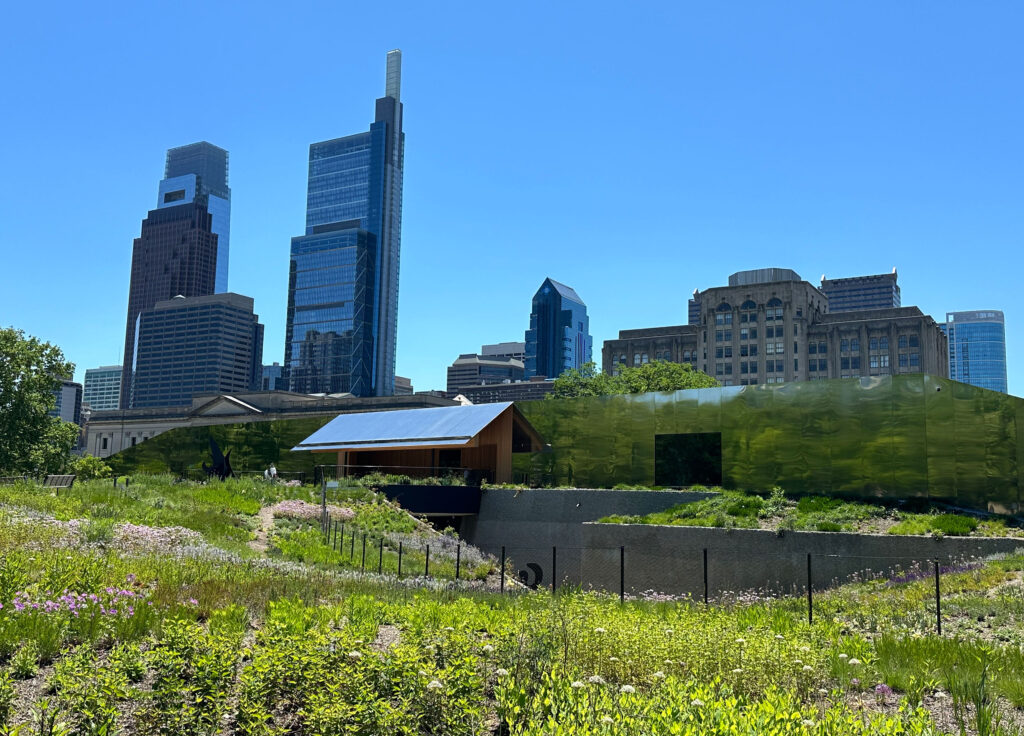
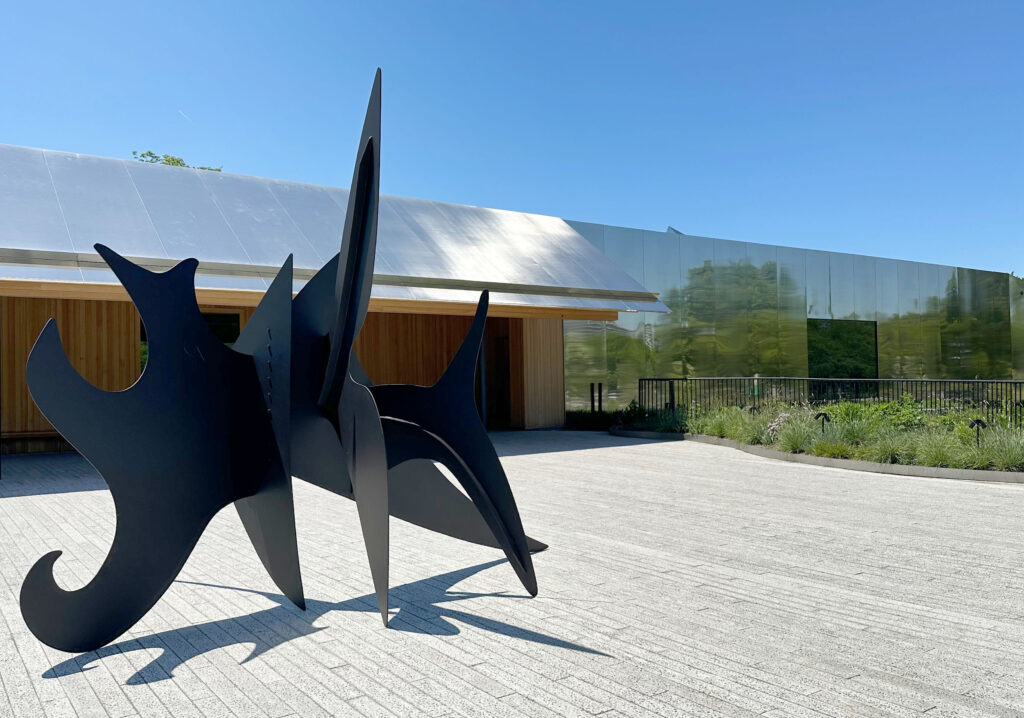
As you approach the Calder Gardens building, you will first notice the gardens and, if you visit in spring, the flowers. Once inside you’ll find a selection of Alexander Calder‘s works, including a few of his paintings. The space is organized in a way that never feels crowded, encouraging visitors to look at the work from different angles or watch how some pieces move with the slightest change in the air around them.

For the month of July, Philadelphia residents can visit Calder Gardens and the Barnes (which is located across the street) for free.

About Calder Gardens from their website:

Calder Gardens is a new art institution dedicated to Alexander Calder (1898–1976), one of the most acclaimed and influential artists of the 20th century. Building on the artist’s enduring legacy, it is conceived as a place where an evolving interplay between art, architecture, nature, and programming encourages contemplation and self-discovery.

Set within a landscape featuring more than 250 varieties of plants in gardens conceived by Piet Oudolf, Calder Gardens’ 18,000-square-foot building, designed by Herzog & de Meuron, houses a rotating installation of artworks by Calder. Spanning the artist’s 50-year career and diverse bodies of work, the objects on view respond to architectural moments rather than art historical narratives. This selection of artworks slowly changes over time, echoing the natural rhythms of the seasons. Some will remain for years, while others are only on view for a few months, creating an ever-changing environment that encourages close looking and repeat visits.

In dialogue with Calder’s own experimental practice, programming at Calder Gardens presents performances, sonic experiences, screenings, lectures, and other events that connect the artist’s legacy of innovation to contemporary art. Emphasizing mindfulness and environmental awareness, Calder Gardens is a space that foregrounds the interconnectedness of all elements of life. Straying from fact-based learning, Calder Gardens offers daily walks that encourage personal introspection as visitors move through the building.

Calder Gardens is located on the Benjamin Franklin Parkway in the heart of Philadelphia, a city with deep connections to the Calder family across several generations. It extends this lineage to the present day and joins Philadelphia’s rich artistic and cultural communities.